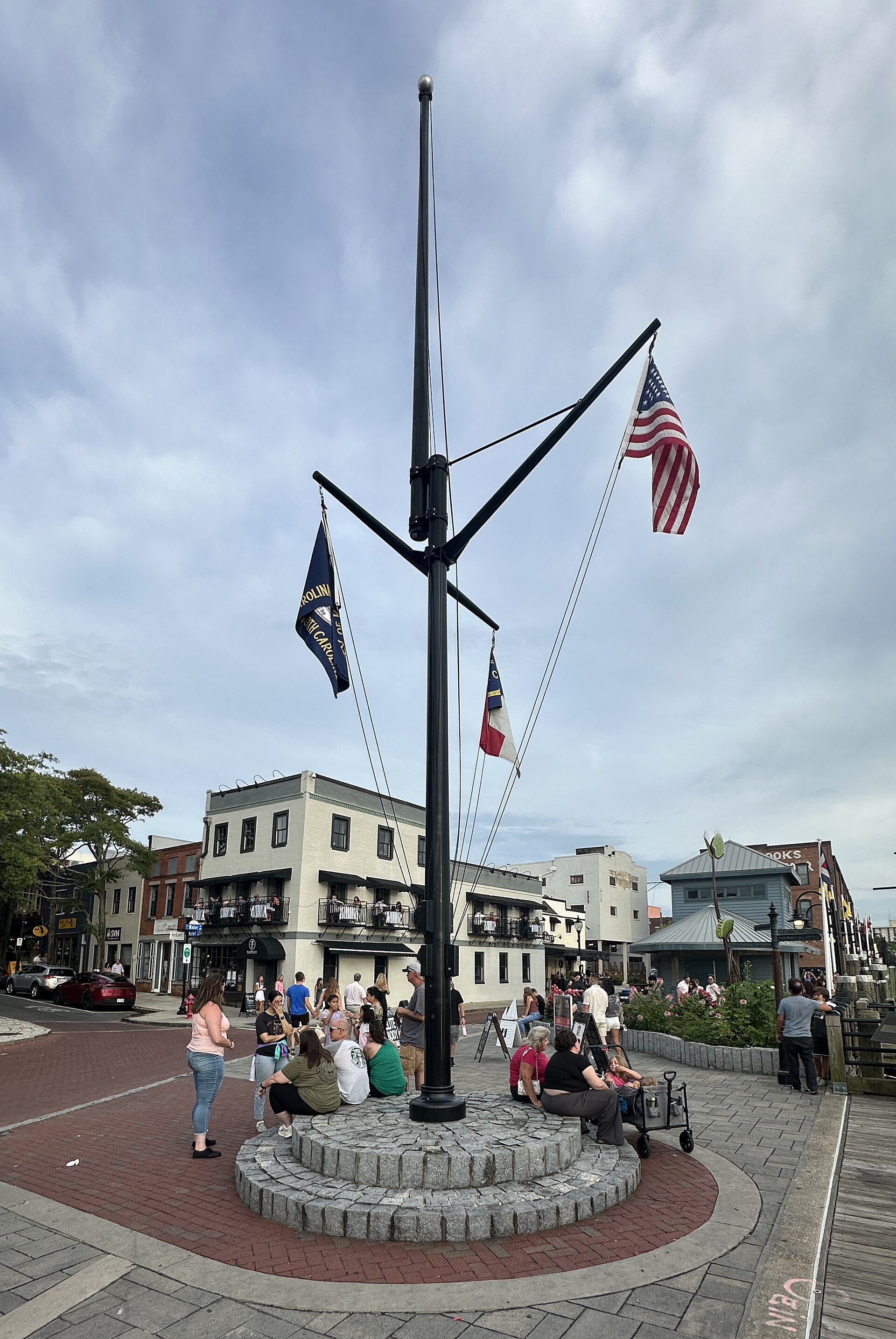
Wilmington is a Cape Fear River city and New Hanover County's principal urban center, with a historic downtown, port economy and access to nearby beaches.
Discover Local CommunitiesNeighborhoods range from the downtown grid and older streetcar-era districts to suburban corridors and newer communities. Walkability, flood exposure, city services and school assignment differ substantially by address.
Downtown supports walking between the riverfront, dining and cultural venues, while most cross-city trips remain car-oriented. Boating, parks and beach outings are integral regional recreation options.
The Riverwalk, Riverfront Park, city parks and nearby beaches support a broad mix of culture and outdoor recreation.
New Hanover County Schools serves Wilmington. The city contains many attendance zones, so no school should be assigned without checking the exact address in the current district locator.
Downtown, the Cargo District, Oleander Drive, Mayfaire and other corridors each offer distinct dining and retail clusters; specific businesses change over time.
Wilmington sits on the Cape Fear River in southeastern North Carolina, about ten miles inland from Wrightsville Beach and roughly two hours from both Raleigh and Charleston, and the range of Wilmington homes for sale runs from condominiums in the $200,000s to riverfront and historic district property well above $2 million. It is a port city with a genuine historic downtown along the riverfront, a university, a film industry presence, and a housing stock that spans antebellum houses in the historic district, mid-century neighborhoods, and substantial newer development toward the beaches and the north.
Three current figures point in three directions and reading them together is the useful exercise. Redfin recorded a median sale price of about $479,000 over the three months ending May 2026, up 5.4 percent year over year. Over the same period, price per square foot fell about 6.1 percent to around $262. And homes took about 57 days to sell against 24 a year earlier, with 508 sales in May against 549. Prices rising while per-foot values fall and pace halves is a sales-mix effect: larger or better-positioned houses are making up more of what closes, while the underlying market has loosened considerably.
For a seller that combination is the important one. A median that is up does not mean a house will move quickly, and with the average property selling at roughly 2 percent below list after nearly two months, pricing from last year's comparables is the most common way to sit through a season here. Redfin puts the city's Compete Score at 51 out of 100, which is a balanced market rather than a hot one. For a buyer it means genuine choice and time to look, which Wilmington has not offered consistently in several years.
The Andy Bovender Team serves Wilmington from a Compass office in the city, alongside offices in Charlotte, Charleston, Columbia, Fort Mill, Greenville, Lake Murray, and the Outer Banks. Two things make local representation matter here. First, Wilmington spans a very wide range of housing eras and positions, from historic downtown to beach-adjacent to inland suburban, and the city median describes almost none of it; comparables need to come from the same neighborhood and the same product. Second, this is a coastal city on a river, so flood zone, base flood elevation, storm history, and insurance cost with its recent trend matter across a much wider area than the waterfront alone.
A Riverfront Downtown That Works at Night
Front Street and Water Street carry restaurants, bars, and a brewery along the Cape Fear River, with the Riverwalk running beside them. River 128, Front Street Brewery, Rebellion, and Anne Bonny's all sit within a few blocks of the water.
Ten Miles to Wrightsville Beach
Wilmington puts a full city, with its hospitals, university, airport, and retail, within about ten miles of an Atlantic beach. Very few American cities of this size offer that combination, and it is the reason the region draws relocating buyers.
Genuine Time to Look
Homes here now take about 57 days to sell against 24 a year ago, and the average property closes at roughly 2 percent below list. Buyers have time to compare, negotiate, and complete proper diligence, which was not true of this market recently.
One of the Largest Historic Districts in the State
Wilmington's downtown historic district holds a substantial concentration of nineteenth-century architecture on a walkable grid near the river. For buyers who want period housing rather than new construction, this is the deepest stock in coastal North Carolina.
A City Economy, Not a Resort One
Wilmington runs on a port, a university, healthcare, and a film industry rather than on seasonal tourism alone, which gives it a year-round rhythm the beach towns nearby do not have. Winter here is quiet rather than closed.
The Gateway to Three Coastal Markets
Wrightsville Beach, Carolina Beach, and Kure Beach sit within a short drive, with Oak Island and Bald Head Island about an hour southwest. A Wilmington address puts several very different coastal markets within reach without living in any of them.
Wilmington is a city rather than a neighborhood, and it is organized by the river on one side and the beaches on the other. Four areas cover it.
The Historic District and Downtown
The blocks around Front Street, Water Street, and the streets running back from the river hold Wilmington's oldest housing and its only genuinely walkable ground. Product runs to nineteenth-century houses on a compact grid, alongside converted buildings and newer attached product near the waterfront. This is where a buyer gets period architecture, a working downtown, and the river within a walk. Three cautions apply. Housing of this age carries the usual questions about systems, structure, and permit history. A historic district may impose design review on exterior work, which should be established for the specific property. And downtown is the most flood-exposed part of the city, so elevation and insurance matter more here than the distance from open water suggests.
The Beach Corridors Toward Wrightsville
Running east from the city toward Wrightsville Beach, the corridors along Oleander Drive, Eastwood Road, and Military Cutoff hold much of Wilmington's newer and higher-priced housing, along with the city's principal retail. Product runs from established mid-century neighborhoods to newer subdivisions and attached product, and prices generally rise as the beach gets closer. This is where most relocating buyers land, because it balances beach access, retail convenience, and a shorter run to the city than the outer areas offer. What a buyer accepts is corridor traffic, which is substantial at peak and worse on summer weekends when beach traffic uses the same roads.
The Northern and Inland Areas
North and inland from the city, Wilmington's newer subdivisions and its most accessible housing spread along the highway corridors toward the county's growth areas. Product runs to conventional suburban housing on standard lots, generally with a homeowners association and often with amenities, alongside continuing new construction. This is where the city's price advantage is clearest and where buyers who want current mechanicals and layouts rather than a period house or a beach premium find the most choice. Read the association documents, ask what remains to be built on adjacent parcels, and confirm which municipality and school district a specific address falls under, because the city's boundaries interlock with unincorporated county land.
The Riverfront and Waterway Positions
Wilmington sits between the Cape Fear River and the Intracoastal Waterway, and property with frontage or access on either sits at the top of the market. Product includes riverfront houses, waterway-front property with dock potential, and newer condominium development near the water, priced on position rather than square footage. The diligence is the full coastal set and none of it is optional: elevation certificate and base flood elevation for the exact parcel, storm history, insurance cost with its five-year trend, and where a dock exists or is contemplated, permit status and what may be added. On the waterway side, establish water depth and access at varying tides before assuming a boat can be kept there.
Property Types Across Wilmington
Four categories cover the city. Historic downtown housing is the character stock, the most walkable, and the most likely to carry design review and flood exposure. Established mid-century neighborhoods across the city are the volume of the market and where condition varies most. Newer subdivision housing north and inland is the most current inventory and the most accessible on price. Riverfront and waterway property is the top of the market and is priced on water position. Across all four, four questions decide value: flood zone and base flood elevation for the exact parcel, insurance cost and its five-year trend, whether any historic or design review applies, and on the water, dock permit status and depth at tide.
Wilmington's independent dining concentrates on and around Front Street and Water Street downtown, most of it within a few blocks of the river, and the depth is what you would expect of a city rather than a beach town.
The Pilot House, at 2 Ann Street, is the long-standing waterfront restaurant, working sweet potato crusted grouper, seafood bucatini, lamb shank, and cast iron steak with patio seating over the river. Open seven days, and reservations are advisable.
River 128, at 128 South Water Street, sits on the Riverwalk with salmon, scallops, duck, and lobster ravioli, and an outdoor terrace that catches the sunset. Closed Mondays, and it takes bookings.
Michael's on the Waterfront, at 5 South Water Street, is the from-scratch kitchen, doing short rib, French dip with rosemary jus, crab dip, and onion rings. Open seven days.
Front Street Brewery, at 9 North Front Street, brews on site and covers fried green tomatoes, shrimp and grits, reubens, and fish and chips across a long tap list. Open seven days.
Rebellion NC, at 15 South Front Street, is the sports bar and kitchen, with a large soft pretzel, macaroni cheese, sliders, and pulled pork across two floors. Open seven days, later at the end of the week.
Anne Bonny's Bar and Grill, at 106 South Water Street, is the outdoor waterfront option, doing po boys, fried banana peppers, cheesesteaks, and wraps with all seating on the water. Open seven days.
Wilmington shops like a city, which after several beach markets is worth stating plainly. Downtown carries independent retail, galleries, and services along Front Street and the surrounding blocks in a walkable arrangement. The eastern corridors along Oleander Drive, Eastwood Road, and Military Cutoff carry the region's principal retail concentration, including big-format stores, grocery, pharmacies, and services, and the northern corridors add further commercial as the city grows. Between them, nothing requires leaving the area, which is not true of the coastal markets nearby and is one of the practical reasons buyers choose the city over them. Buyers should note that outside downtown Wilmington is laid out for driving, and that the eastern corridors carry beach traffic as well as local traffic on summer weekends.
The Cape Fear River is the city's front edge and the Riverwalk runs along it downtown, connecting the restaurants, the historic district, and the waterfront in a route residents use daily. The river itself supports boating and fishing, and the Intracoastal Waterway on the eastern side adds more. Beyond the water, downtown carries the city's cultural life across its historic streets, and the university adds programming and sport through the year.
What most distinguishes Wilmington is what sits around it. Wrightsville Beach is about ten miles east, with Carolina Beach and Kure Beach south along the coast, and Oak Island and Bald Head Island roughly an hour southwest, both covered on their own pages. Wilmington International Airport serves the region directly. Raleigh and Charleston are each around two hours by road. The practical summary is that Wilmington is a city with beaches attached rather than a beach town with a city attached, and for a household that wants both, that distinction is the whole decision.
Wilmington is known as a historic port city on the Cape Fear River in southeastern North Carolina, often called the Port City. It is recognized for one of the largest historic districts in the country, a riverfront Riverwalk, the University of North Carolina Wilmington, a busy film and television industry, the Battleship North Carolina, and easy access to nearby beaches.
Living in Wilmington combines a walkable historic downtown with a coastal, college-town feel. Residents enjoy riverfront dining and breweries, kayaking and boating on the Cape Fear, and beach days at Wrightsville, Carolina, and Kure beaches. The city draws students, families, retirees, and remote workers, with major employers in healthcare and manufacturing. Hurricane and flood exposure is part of coastal life here.
Homes in Wilmington carry a median around $420,000 to $480,000. More affordable areas such as Castle Hayne and the Northside sit in the $300,000s, while the historic district and master-planned communities like Mayfaire run higher. Waterfront and gated-community homes, including Landfall and Wrightsville Beach, reach $1 million or more.
Wilmington offers historic downtown homes in Victorian, Italianate, and Craftsman styles, urban condos and townhomes, and suburban single-family homes in areas like Ogden and Porters Neck. Master-planned Mayfaire and gated Landfall add newer construction and golf homes, while Figure Eight Island and the Intracoastal Waterway offer oceanfront and waterfront estates.
Wilmington sits in New Hanover County on the Cape Fear River, where Interstate 40 ends and US-17 runs along the coast. Wrightsville, Carolina, and Kure beaches are 15 to 25 minutes away, Leland and Brunswick County lie across the river, and Wilmington International Airport is close. Students attend New Hanover County schools.

The Andy Bovender Team pairs deep Carolinas market knowledge with the reach of Compass. Expect straight answers, sharp preparation, and a process that stays simple, whether you are buying, selling, or both.