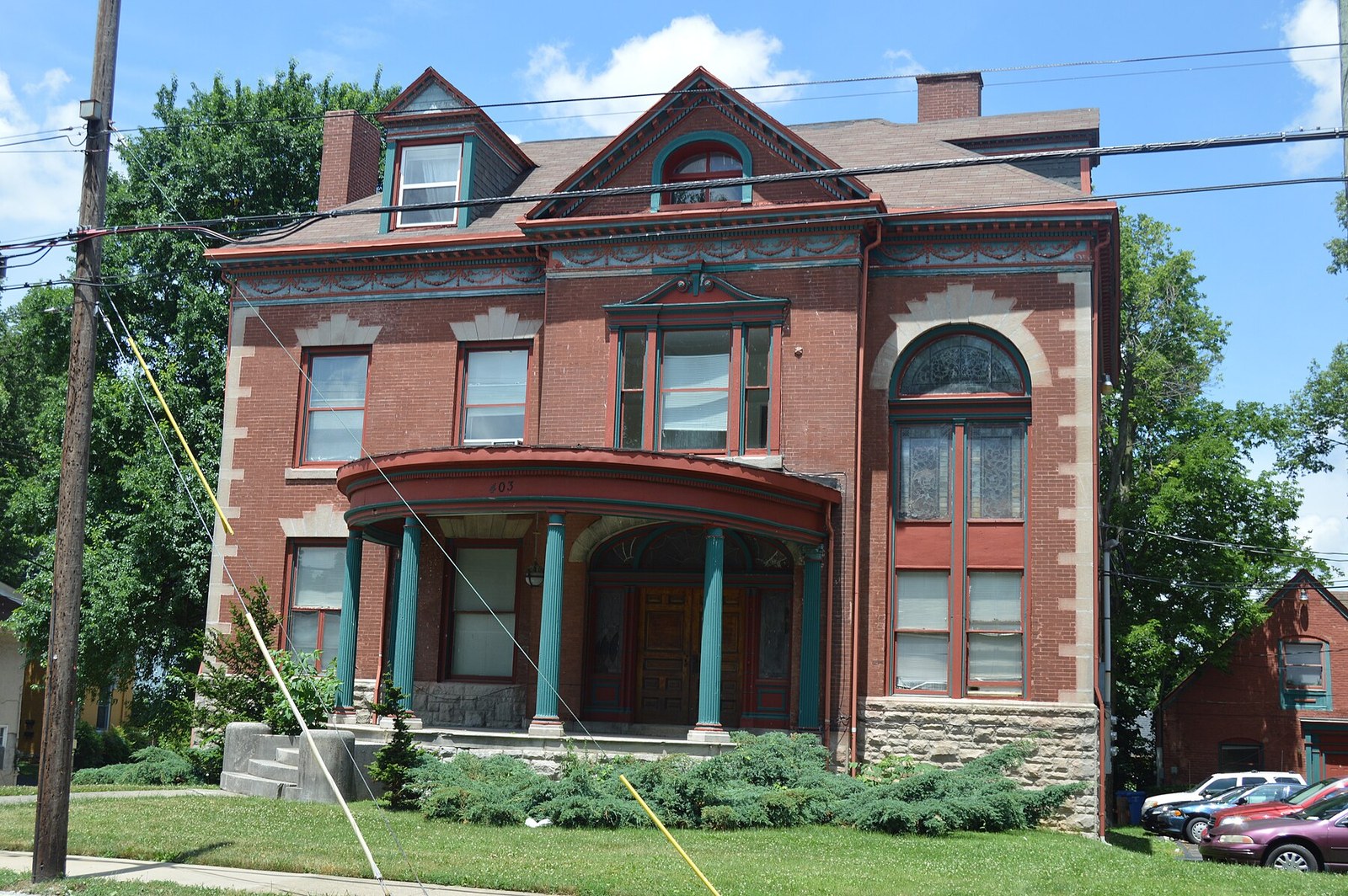
West End Historic District offers a designated historic district immediately west of downtown Greenville with a long rail and commercial history.
Discover Local CommunitiesThe official historic district is smaller than some broader uses of the West End name. Here, housing includes historic homes, apartments, condominiums, townhomes, and mixed-use infill near downtown.
Many daily and leisure trips can be made on foot or by bicycle, though parking and traffic vary during events.
Conditions can vary by street, development, and jurisdiction, so property-level due diligence remains important.
Fluor Field, Falls Park, the Swamp Rabbit Trail, museums, and performance venues are nearby. School attendance must be confirmed by address.
School note: Attendance zones, program eligibility, and transportation can change. Confirm every assignment with the district using the full property address before making a housing decision.
The West End and nearby Main Street contain a dense mix of restaurants, cafes, galleries, and shops.
The West End is the area of Greenville immediately south and west of the city center along South Main Street, and the range of West End homes for sale runs substantially to attached product, with one-bedroom condominiums recorded at a median of $560,000 and two-bedrooms at $910,000 against an all-types median of $726,747. It is Greenville's second downtown historically, and today it is the part of the city where new residential construction has concentrated alongside a working commercial district.
This market has moved sharply upward. Redfin recorded a West End median sale price of $726,747 for June 2026, up 32.1 percent year over year, which is the largest annual rise among Greenville's submarkets and stands against a city where the overall median has been recorded between $362,000 and $480,000. A property platform separately breaks the area down by condominium size, which is the more useful framing here: this is not primarily a market of houses and a median across all types blends products that a buyer would never compare.
The historical layer is genuine rather than decorative. The West End Commercial Historic District was added to the National Register in 1993 with a boundary increase in 1998, covering fifteen contributing buildings of mainly Victorian commercial architecture dating from about 1880 to 1920, around the junction of Pendleton, River, Augusta and South Main Streets. The city's own account describes the West End as established as a historic district in 1993. Whether that refers to the same listing or to a separate local designation was not established, and it determines what an owner may change.
The Andy Bovender Team serves the West End from Compass offices across the Carolinas, including Greenville, alongside Charlotte, Charleston, Columbia, Fort Mill, Lake Murray, Wilmington, and the Outer Banks. Two things follow. First, on a market weighted toward attached product, the association is a substantial part of what a buyer is purchasing and the fee, reserves, and assessment history matter as much as the price. Second, on any property in or near the historic district, establish which designation applies and over what boundary, because the National Register district is small and commercial and the area people call the West End is considerably larger.
Greenville's Second Downtown, Kept
The West End Commercial Historic District preserves fifteen contributing buildings of mainly Victorian commercial architecture from about 1880 to 1920, in what the National Register describes as Greenville's second downtown.
The City's Fastest-Rising Submarket
A median of $726,747 in June 2026, up 32.1 percent year over year, is the largest annual rise among Greenville's submarkets. Some of that reflects new product entering rather than existing property appreciating.
A Condominium Market With Real Choice
One-bedroom units have been recorded at a median of $560,000 and two-bedrooms at $910,000. For a buyer who wants downtown Greenville without a house, this is where the product is.
Walk to Everything
The West End sits immediately below the city center on South Main, which puts Main Street, Falls Park, and the downtown restaurants within walking distance in a way almost nothing else in Greenville does.
Restaurants at the Doorstep
Lefty's West End Tavern on South Main holds a 4.7 rating, with Juniper and Paloma further up the street and Soby's and Indaco toward the center. The density here is the highest of any neighborhood in this volume.
Still Being Built
New residential construction has concentrated in the West End and in West Greenville beyond it, which means current product and current systems in a historic setting. Establish what remains to be built nearby.
The West End is a mixed historic and new-build district weighted toward attached product, so what varies is building, age, and whether a property sits inside any designated boundary. Three groupings and one set of questions cover it.
New and Recent Condominium Product
The bulk of what trades in the West End is attached, and recent construction accounts for a substantial share of it, with one-bedroom units recorded around $560,000 and two-bedrooms around $910,000. On attached product the association is a large part of the purchase: establish the fee and what it covers, the reserve position, the assessment history, what any regime covers on top, and what leasing and short-term rental the building permits, which in a district adjoining a busy downtown is a question worth asking directly. On recent construction, establish what the fee becomes after builder handover and what remains to be built nearby.
Historic Buildings and Conversions
The district's older fabric is mainly commercial in origin, with fifteen contributing buildings on the National Register dating from about 1880 to 1920, and residential use in such buildings generally arrives through conversion. On a converted property, establish what the conversion did and under what permit, the condition of the original structure and envelope, and how building systems were run through a historic shell, since that is where conversions most often disappoint. Then establish the designation question: whether the building sits inside a local preservation overlay requiring a Certificate of Appropriateness for exterior work, or only inside a National Register district, which does not restrict alterations.
The Edges | Where the West End Meets Everything Else
The West End meets downtown to the north, the Augusta Street area to the east, and West Greenville to the west, and the boundaries between them are not obvious on the ground. That matters more here than elsewhere because the National Register district covers only about four acres, while the area people call the West End is considerably larger. A property may be in the West End colloquially, outside the historic district entirely, and closer in character to downtown or to West Greenville. Establish which area a specific address is actually in, which designation if any applies to it, and which comparables therefore belong.
What to Establish Before an Offer
Six questions decide a West End purchase. Which designated boundary, if any, the property sits inside, given that the National Register district is about four acres and the colloquial West End is much larger. Whether any local preservation overlay applies and what a Certificate of Appropriateness would require. On attached product, the association fee, reserves, assessment history, and what it becomes after handover. What leasing and short-term rental the building permits. On a conversion, what the conversion did and how systems were run through the original structure. And what remains to be built nearby, since construction has concentrated here.
The West End has the densest concentration of restaurants of any neighborhood in this volume, running up South Main from the district toward the city center.
Lefty's West End Tavern, at 941 South Main Street, is the district's own tavern, doing a Philly cheesesteak, sweet potato fries, wings with several sauces, a mac and cheese regulars name, and a club sandwich, with a patio and sport on the screens. Open seven days.
Juniper, at 315 South Main Street, is the more designed room, with a brisket Benedict, potato waffle, and a floral interior reviewers single out, plus a Sunday brunch. Closed Mondays and Tuesdays, dinner only except Sundays, and the entrance is easy to miss.
Paloma, at the same South Main address, covers Spanish tapas and paella with chicken and octopus skewers, a charcuterie board, and live music, with doors that open onto the street. Open seven days.
Further toward the city center, Soby's on South Main and Indaco on West Broad add a modern Southern room and an Italian one, both covered on the Greenville page. The gradient from the West End into downtown is short and the labels overlap.
The West End's advantage is that shopping and everyday life happen on foot in a way almost nothing else in Greenville manages. The district and the stretch of South Main running north into the city center carry independent shops, galleries, and services alongside the restaurants, and Main Street's full range is a short walk beyond, covered on the Greenville page. What the district carries less of is the ordinary weekly shop, so establish where the nearest supermarket is from a specific address before assuming that walkability extends to groceries. Buyers should also note that this is a working commercial district adjoining a busy downtown, and that event and evening activity is part of living here rather than an occasional feature.
The West End's own appeal is its fabric and its position. The historic commercial buildings along South Main date from about 1880 to 1920 and give the district a character the city's newer areas do not have, and the whole of downtown Greenville is a short walk north, with Main Street, Falls Park, and the city's cultural venues covered on the Greenville page. The area is also where the city has concentrated recent investment, with new residential construction and public projects nearby. A ballpark is understood to sit within the district and should be confirmed and named, because if so it shapes evenings here considerably.
Beyond the West End, the city opens in every direction. Downtown Greenville is immediately north with Main Street and Falls Park, covered on its own page, with North Main beyond it and the Augusta Street area east, both covered in this volume, and Overbrook further east. West Greenville lies west. Further out, the ring of Upstate communities including Travelers Rest, Taylors, Greer, Five Forks, Simpsonville, Mauldin, Fountain Inn, Easley, and Powdersville all have their own pages, with Anderson County beyond. The practical summary is that the West End is Greenville's second downtown, now the city's fastest-rising submarket and substantially a condominium market, with a historic district considerably smaller than the name suggests.
West End Historic District is known as downtown Greenville's arts, dining, and entertainment quarter. It centers on Fluor Field, home of the Greenville Drive minor league baseball team, and sits beside Falls Park on the Reedy and the Liberty Bridge. Former textile warehouses now hold restaurants, galleries, and music venues, and the district traces its roots to railroad and mill growth in the 1850s.
Living in West End means a walkable, urban lifestyle within steps of Main Street, the Swamp Rabbit Trail, and Unity Park. Residents reach restaurants, breweries, and ballgames on foot, with a Walk Score in the high 60s. The area draws professionals, downsizers, and investors, and includes a high share of renters alongside owner-occupied condos and townhomes.
Homes in West End span a wide range, from condos in the high $300,000s to renovated historic houses and new townhomes above $900,000. Recent vintage-home listings carried a median near $764,000. Pricing varies sharply by property type, since the district mixes single-family homes, condos, townhomes, and multi-family buildings.
West End offers early 1900s bungalows and American Foursquares, Tudor-influenced new construction, modern condominium buildings, and multi-level townhomes. Many warehouse-era structures have been adapted for residential use, and infill construction continues across the district. Options range from compact one-bedroom condos to larger restored single-family homes.
West End sits at the southern edge of downtown Greenville, South Carolina, along the Reedy River. It adjoins Main Street, Falls Park, Unity Park, and the West Greenville arts village, with St. Francis Downtown hospital and the Swamp Rabbit Trail close by. Greenville-Spartanburg International Airport is roughly 30 minutes away.

The Andy Bovender Team pairs deep Carolinas market knowledge with the reach of Compass. Expect straight answers, sharp preparation, and a process that stays simple, whether you are buying, selling, or both.