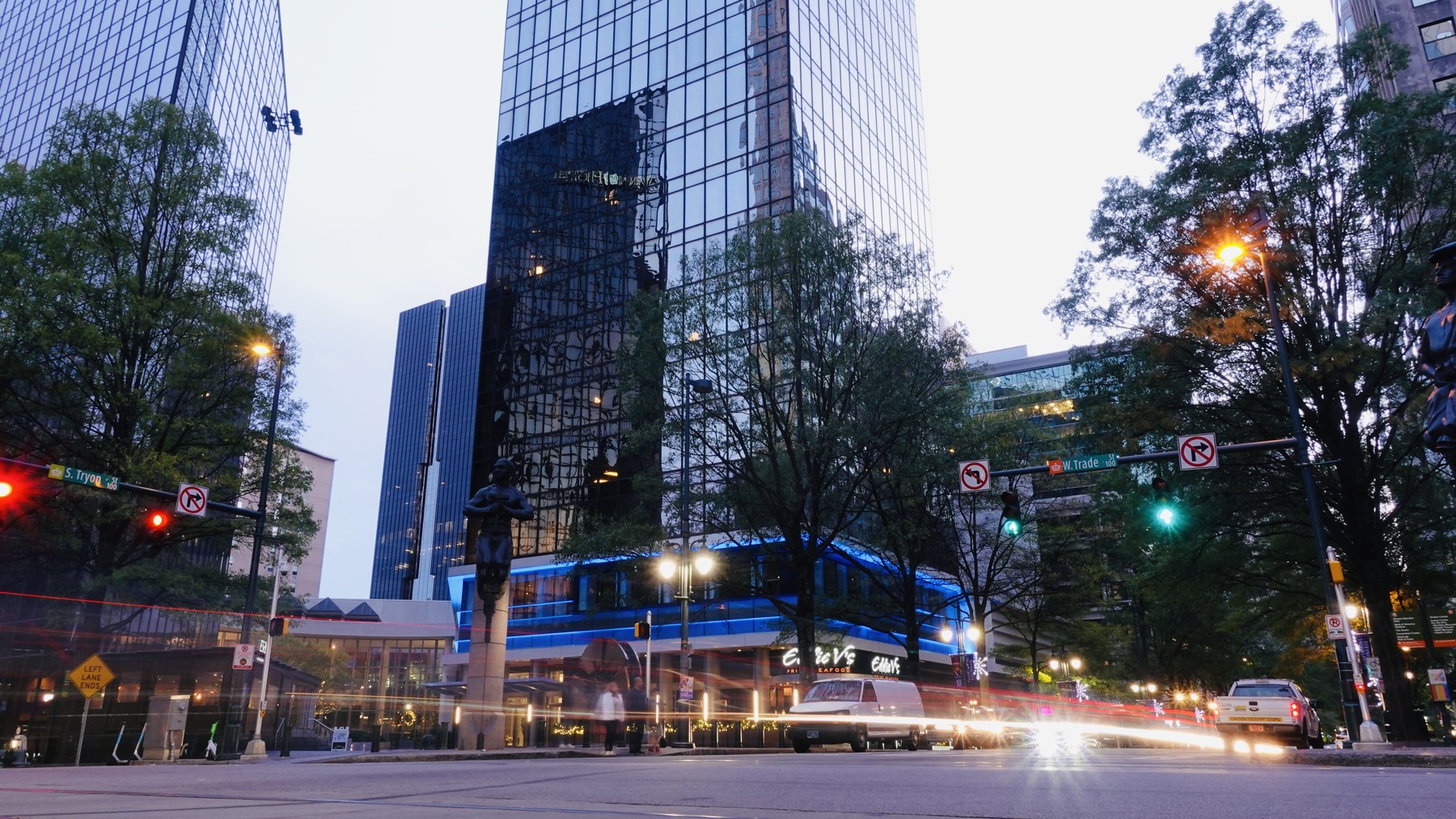
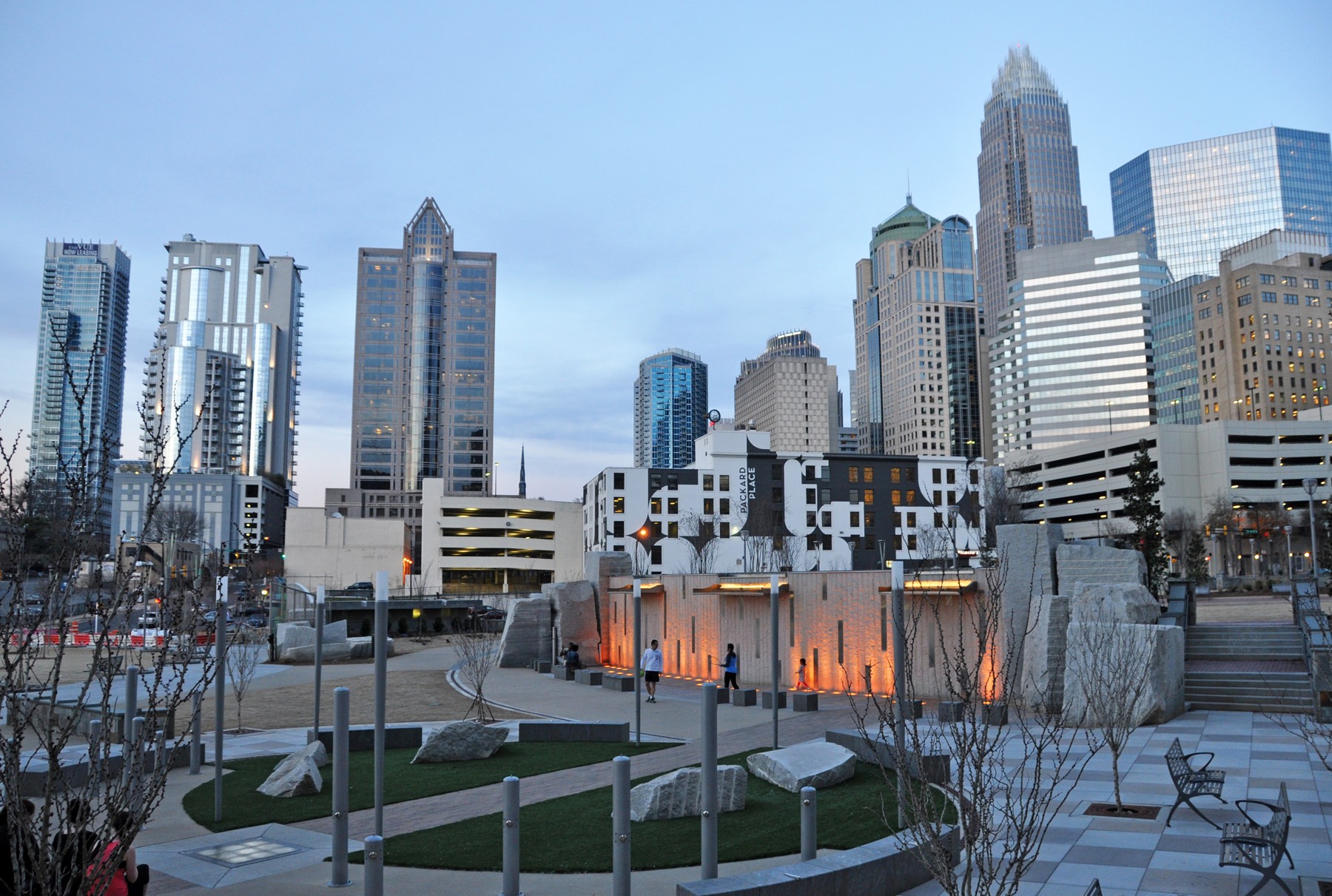
Uptown is Charlotte's central business and civic district, organized within the I-277 loop and home to major employers, government offices, museums, sports venues, transit hubs and urban residential towers.
Discover Local CommunitiesThe district is commonly divided into four wards, each with a different mix of offices, homes, institutions and public spaces. Block-level research is needed for parking, construction and immediate surroundings.
Uptown concentrates arts, sports, civic institutions, employment and transit in a compact center. The Blue Line, Gold Line and bus network connect the district with neighborhoods across Charlotte.
Walking and transit are practical for many central trips, while residents also use cars for regional travel. Activity levels differ between weekday office areas, event corridors and residential streets in the wards.
Museums, theaters, stadiums, parks and civic events provide a broad entertainment calendar. CMS home-school assignments depend on the residential address; First Ward and Piedmont are nearby district schools but not universal assignments.
Restaurants, services and entertainment are spread among Tryon Street, the wards and venue districts. Retail is more urban and dispersed than a suburban shopping center, and individual venues change regularly.
Uptown is Charlotte’s central business district and its only genuinely high-rise residential market. The range of Uptown homes for sale runs from studio condominiums near $200,000 to penthouse residences approaching $3 million. Charlotteans say Uptown rather than downtown, a habit that comes from the city center sitting on a slight ridge, and the district is divided into four wards by the crossing of Trade and Tryon streets at Independence Square. Almost everything residential here is attached: high-rise and mid-rise condominiums, converted historic buildings, townhomes, and a large apartment supply. The exception is Fourth Ward, where a block of restored Victorian houses survives a few hundred feet from thirty-storey towers.
Uptown is currently the softest resale market of any Charlotte submarket covered on this site, and a buyer or seller here needs to know that before anything else. Redfin recorded an Uptown median sale price of about $378,000 over the three months ending May 2026, down roughly 2 percent year over year, with homes taking about 91 days to sell against 62 days a year earlier. Its Redfin Compete Score sits at 25 out of 100, the lowest of any neighborhood in this project. Fourth Ward specifically showed a median near $350,000, down about 4 percent, with about 76 days on market against 54. Sales volume actually rose, with 74 Uptown closings in May against 59 a year earlier, so the slowdown is in pace and pricing rather than in demand disappearing.
At the same time, price per square foot went up. Redfin reports about $399 per square foot across Uptown, up roughly 5.5 percent year over year, and about $420 in Fourth Ward, up about 6.6 percent. A falling median alongside a rising price per square foot is a sales-mix effect rather than a valuation signal: more small units are trading and fewer large ones, which pulls the median down while the underlying per-foot value holds or rises. In a market that is almost entirely condominiums, where unit sizes range from studios to whole-floor residences inside the same building, this happens routinely and it is the single most misread number in Uptown. Building-level and floor-level comparables are the only ones that mean anything here.
The Andy Bovender Team serves Uptown from a Compass office at 4525 Sharon Road in Charlotte, as part of a footprint that also covers Charleston, Columbia, Wilmington, Fort Mill, Greenville, Lake Murray, and the Outer Banks. Two things make representation matter more in Uptown than the polished lobbies suggest. First, buying a condominium is partly buying an association, and the documents matter as much as the unit: reserve funding, the schedule of monthly dues, any special assessment history, rental caps, and what the building has deferred. Second, with about three months of days-on-market and a soft median, an Uptown seller pricing from 2025 comparables will sit, while a buyer has more room to negotiate here than anywhere else on this site.
A Two-Mile District You Can Cross on Foot
Uptown fits inside the loop formed by Interstate 277 and Brookshire Freeway, which means offices, restaurants, three professional sports venues, four museums, and the residential towers all sit within a walk of each other. It is the only part of Charlotte where a household can reasonably operate without a car.
Three Sports Venues Inside the Loop
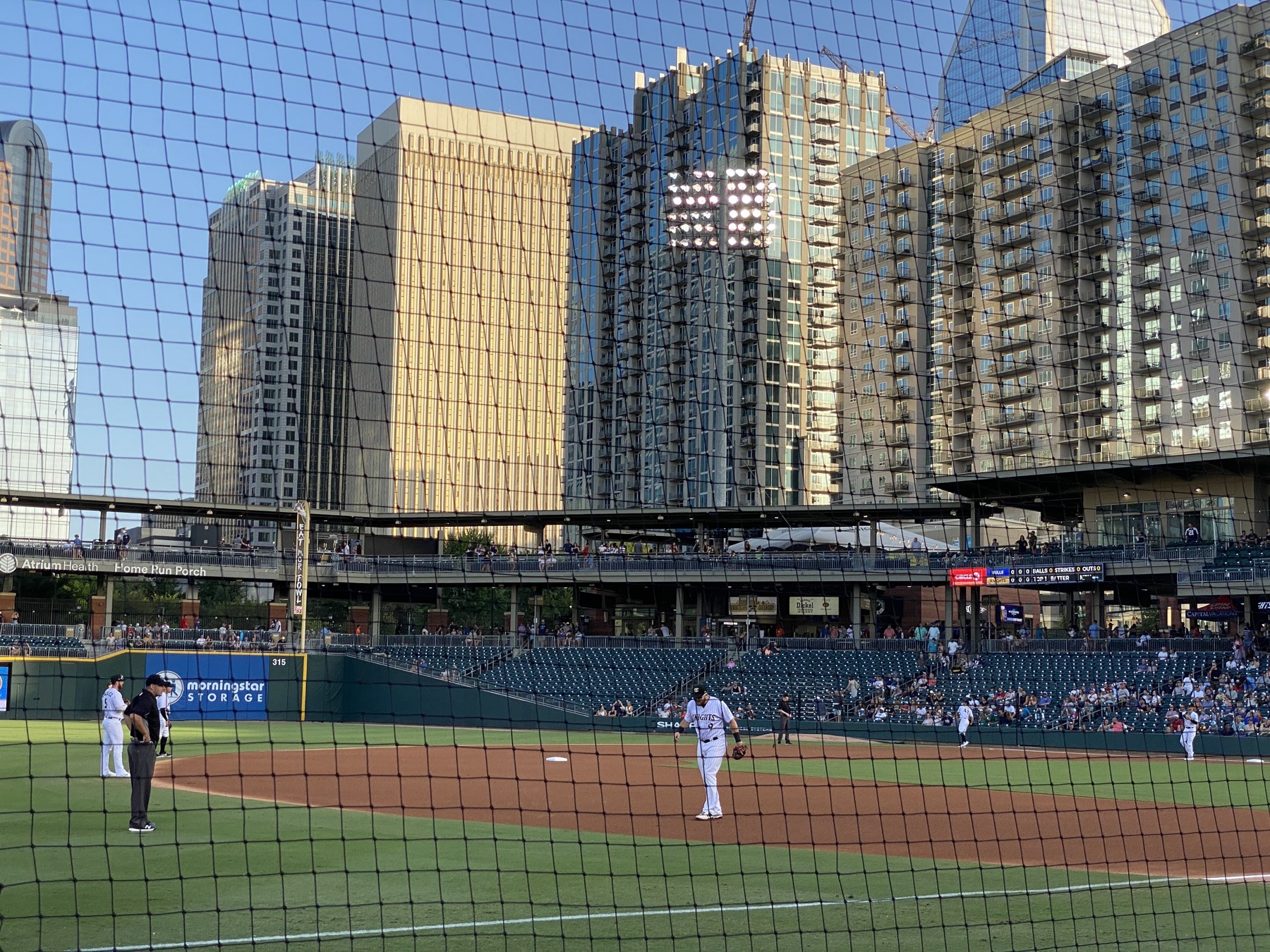
Bank of America Stadium at 800 South Mint Street, Spectrum Center at 333 East Trade Street, and Truist Field at 324 South Mint Street sit within a few blocks of each other, covering NFL and Major League Soccer, NBA and NHL-scale arena events, and Triple-A baseball. Residents walk to games rather than driving to them.
Four Museums on One Block of South Tryon
The Levine Center for the Arts groups Mint Museum Uptown at 500 South Tryon Street, the Bechtler Museum of Modern Art at 420 South Tryon, and the Harvey B. Gantt Center for African-American Arts and Culture at 551 South Tryon, alongside the Knight Theater. Discovery Place sits a few blocks north on North Tryon.
Three Distinct Public Parks
Romare Bearden Park at 300 South Church Street has open lawn, interactive fountains, and skyline views and stays open around the clock. First Ward Park at 301 East 7th Street adds playgrounds, outdoor exercise equipment, and a skate-friendly plaza. Fourth Ward Park on North Poplar Street is the quiet one, with a fountain and a paved path.
Victorian Houses Beside Thirty-Storey Towers
Fourth Ward holds a surviving block of restored late nineteenth century houses on tree-lined streets, a few hundred feet from modern high-rises. Very few American downtowns let a buyer choose between a Victorian house and a glass tower inside the same neighborhood.
The LYNX Blue Line Runs Through It
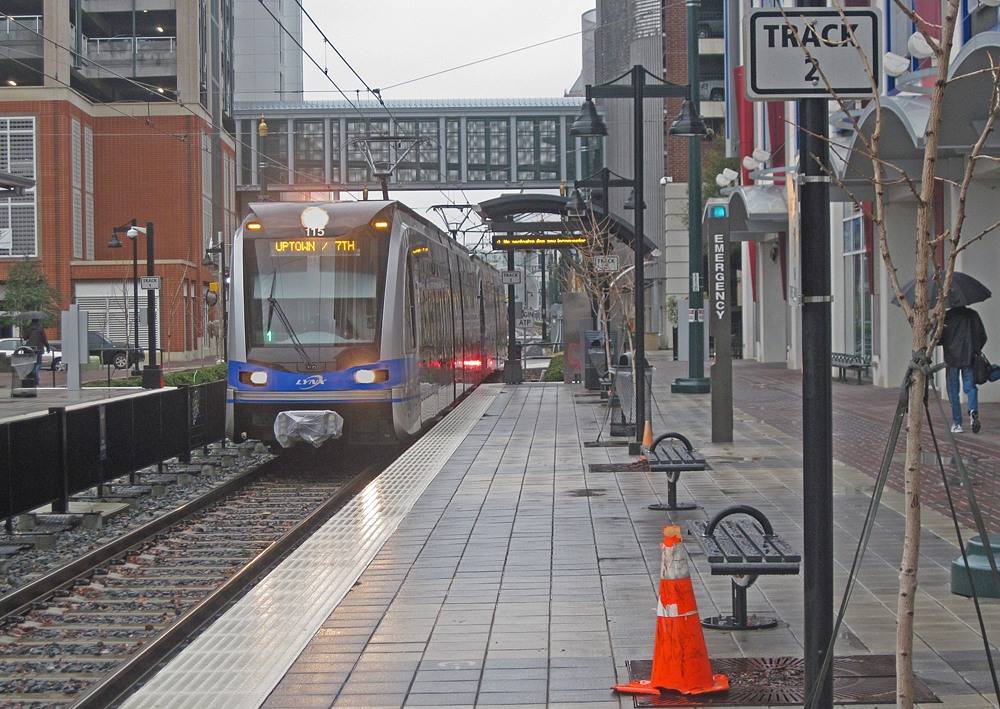
The Blue Line light rail crosses Uptown on its way from South End to the University area, with several Uptown stations, and the CATS bus network centers on the Charlotte Transportation Center at Trade Street. That transit access is a large part of why Uptown carries the price per square foot it does.
Uptown is divided into four wards by Trade and Tryon streets, and the differences between them are real: each ward has a different building stock, a different daily rhythm, and a different price tier. Knowing which ward a listing sits in explains most of the variation.
First Ward
First Ward occupies the northeastern quadrant, north of Trade Street and east of Tryon, and it is the ward that has changed most in the past two decades. First Ward Park anchors it, ImaginOn and the main library sit at its southern edge, and the UNC Charlotte Center City building and the Blue Line put students and commuters on its streets. Housing runs to newer mid-rise and high-rise condominiums, townhomes, and a heavy apartment supply, with relatively little pre-2000 inventory. It is generally the most accessible entry point into an Uptown address and the ward where new construction is most likely. Buyers should look at what is approved and under construction on adjacent parcels, because sight lines and quiet both change here faster than in the other three wards.
Second Ward
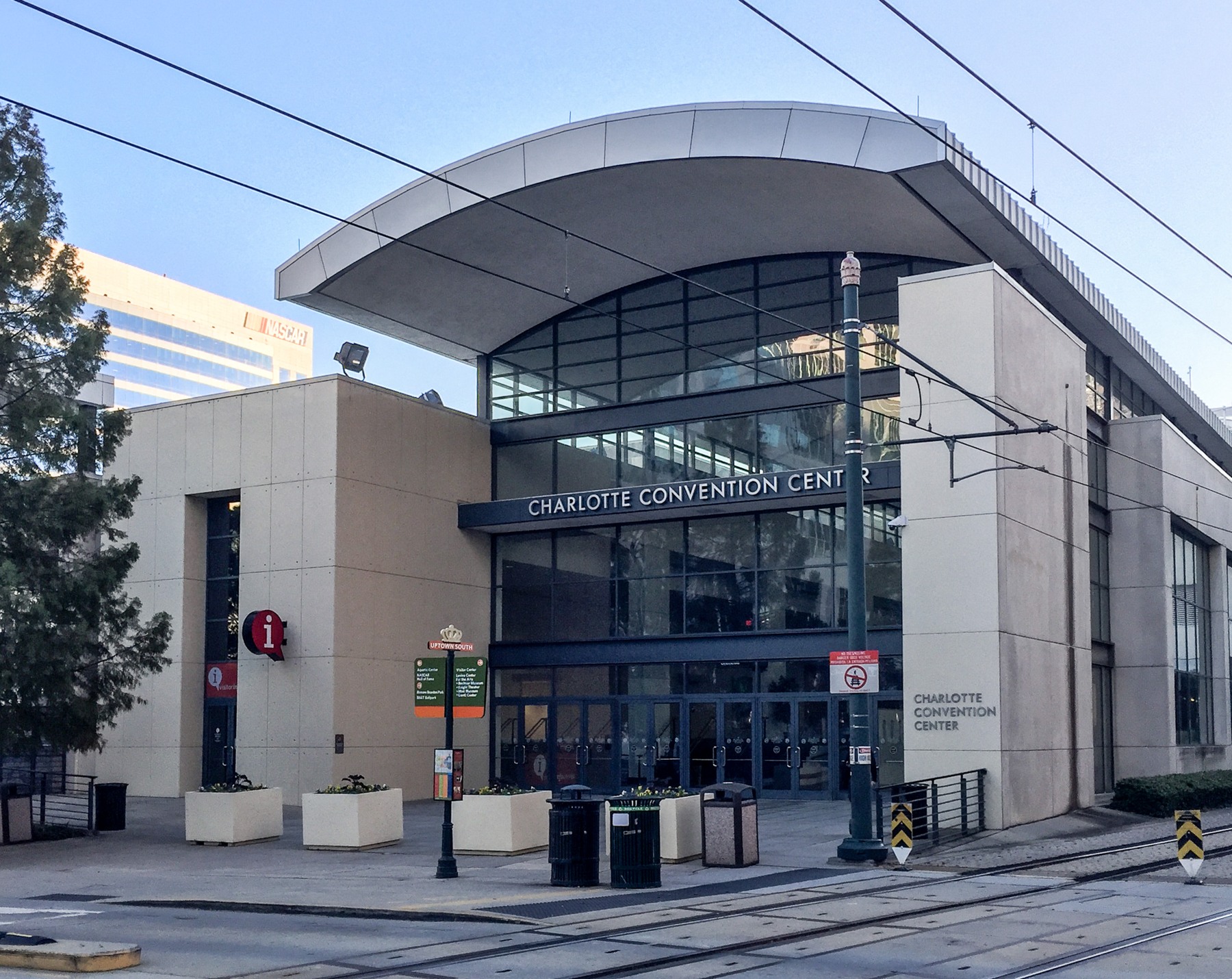
Second Ward covers the southeastern quadrant and is the cultural and civic side of Uptown, holding the government center, the Charlotte Convention Center, Spectrum Center, and the Levine Center for the Arts along South Tryon. It carries some of the most expensive residential addresses in the city, in boutique buildings where privacy rather than amenity count is the selling point, and the residential inventory is thin enough that months can pass without a comparable sale in a given building. Buyers here are typically choosing a specific building rather than a neighborhood, and the practical trade-off is event traffic: a convention, an arena show, and a museum opening can land on the same evening.
Third Ward
Third Ward is the southwestern quadrant and the sports and green-space side of Uptown, with Bank of America Stadium, Truist Field, and Romare Bearden Park all inside it, plus the Gateway Station area and the Johnson and Wales campus buildings to the west. Housing is mostly modern mid-rise and high-rise condominiums and apartments, much of it built to capture skyline and stadium views, and the ward has the most open sky of the four. The trade-off is the most obvious in Uptown: on a game or concert day the streets, the parking, and the restaurants all fill, and buyers should visit once on an event day and once on a Tuesday before deciding.
Fourth Ward
Fourth Ward is the northwestern quadrant and the only ward that reads as a residential neighborhood rather than a business district. A surviving block of restored late nineteenth century houses sits on tree-lined streets around Fourth Ward Park, with high-rise and mid-rise condominiums, converted historic buildings including a former department store, and townhomes filling the rest. It has the widest price range of any ward, running from small entry-level condominiums through the district's most significant penthouse listings, which is exactly why a ward-level median is misleading here. Redfin put the Fourth Ward median near $350,000 over the three months ending May 2026 while individual listings in the ward have been marketed above $2.9 million. Buy the building and the floor, not the ward.
Property Types Across Uptown
Four categories cover nearly everything, and all but one are attached. High-rise condominiums are the volume of the market, priced primarily on floor, exposure, and view, with amenity packages and monthly dues that vary widely between buildings on the same street. Boutique and converted-historic condominiums, concentrated in Second and Fourth Ward, are the thinnest inventory and the top of the market, bought for the building rather than the location. Townhomes, mostly in First and Fourth Ward, are the option for buyers who want a private entrance and some outdoor space inside the loop. Detached historic houses exist only in Fourth Ward and trade rarely. In all four categories the questions that decide value are the same: what the association documents say about reserves, dues, assessment history, and rental caps; what the specific unit's exposure and floor do to light and noise; whether a deeded parking space is included; and what is approved to be built next door.
Uptown's restaurants sit along the Tryon Street spine and on the cross streets between College and Church, which means most of them are a walk rather than a drive from an Uptown address.
Angeline's, at 303 South Church Street, is the Italian restaurant with the deepest following in Uptown, running breakfast, lunch, and dinner seven days and drawing steady praise for its ricotta and bread service and its chicken piccata. Reservations are worth making.
Rooster's Wood-fired Kitchen, at 150 North College Street, works a wood-fired kitchen through rotisserie, pizza, and seasonal vegetables across two floors, open seven days.
Albertine, at 525 South Tryon Street, is the newer occasion restaurant on the Levine Center block, doing Eastern Mediterranean small plates, hanger steak, and lamb. Dinner only, seven days.
Church and Union, at 127 North Tryon Street, occupies a former church with the ceiling covered in text, and covers dinner all week plus weekend and Sunday brunch.
Coquette, at 101 South Tryon Street, is the French brasserie option, open for lunch and dinner seven days with a bakery counter and patio seating across from the Bank of America tower.
Tupelo Honey, at 101 South Tryon Street, serves Southern breakfast through dinner and opens at 8 every morning, which fills a real gap in a district where much of the dining is dinner-only.
The Market at 7th Street, at 224 East 7th Street, is the food hall, holding roughly eight independent food counters plus coffee, a bottle shop, and local makers under one roof, open daily from 8. Validated garage parking is available with a purchase.
Uptown is a district built for offices rather than for shopping, and buyers should understand that before they move in. There is no mall and no department store row. What there is instead is ground-floor retail beneath the towers along North and South Tryon, a run of service businesses, coffee, and restaurants at street level and inside the overstreet walkways, and The Market at 7th Street on East 7th for prepared food, coffee, a bottle shop, and local makers. For groceries, Uptown residents rely on the stores at the edges of the district and just outside the loop rather than anything central, and a buyer should walk the specific route from a building's front door to a full-size grocery store before signing. For department stores and larger retail, the drive is to SouthPark about fifteen minutes south, and South End immediately across Interstate 277 covers independent retail, breweries, and the Rail Trail. Parking is the other daily reality: it is priced, it fills on event days, and a deeded space is worth confirming rather than assuming.
Three public parks sit inside the loop and each does a different job. Romare Bearden Park at 300 South Church Street has open lawn, interactive fountains, and the best skyline views in the city, and it hosts live music, food trucks, and festivals through the warmer months. First Ward Park at 301 East 7th Street is the active one, with two playgrounds, outdoor exercise equipment, a plaza, and restrooms. Fourth Ward Park on North Poplar Street is small, quiet, and residential, with a fountain, a play area, and a paved path through the historic block.
The cultural concentration is the other half of living here. The Levine Center for the Arts on South Tryon groups Mint Museum Uptown, the Bechtler Museum of Modern Art, the Harvey B. Gantt Center for African-American Arts and Culture, and the Knight Theater within a block, and Discovery Place sits north on Tryon. Blumenthal Performing Arts runs the Belk Theater and Booth Playhouse on North Tryon for touring productions. Bank of America Stadium, Spectrum Center, and Truist Field cover professional sport and stadium concerts. Beyond that, Little Sugar Creek Greenway runs along the eastern edge of the district for walking and cycling, and the LYNX Blue Line reaches South End, NoDa, and the University area without a car.
Center City Charlotte, also called Uptown, is known as the urban core of Charlotte, North Carolina, organized into four historic wards. It is recognized as the nation's second-largest banking center, with high-rise condos, pro sports venues, the Blumenthal arts campus and museums, hundreds of restaurants and bars, parks, and direct light-rail access.
Living in Center City Charlotte means a walkable, car-optional lifestyle in the heart of the city. Residents walk to restaurants, museums, parks, and sporting events, and commute by foot or light rail. The area draws young professionals, downsizers, and frequent travelers who want low-maintenance condo living with 24-hour amenities steps from work.
Homes in Center City Charlotte carry a median around $390,000 to $450,000, almost entirely condos and townhomes. One-bedroom units start in the $200,000s to $300,000s, most two-bedroom condos run from the $400,000s to $700,000s, and luxury units and penthouses in towers like The Vue and The Ratcliffe reach $1.2 million to $3 million or more.
Center City Charlotte is dominated by condos and townhomes, from high-rise and penthouse units to mid-rise buildings and urban lofts with exposed brick. Fourth Ward adds historic Victorian single-family homes and brownstone-style townhomes. Monthly HOA fees vary widely with building age and amenities, often covering concierge, security, and fitness facilities.
Center City Charlotte sits at the core of Charlotte, in Mecklenburg County, North Carolina, bordered by Interstates 77 and 277 and divided into First, Second, Third, and Fourth Wards. South End, Dilworth, and Plaza Midwood are just outside. The LYNX Blue Line and CityLYNX Gold Line serve the area, and students attend Charlotte-Mecklenburg Schools.

The Andy Bovender Team pairs deep Carolinas market knowledge with the reach of Compass. Expect straight answers, sharp preparation, and a process that stays simple, whether you are buying, selling, or both.