South End is a dense mixed-use district immediately south of Uptown, organized around the CATS Blue Line, Charlotte Rail Trail, adaptive reuse and growing residential and employment space.
Discover Local CommunitiesThe district's boundaries are local and planning-oriented rather than legal. Property details, parking, noise and construction conditions can vary significantly by block and should be researched at the address level.
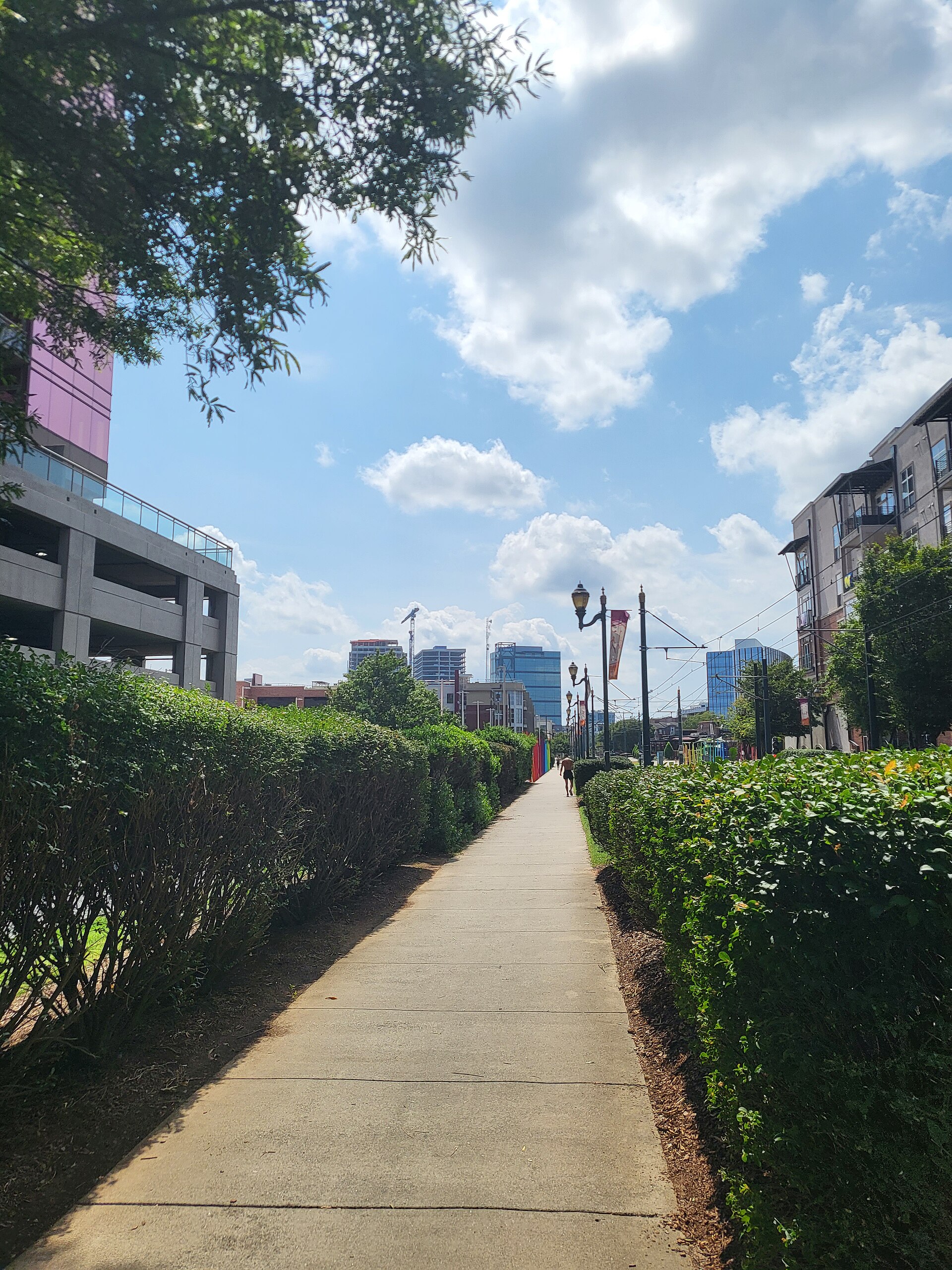
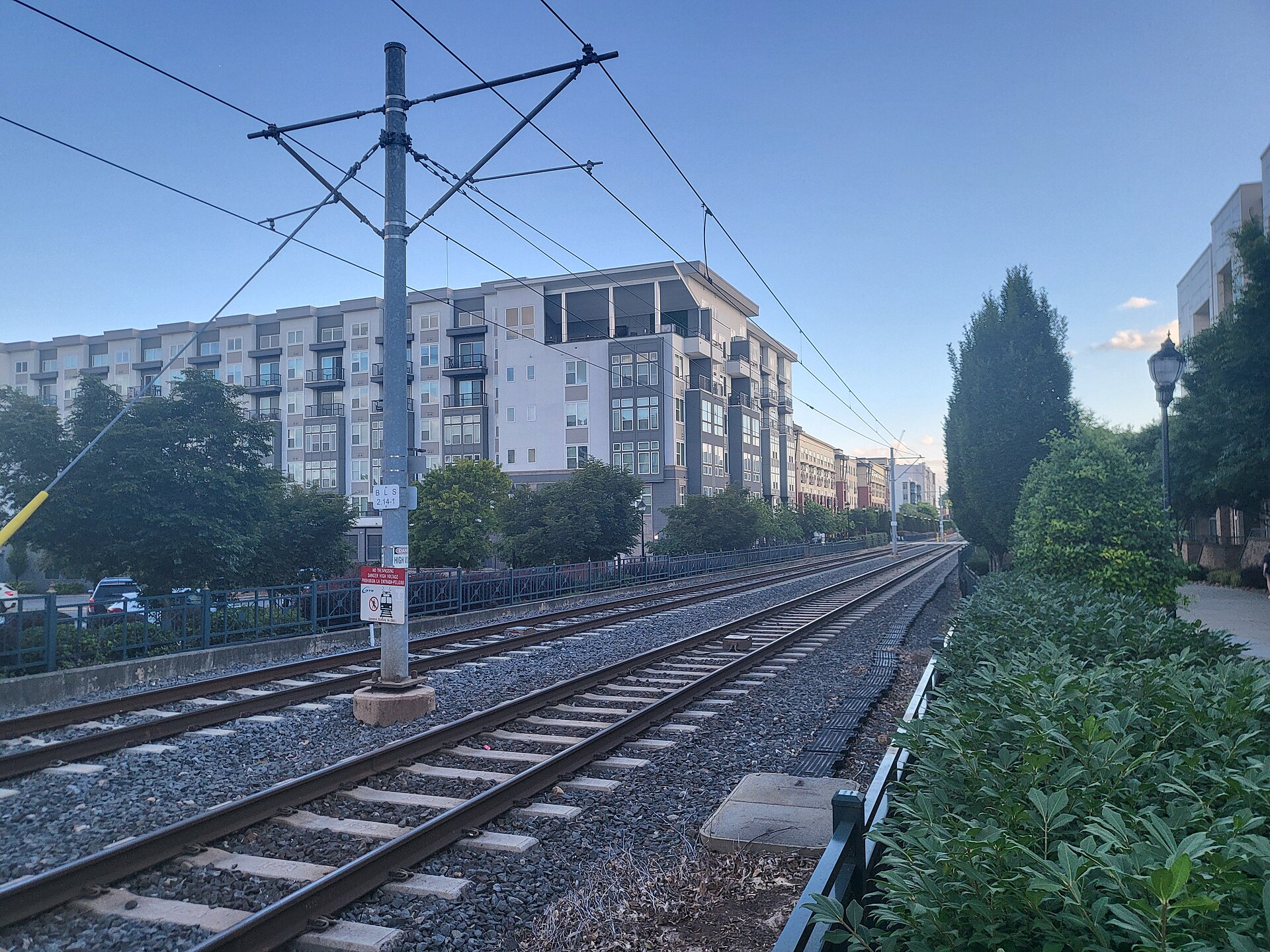
The Blue Line and Rail Trail connect homes, offices, shops, restaurants and public spaces along a compact corridor. The City is building a new bicycle and pedestrian bridge to improve the South End-Uptown connection.
Walking, cycling and transit are practical for many trips near station areas, while cars remain part of regional travel. The district is active throughout the day and evening, with frequent construction and redevelopment.
The Rail Trail, public art, events and nearby Uptown venues provide entertainment. CMS serves residential addresses in the district, but assignments must be confirmed individually; nearby schools are not necessarily zoned schools.
Restaurants, breweries, services and retail are concentrated along South Boulevard, Camden Road and nearby side streets. Because tenant turnover is common, corridor-based descriptions age better than fixed venue lists.
South End runs southwest from Uptown Charlotte along South Boulevard and the LYNX Blue Line, and the range of South End homes for sale runs from studio condominiums in the $300,000s to townhomes and lofts above $1.2 million. It was Charlotte's industrial corridor, a strip of mills, warehouses, and rail sidings serving the streetcar line out to Dilworth, and it has been rebuilt over the past two decades into the densest and newest residential district in the city. Almost everything residential here is attached. The Charlotte Rail Trail runs the length of it alongside the light rail, and that combination of transit and trail is the organizing feature of the whole neighborhood.
Two figures, both current, describe South End very differently, and understanding why matters before relying on either. Redfin recorded a median sale price of about $714,000, up roughly 3 percent year over year, at about $437 per square foot, up about 2.7 percent, with homes taking about 60 days to sell. One market summary put the median home value nearer $525,000 in the same period, noting that condominiums and townhomes dominate the inventory and that listings often move within two weeks. Both are plausible. The gap is almost certainly a product-mix effect, because a market containing studio condominiums, three-bedroom townhomes, and converted mill lofts will produce very different medians depending on which of those a given method weights.
For a buyer the practical consequence is that South End's neighborhood median is close to meaningless and the per-square-foot figure is the more useful number, because it strips out unit size. At roughly $437 per square foot, South End is among the highest per-foot markets in Charlotte, above Uptown and well above the citywide figure of about $247. That is what a buyer is actually paying for here: not space, but position on a transit line inside a walkable district. Comparables need to come from the same building or the same product type, and in a market this new that is usually possible, because there are often several near-identical units.
The Andy Bovender Team serves South End from a Compass office at 4525 Sharon Road in Charlotte, as part of a footprint that also covers Charleston, Columbia, Wilmington, Fort Mill, Greenville, Lake Murray, and the Outer Banks. Two things make representation matter here. First, buying in South End is largely buying into an association, and the documents matter as much as the unit: reserve funding, monthly dues, assessment history, rental caps, and what the building has deferred. Second, this district is still building, so what is approved on the adjacent parcel can change a unit's light, view, and noise substantially within a few years, and that is a question worth asking before an offer rather than after.
The Rail Trail Runs Through the Whole District
The Charlotte Rail Trail runs the length of South End alongside the light rail, connecting the district end to end on foot and by bike and passing restaurants, breweries, and shops along the way. It is the neighborhood's main street, and it is a trail rather than a road.
Light Rail Instead of a Car
The LYNX Blue Line runs the length of South End with several stations, connecting north into Uptown in minutes and south toward Pineville. Very few Charlotte neighborhoods make a car genuinely optional, and this is the clearest case in the city.
Charlotte's Densest Restaurant and Brewery Run
South End carries a concentration of restaurants, breweries, and bars unmatched in the city, much of it in converted industrial space along Camden Road and South Boulevard, including Flower Child, Leroy Fox, Naked Farmer, and Legion at the Trolley Barn. Most of it is walkable from most of the district.
Converted Mills and Warehouses
The neighborhood's industrial past survives in converted mill and warehouse buildings now holding restaurants, retail, and lofts, including Atherton Mill on the Dilworth edge and the Trolley Barn. Buyers get genuine industrial architecture in a district that is otherwise almost entirely new construction.
A Mile From Uptown Without Being In It
South End begins immediately across Interstate 277 from Uptown, close enough to walk to the central business district while keeping its own street life, its own restaurants, and considerably more of them than Uptown has. For a household working Uptown, it is the shortest commute available with a neighborhood attached.
Newer Housing Than Anywhere Else Close In
Almost all of South End's residential stock has been built in the past two decades, which means modern layouts, systems, and building standards in a district a mile from Uptown. Buyers who want current construction rather than a century-old house have very few alternatives this close to the center.
South End is long and narrow, organized along the rail corridor, so the useful distinction here is how far along it a building sits and what kind of building it is. Four positions behave differently.
The Uptown End
The northern end of South End, closest to Interstate 277 and the Uptown skyline, is the densest and most recently built part of the district. Product runs to mid-rise and high-rise condominiums and apartments, with ground-floor retail and restaurants beneath much of it, and it carries the shortest walk into the central business district of anywhere in the neighborhood. This is where a buyer working Uptown gets the closest thing to a car-free arrangement in Charlotte. The trade-offs are the ones that come with density: construction activity on adjacent parcels, evening noise from the ground-floor bars, and views that can change. Ask what is approved next door, and look at which floor and which exposure a specific unit has rather than which building it is in.
The Camden Road Corridor
Camden Road runs parallel to the rail corridor through the middle of the district and carries much of South End's restaurant and retail activity, with the Rail Trail alongside it. Housing here mixes newer condominiums and apartments with townhomes on the streets behind, and it is the most walkable ground in the neighborhood, with the highest density of places to go within a few minutes. It is also the busiest, particularly at weekends, and street parking is genuinely difficult. For a buyer who wants South End for what it offers rather than for the Uptown commute, this is the position, and the practical question is how many floors up from the activity a unit sits.
The Converted Industrial Buildings
Scattered through the district, surviving mill and warehouse buildings have been converted to lofts, restaurants, and retail, and they are the only genuinely old residential product in South End. Lofts in these buildings carry exposed brick, timber, and high ceilings that new construction does not replicate, and they trade on character rather than on amenity packages. They also carry the diligence profile of century-old industrial structures adapted to residential use, which is a different exercise from buying a 2019 condominium: window and envelope performance, insulation, mechanical retrofits, and what the conversion actually did to the structure all matter. Read the building documents carefully and get a surveyor who has looked at conversions before.
The Southern End Toward Woodlawn
Running southwest along South Boulevard, the district thins out and the character changes. Buildings are generally newer and lower, there is more surface parking, the Rail Trail continues but the density of destinations falls away, and prices are correspondingly more accessible. What a buyer gains here is more space for the money and easier parking while keeping light rail access. What a buyer accepts is that this end is less walkable in practice, with longer distances between things, and that it is still developing, so the character of a given block may change substantially. It is the position for a buyer who wants the transit and the price rather than the street life.
Property Types Across South End
Four categories cover the district and all but one are attached. Mid-rise and high-rise condominiums, mostly from the past two decades, are the volume of the market and are priced primarily on floor, exposure, and building amenity. Townhomes, concentrated on the streets behind the main corridors, are the option for buyers who want a private entrance and some outdoor space. Converted mill and warehouse lofts are the character stock, the thinnest inventory, and the most variable in condition. Apartments make up a large share of the district's buildings and shape its character even though they are not for sale. Across all four, the questions that decide value are the same: what the association documents say about reserves, dues, assessment history, and rental caps; what floor and exposure a specific unit has; whether a deeded parking space is included; and what is approved to be built on the adjacent parcel.
South End has more restaurants per block than anywhere in Charlotte, concentrated along Camden Road and South Boulevard and mostly reachable on foot from the Rail Trail.
Flower Child, at 1537 Camden Road, does bowls, salads, and wraps with an unusually deep vegetarian and vegan range, sitting right beside the Rail Trail with indoor and outdoor seating. Open seven days.
Naked Farmer, at 2725 South Boulevard, works locally sourced bowls and plates cooked without seed oils, which is a genuine differentiator in this market. Open seven days with a break between lunch and dinner service.
Leroy Fox, at 1616 Camden Road, is the larger casual option, covering fried chicken, pimento chicken sandwiches, truffle fries, and brunch bowls, open seven days. Parking is validated for a limited period, so check before you stay.
Legion at the Trolley Barn, at 2104 South Boulevard, is a brewery and kitchen in a converted trolley barn, doing house beer alongside gyros, wings, and barbecue with a large indoor and outdoor space. Open seven days.
Salted Melon Market and Eatery, at 100 West Worthington Avenue, is a market and restaurant with a strong gluten-free range, opening at 7 on weekdays for breakfast and running through to evening. Open seven days.
South End's retail is organized along the Rail Trail and the corridors beside it, which makes it the most walkable shopping district in Charlotte outside Uptown. Camden Road and South Boulevard carry independent retail, design and home shops, fitness studios, coffee, and services at ground level beneath the residential buildings, alongside the restaurants and breweries. Atherton Mill on the Dilworth edge adds converted mill retail, and it is described on the Dilworth page. For groceries, several stores serve the district directly, which is unusual for a neighborhood this dense in Charlotte and is one of the practical reasons a car is genuinely optional here. For department stores and larger retail, SouthPark is about ten minutes south and covered on its own page in this volume, and Uptown is immediately north across Interstate 277. Buyers should note that street parking is difficult throughout the district and that a deeded space is worth confirming rather than assuming.
The Charlotte Rail Trail is the center of life in South End, running the length of the district alongside the light rail and connecting it end to end for walking, running, and cycling, with restaurants, breweries, shops, and public art along its route. It functions as the neighborhood's main street and it is the single feature that most defines living here. Beyond it, South End carries Charlotte's densest concentration of breweries and taprooms, many in converted industrial buildings, and the district's evening life runs on them rather than on formal venues.
For everything else, South End's position does the work. Uptown sits immediately north across Interstate 277, within walking distance and two minutes on the Blue Line, carrying the Levine Center museums, three professional sports venues, and the major performance halls, all covered on its own page. Freedom Park and the Little Sugar Creek Greenway sit a short distance east in Dilworth, covered on that page. The Blue Line runs south toward Pineville and north through Uptown to the University area without a car. Charlotte Douglas International Airport is roughly fifteen minutes west.
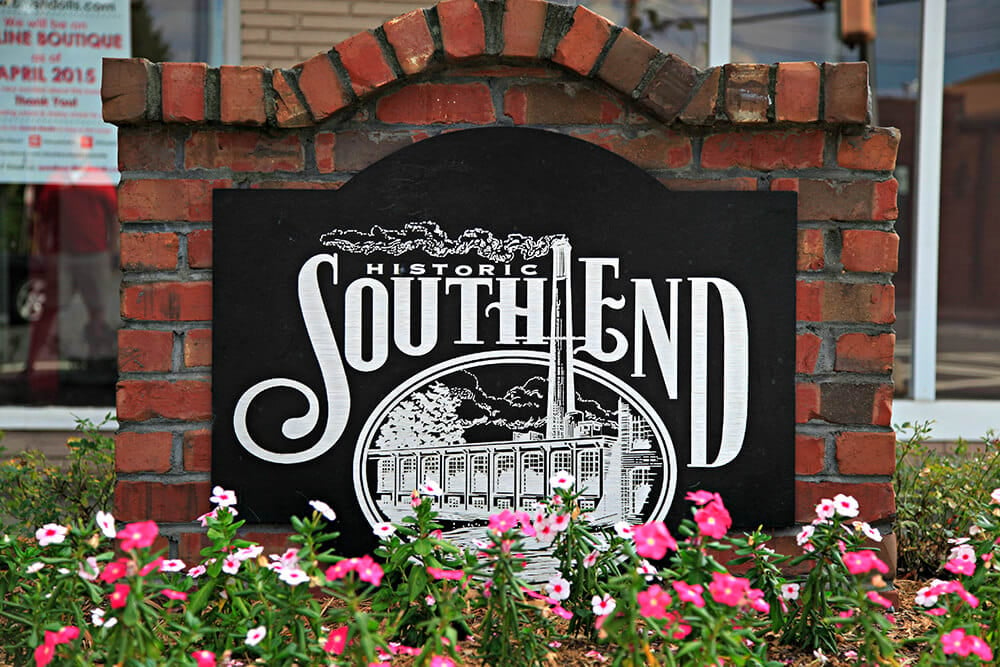
South End is known as one of Charlotte's most walkable and in-demand urban districts, just southwest of Uptown in Mecklenburg County, North Carolina. A former warehouse and rail district, it is recognized for the LYNX Blue Line light rail, the Rail Trail, breweries and restaurants, Atherton Mill, art installations, and a car-optional lifestyle close to the city center.
Living in South End centers on walkability and energy. Residents reach restaurants, breweries, coffee shops, fitness studios, and shops on foot, and the Rail Trail and light rail connect to Uptown and Dilworth without a car. The area skews toward young professionals, with strong rental demand. It trades suburban quiet for one of Charlotte's most active urban settings.
Homes in South End carry a median around $525,000 to $565,000. Condos and townhomes, which make up most of the housing, run from the $300,000s to around $520,000, while the limited single-family homes near the neighborhood edges reach $1 million or more. Rents are strong, often $2,200 to $2,600 a month.
South End is dominated by condos and townhomes, from converted loft-style units to sleek new high-rises, along with rowhomes and apartments. Single-family homes exist only in limited pockets near the edges and tend to sell quickly. New construction has been heavy, giving buyers many modern, low-maintenance, lock-and-leave options close to Uptown.
South End sits just southwest of Uptown Charlotte, in Mecklenburg County, North Carolina, along the LYNX Blue Line and the Rail Trail. Dilworth and Wilmore are next door, Uptown is minutes away, and Interstates 77 and 277 are close. Students attend Charlotte-Mecklenburg Schools, including Dilworth Elementary at the Latta Campus and Myers Park High.

The Andy Bovender Team pairs deep Carolinas market knowledge with the reach of Compass. Expect straight answers, sharp preparation, and a process that stays simple, whether you are buying, selling, or both.