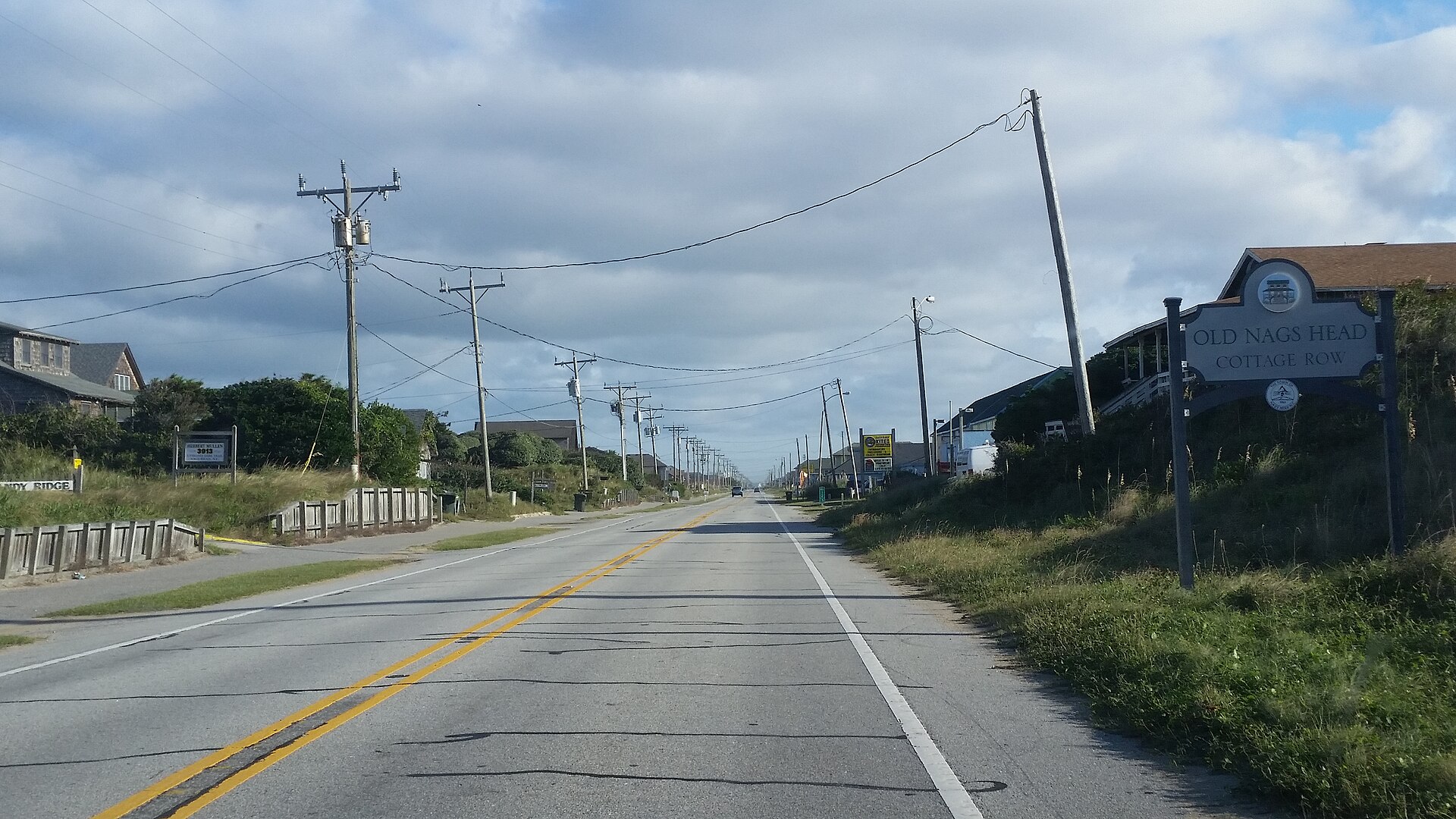
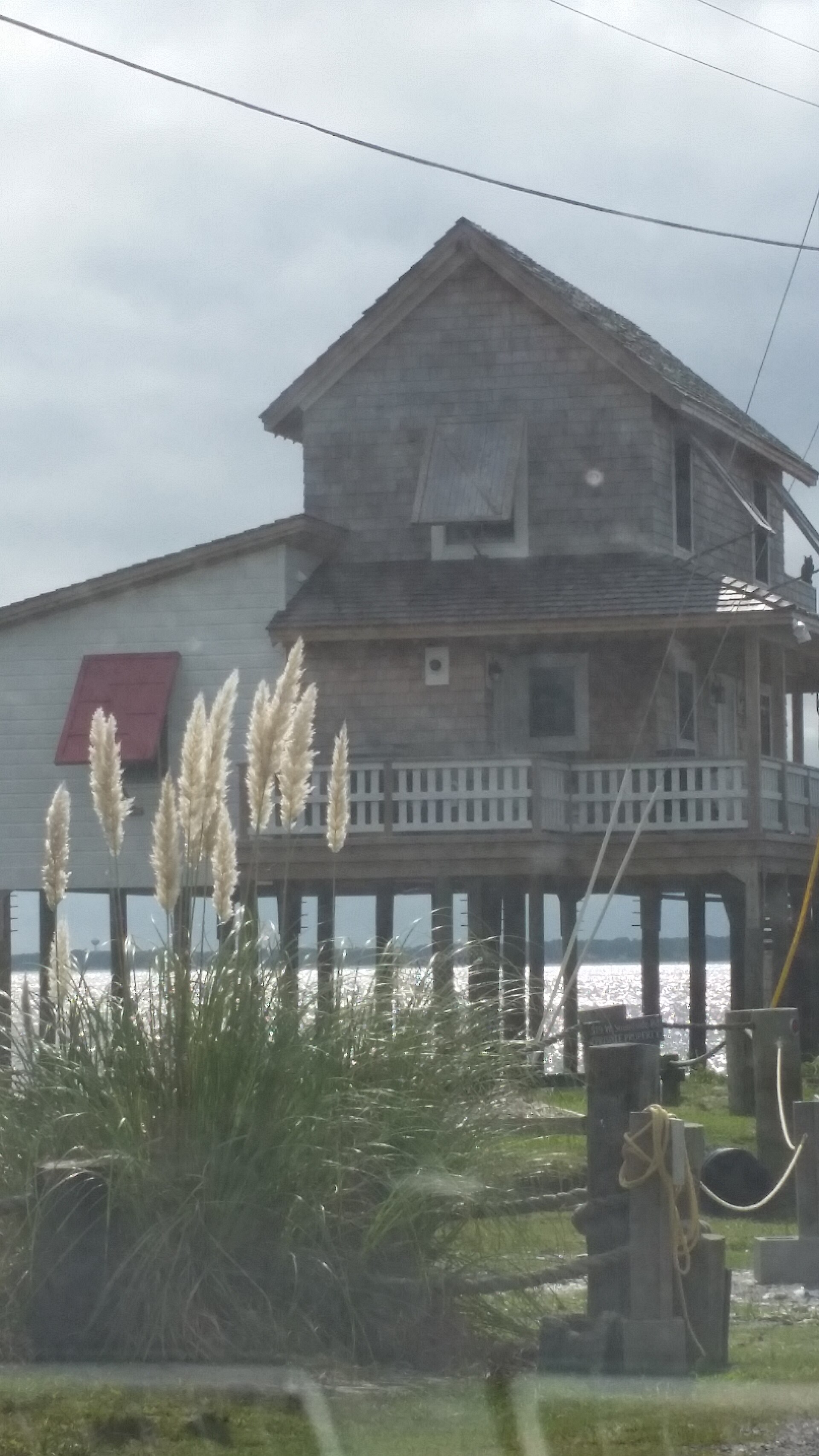
Nags Head is a central Outer Banks town stretching between Atlantic beaches, Roanoke Sound and the dunes of Jockey's Ridge.
Discover Local CommunitiesThe town combines historic cottage areas, year-round neighborhoods and visitor-oriented corridors. Storm access, flood zones, shoreline conditions and rental rules should be reviewed for each property.
Beach use, paddling, fishing and cycling are prominent, with US 158 and NC 12 supporting most travel. Seasonal traffic and parking can change the pace substantially.
Jockey's Ridge State Park and Dowdy Park are major public recreation anchors.
Dare County Schools serves Nags Head. Confirm current attendance and transportation for the exact street address with the district.
Dining, groceries and services line US 158 and NC 12, with options extending north into Kill Devil Hills and south toward Manteo connections.
Nags Head sits on the Outer Banks in Dare County, North Carolina, a narrow barrier island town running about eleven miles between the Atlantic and Roanoke Sound, and the range of Nags Head homes for sale runs from cottages around $350,000 to oceanfront property above $3 million. It is one of the oldest resort communities on the East Coast, with the Beach Road running behind the dune line, the bypass carrying the through traffic, and a housing stock that spans weathered cottages, substantial rental houses, and newer construction. It is a long drive from anywhere: roughly ninety minutes from Norfolk and well over three hours from Raleigh.
Published prices here disagree more sharply than in almost any market covered on this site. Redfin recorded a March 2026 median of about $1.1 million, up 50.9 percent year over year, at about $422 per square foot, on nine sales against twenty-four the year before. Zillow's home value index sat near $680,900 and up 1.6 percent. One data platform gave a median listing price of $699,900 for the ZIP code, and another put the median value near $490,800. Those four figures span more than $600,000 and they cannot all describe the same market.
The explanation is in the sales count. Nine transactions in a month, down from twenty-four, is a very thin sample, and on a barrier island where an oceanfront house and an inland cottage can differ by a factor of eight, the median simply reports which nine closed. A 50.9 percent rise on nine sales is arithmetic. What is more telling is the volume itself: transactions fell by roughly 62 percent year over year in that reading, which is a market that has slowed considerably rather than one that has appreciated by half. One platform also indicated that a substantial share of the ZIP code's residential properties were listed for sale, which if accurate points the same way.
The Andy Bovender Team serves Nags Head from a Compass presence on the Outer Banks, alongside offices in Charlotte, Charleston, Columbia, Wilmington, Fort Mill, Greenville, and Lake Murray. Two things make local knowledge essential here. First, with figures this unreliable, pricing depends entirely on comparables matched by position and product rather than on any published median, and on this island position means oceanfront, ocean side, bypass, or sound side. Second, a large share of the housing here operates as vacation rental, which means rental history, management arrangements, and projected income are part of the valuation in a way they are not in a primary-residence market.
Ocean on One Side, Sound on the Other
Nags Head is narrow enough that most of the town sits within a few minutes of both the Atlantic and Roanoke Sound. That gives buyers two entirely different waterfronts, two different price tiers, and sunrise and sunset within a short walk of each other.
A Restaurant Scene With Real Depth
Blue Moon Beach Grill, Tortugas Lie, Fish Heads on the pier, and Shaka's between them carry more than twelve thousand reviews at high averages. For a barrier island town, that is an unusually strong and unusually well-established list.
Jockey's Ridge and the Tallest Dune on the East Coast
Jockey's Ridge State Park occupies a large active dune system in the middle of the town, used for hang gliding, kite flying, and sunset walking, and it is the single most distinctive natural feature of any market covered on this site.
Buyers Have the Advantage Right Now
Transactions in one recent month ran at roughly a third of the prior year's level, which on a market this size means sellers are competing for a smaller pool. Buyers have time, choice, and negotiating room that this island has not offered recently.
A Rental Market Built Over Decades
The Outer Banks has one of the longest-established vacation rental economies on the East Coast, with professional management infrastructure to match. For a buyer intending to let, that means an existing booking market rather than one to build from scratch.
The Beach Road and the Old Cottages
The Beach Road behind the dune line carries a run of weathered shingled cottages, some of them among the oldest beach houses on the Outer Banks. It is a genuinely historic beach streetscape rather than a rebuilt one.
A barrier island town this narrow organizes itself in strips running north to south. Four positions cover Nags Head and the difference between them is most of the price.
Oceanfront and Semi-Oceanfront
Property on the ocean and immediately behind it is the top of the Nags Head market and the core of its rental economy, since ocean position drives both sale price and weekly rate. Product runs to substantial raised houses built for letting, with multiple bedrooms, pools, and decks, alongside older cottages on original lots. Price is set by position rather than square footage, and the difference between true oceanfront, semi-oceanfront, and ocean side is substantial. Two diligence items are specific to this island. Establish the erosion and beach nourishment position for that stretch, which on the Outer Banks is an active and expensive question. And if rental income matters, obtain the actual booking history rather than a projection.
The Beach Road
The Beach Road running behind the dune line carries the town's oldest and most distinctive housing, including a run of weathered shingled cottages that predate most of the Outer Banks' development. Product here trades on character and proximity to the sand rather than on modern specification, and it is generally more accessible than true oceanfront while sitting closer to the water than the bypass side. What a buyer accepts is the diligence profile of old beach housing in a high-exposure environment: structure, envelope, elevation, storm history, and what previous repairs actually did. Establish whether a property sits within any historic designation, because that would affect what may be altered.
The Bypass and Central Corridor
The bypass carries the town's through traffic and most of its commercial development, with residential streets running off it on both sides. Housing here is the most accessible in Nags Head, running to cottages, mid-century houses, and newer construction on standard lots, and it is where a buyer gets an island address without an ocean or sound premium. The trade-offs are the ones any arterial produces: traffic noise varies considerably with lot depth and orientation, and summer weekend traffic on the bypass is a defining feature of life here. It is also the most practical position for a primary residence rather than a rental, since it sits closest to the town's shops and services.
The Sound Side
The western edge of the town faces Roanoke Sound, offering water frontage, dock potential in places, sunset views, and generally calmer water than the ocean side. Product runs from cottages to substantial houses depending on frontage, and sound-front property typically trades below equivalent oceanfront while still carrying a water premium. For a buyer who wants a boat, a paddleboard, or a sunset rather than surf, this is the position and it is frequently overlooked. Establish dock permit status and water depth where relevant, and understand that sound-side rental rates generally run below oceanfront, which matters if income is part of the calculation.
Property Types Across Nags Head
Four categories cover the town. Large purpose-built rental houses, concentrated oceanfront and semi-oceanfront, are the top of the market and are valued partly on income. Older cottages along the Beach Road and through the town are the character stock and the most exposed to weather and age. Conventional houses on the bypass side and inland are the volume of the market and the most accessible. Sound-front property is the overlooked water position. Across all five questions decide value here: the exact water position and what it commands in both sale price and weekly rate, rental history and management arrangements where income matters, erosion and nourishment status for that stretch of beach, elevation certificate and base flood elevation for the parcel, and insurance cost with its five-year trend.
For a barrier island town, Nags Head has an unusually deep and unusually established restaurant list, spread along the Beach Road and the bypass.
Blue Moon Beach Grill, at 102 East Dove Street, is the town's most reviewed room, working seafood, jerk barbecue, fish tacos, and a lemon cake regulars come back for, in a space full of collected oddments. Closed Tuesdays, and reservations are wise.
Tortugas Lie, at 3016 South Virginia Dare Trail, is the long-standing Caribbean-influenced kitchen, doing fish tacos, crab and artichoke dip, and fresh catch, with a back bar and live music. Closed Sundays.
Fish Heads Bar and Grill, at 8901 South Old Oregon Inlet Road, sits on the pier itself with tuna sandwiches, crab cake sandwiches, and ocean views from every seat. Closed Mondays and Tuesdays, so check before setting out.
Shaka's Beach Bar and Grill, at 2217 South Croatan Highway, covers shrimp tacos, sushi stacks, Huli Huli chicken, and short ribs with a large outdoor area and live music. Open seven days.
Nags Head shops along the bypass, which carries the grocery stores, pharmacies, hardware, beach supply, restaurants, and services that keep the town running year-round, alongside the seasonal retail that serves visitors. That provision is better than most barrier island towns manage and it means daily life does not require leaving the island. The Beach Road adds smaller independent shops and the older commercial fabric. For a wider run, Kill Devil Hills and Kitty Hawk sit immediately north along the island with further retail, and the mainland is across the bridges. Buyers should understand two things about the rhythm here. Summer traffic on the bypass is substantial and it is the defining seasonal feature of the town. And a meaningful share of the retail operates seasonally, so the winter offer is materially thinner than the summer one, which is worth experiencing before committing.
The beach runs the length of the town with public access points along the Beach Road, and the ocean is the reason the place exists. What makes Nags Head unusual among beach towns is Jockey's Ridge State Park, a large active dune system in the middle of the town that is used for hang gliding, kite flying, sandboarding, and sunset walking, and which has no equivalent in any other market covered on this site. On the sound side, the shallow water supports kayaking, paddleboarding, kiteboarding, and fishing, and the sunsets over Roanoke Sound are the local counterpart to the sunrise over the Atlantic.
Beyond the town, the Outer Banks runs north and south from here. Kill Devil Hills and Kitty Hawk sit immediately north with the Wright Brothers site, Duck and Corolla further up the island, and Cape Hatteras National Seashore stretches south beyond Oregon Inlet with some of the least developed beach on the East Coast. Roanoke Island and Manteo lie across the sound to the west. Norfolk is roughly ninety minutes north for the nearest major airport, and Raleigh is over three hours inland. The practical summary is that Nags Head is a long way from a city and immediately adjacent to a great deal of coast.
Nags Head is known as one of the oldest and most established beach towns on North Carolina's Outer Banks, set on a barrier island between the Atlantic and Roanoke Sound. It is recognized for miles of wide Atlantic beaches, Jockey's Ridge State Park with the tallest natural sand dunes in the eastern United States, Jennette's Pier, the Nags Head Golf Links, and a long line of historic beach cottages.
Living in Nags Head pairs a relaxed beach-town pace with a strong outdoor focus. Residents surf, fish, kayak the sound, hang glide at Jockey's Ridge, and gather at the many restaurants along the bypass. The town mixes year-round residents with second-home owners and vacation rentals. Groceries and services are close, while the quieter feel of South Nags Head sits just down the beach.
Home prices in Nags Head span a wide range and the small market can swing year to year. Condos and co-ops start lower, often from the $150,000s to $300,000s, single-family cottages and homes commonly run from the $400,000s, and oceanfront homes reach well over $1 million. Recent medians have ranged roughly $700,000 to $1.1 million depending on the mix of sales.
Nags Head offers classic and updated beach cottages, oceanfront and soundfront homes, contemporary coastal houses, condos, duplexes, and co-ops. Communities include the Village at Nags Head around the golf course, Nags Head Cove with deep-water canals, and the all-residential South Nags Head. Building lots are also available, from soundside parcels to prime oceanfront sites.
Nags Head sits on the central Outer Banks in Dare County, North Carolina, between the Atlantic Ocean and Roanoke Sound. Kill Devil Hills and Kitty Hawk are just north, Cape Hatteras National Seashore lies to the south, and the Wright Brothers National Memorial and Bodie Island Lighthouse are nearby. Students attend Dare County schools, and flood insurance is required for most oceanside homes.

The Andy Bovender Team pairs deep Carolinas market knowledge with the reach of Compass. Expect straight answers, sharp preparation, and a process that stays simple, whether you are buying, selling, or both.