Greer offers a growing Upstate city with a revitalized downtown and municipal territory in both Greenville and Spartanburg counties.
Discover Local CommunitiesThe city lies between Greenville and Spartanburg near major employment and transportation corridors. Here, housing ranges from traditional in-town neighborhoods to subdivisions, townhomes, apartments, and new construction.
Residents can enjoy local downtown events and parks while using I-85 and Wade Hampton Boulevard for regional trips.
Conditions can vary by street, development, and jurisdiction, so property-level due diligence remains important.
City parks, community events, and nearby Upstate recreation add variety. Because Greer spans two counties, the listed Greenville County schools apply only to verified Greenville County addresses.
School note: Attendance zones, program eligibility, and transportation can change. Confirm every assignment with the district using the full property address before making a housing decision.
Trade Street and nearby corridors provide local restaurants and shops, with larger retail available throughout the east Greenville area.
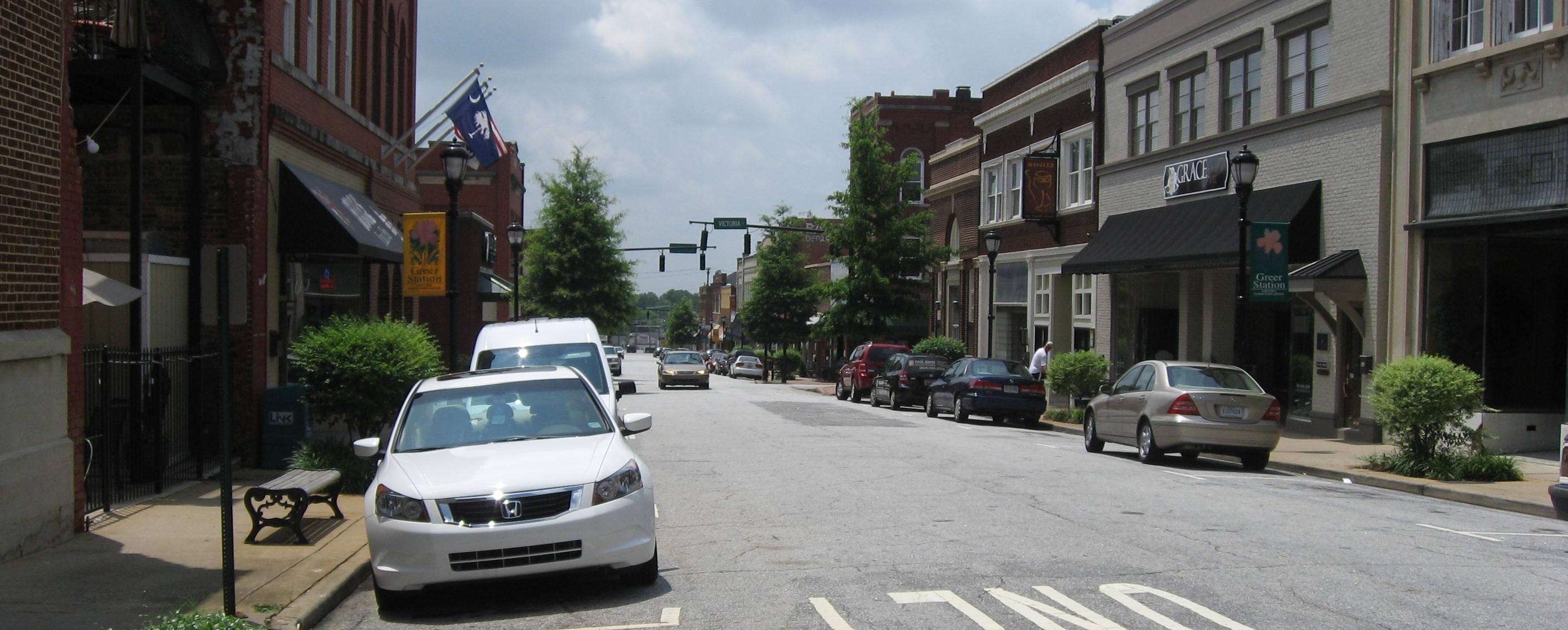
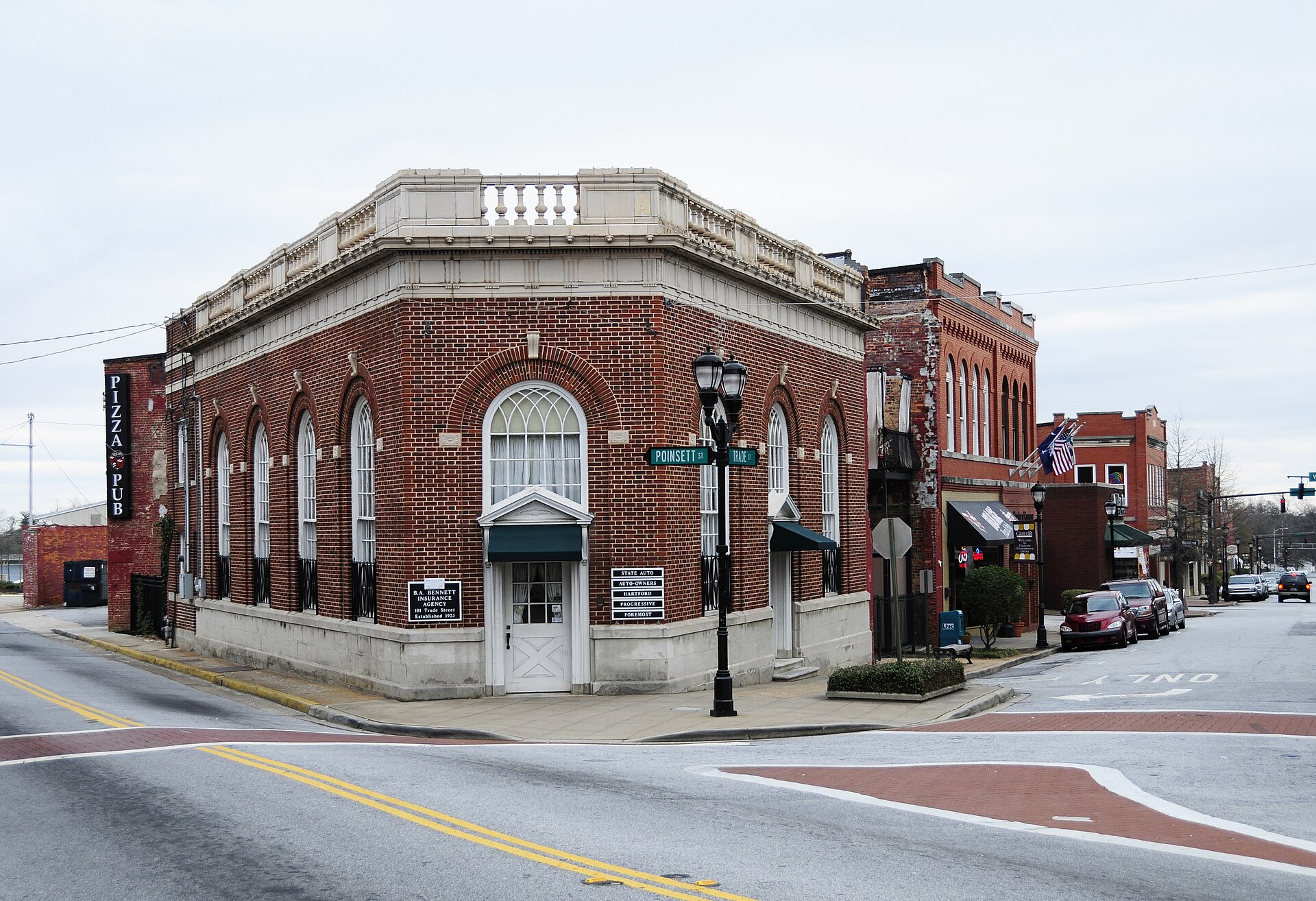
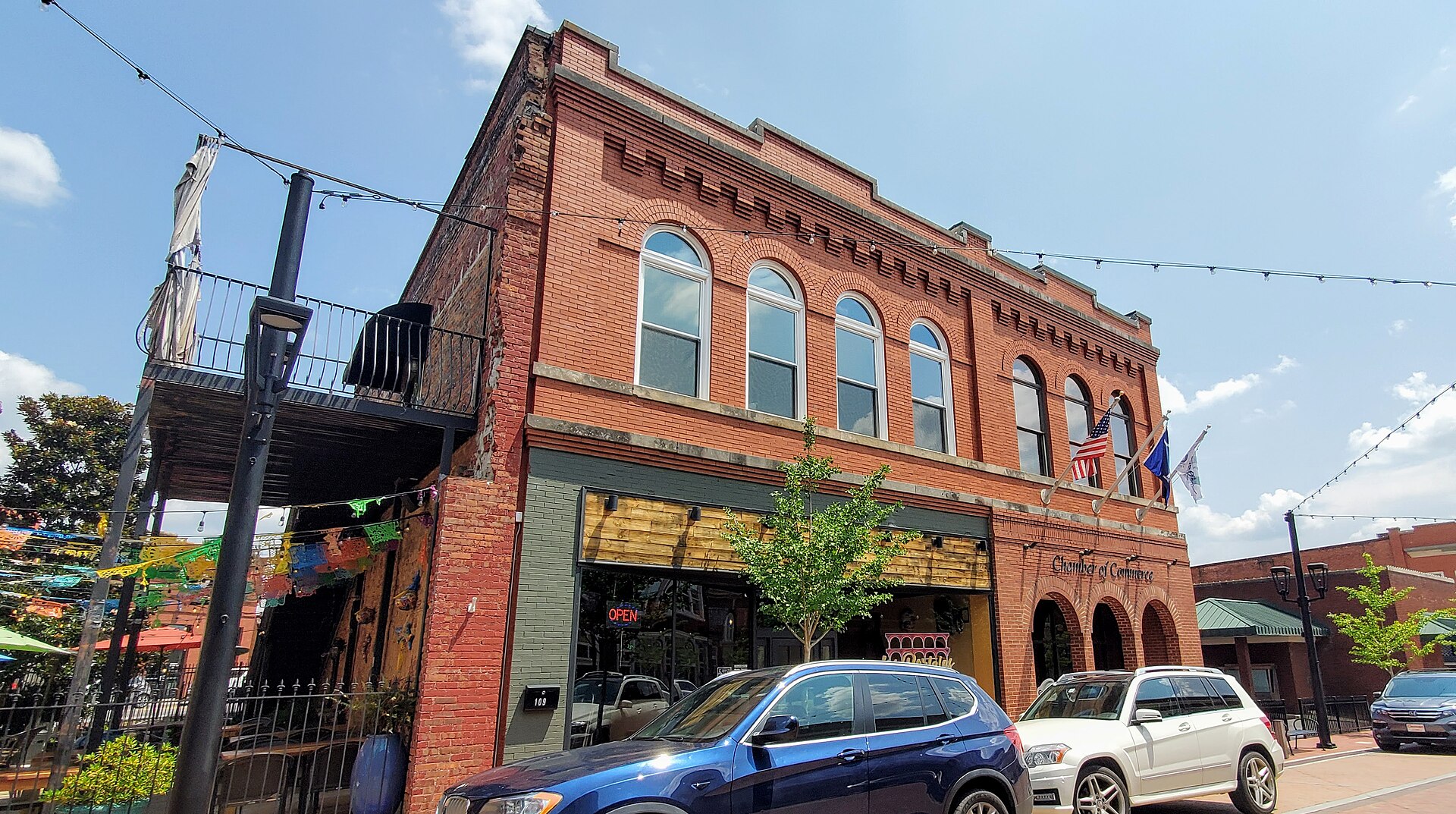
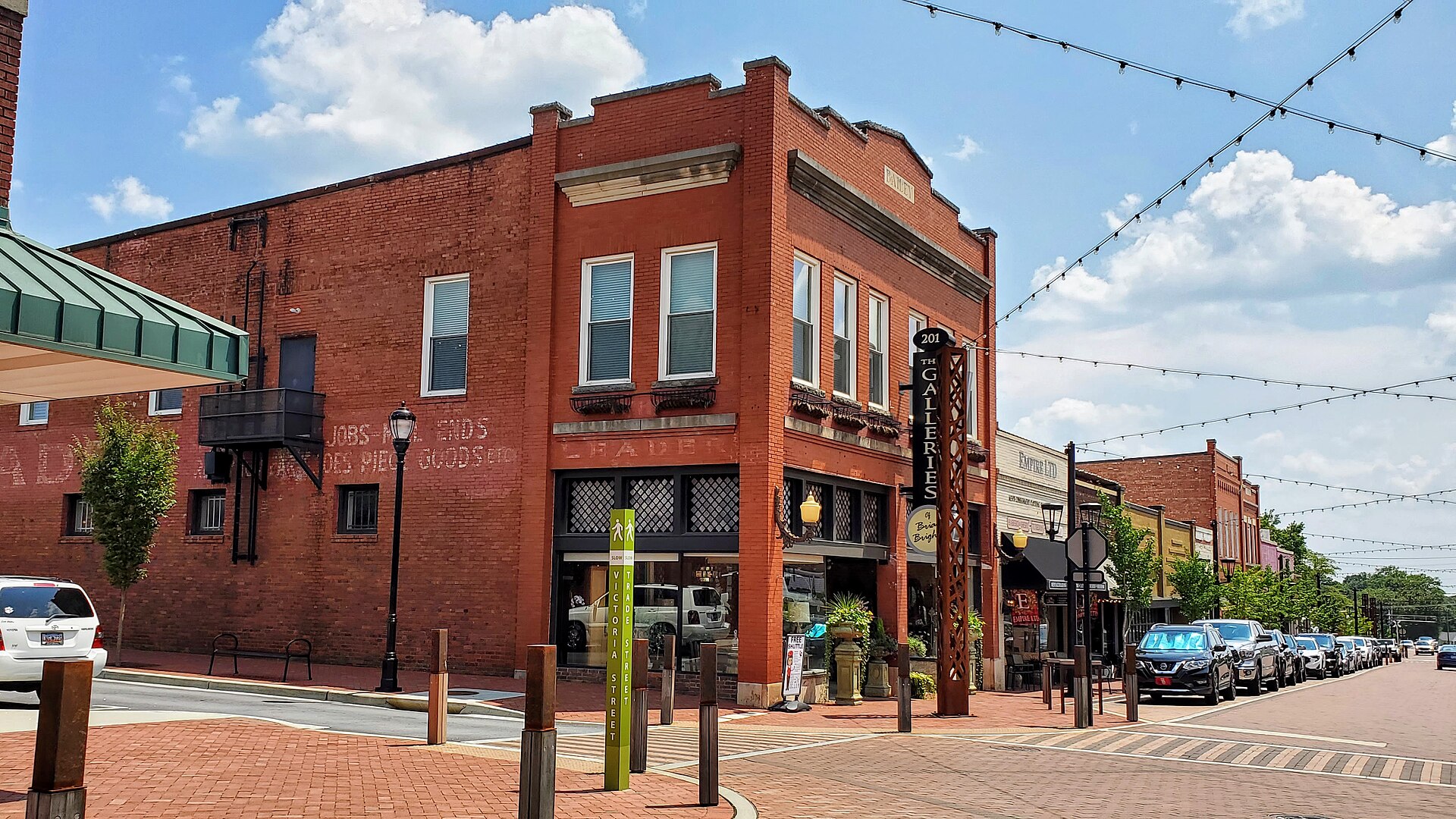
Greer sits northeast of Greenville between that city and Spartanburg, straddling the line between the two counties, and the range of Greer homes for sale runs from smaller houses in the $200,000s to newer construction and acreage above $700,000. It is the Upstate's employment town: Greenville-Spartanburg International Airport and the BMW manufacturing campus both sit at its edge, and a great deal of the area's industrial base is within a short drive. It also has a genuine historic downtown along Trade Street, with brick-paved streets and a restaurant row that has grown substantially.
The published figures for Greer diverge more than for any other Upstate market and the divergence is instructive. Redfin recorded a February 2026 median of about $303,000, down 8.0 percent year over year, with 92 days on market and 34 sales in the month against 82 a year earlier. One aggregator gave an April 2026 median of $379,900 with 45 days on market and 724 sales against 623. Thirty-four sales against seven hundred and twenty-four is not a discrepancy in level; it is two sources counting entirely different things across a town that spans two counties, and no reading should be taken from either without establishing what it covers.
What can be said is that Greer sits in the middle of the Upstate ladder. Against Mauldin at roughly $275,000 to $316,000 and Greenville at $477,000 to $525,000, Greer's figures place it between the two, and a competing analysis describes its market as unusually varied, with more land and more historic property than the suburbs closer to Greenville. For a buyer who works at the airport, at BMW, or in Spartanburg, Greer is the obvious position, and for a buyer who wants a town with its own center rather than a suburb, it is the strongest candidate of the three.
The Andy Bovender Team serves Greer from a Compass office in Greenville, alongside offices in Charlotte, Charleston, Columbia, Wilmington, Fort Mill, Lake Murray, and the Outer Banks. Two things follow. First, establish which county an address sits in before anything else, because the tax and school district answers differ and the town line does not follow the county line. Second, with published sales counts differing by a factor of twenty between sources, comparables here need to come from the MLS and from the same side of the county line rather than from a portal.
Minutes From the Airport and the BMW Campus
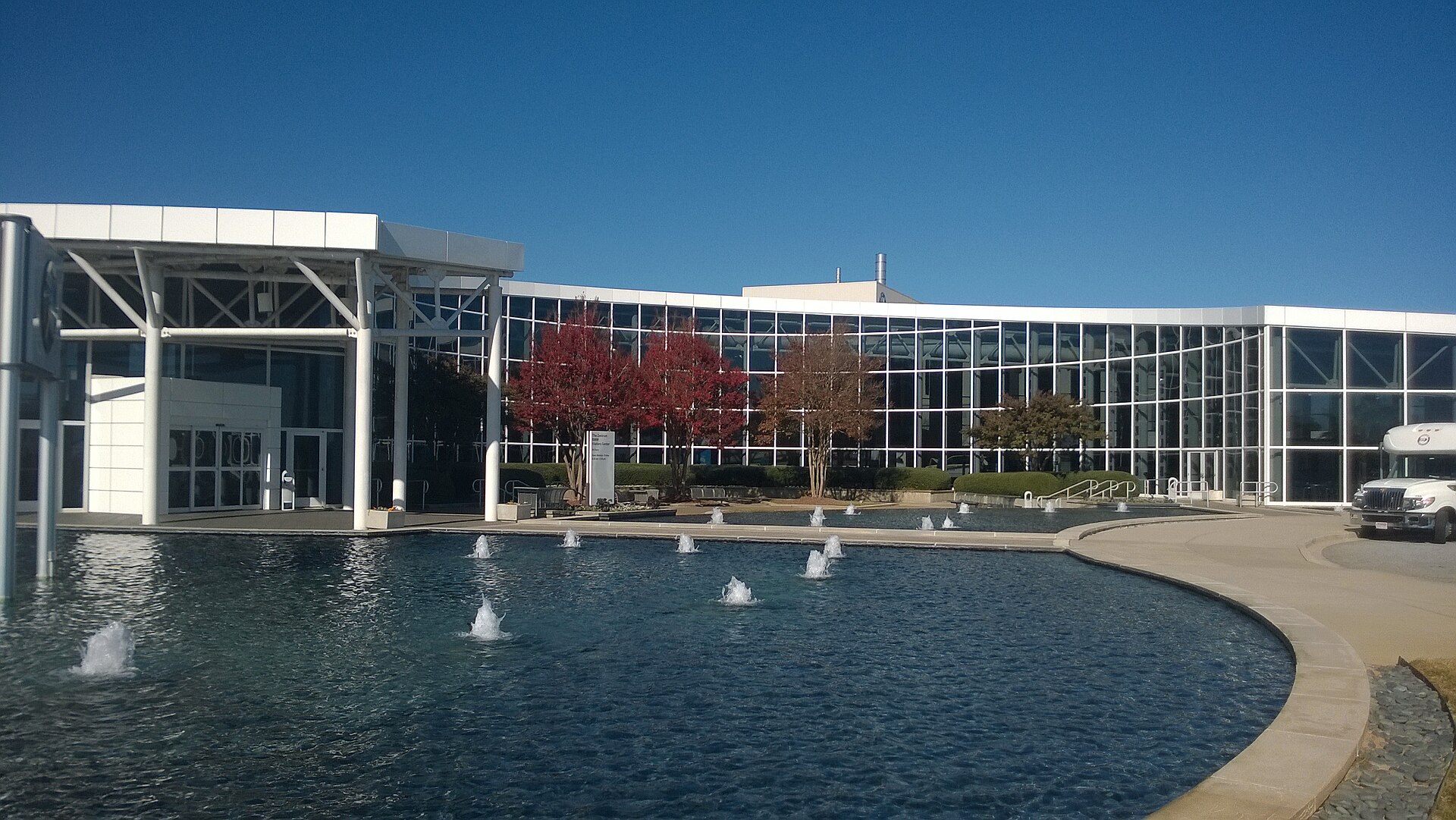
Greenville-Spartanburg International Airport and the BMW manufacturing campus both sit at Greer's edge. For a household with someone working at either, or anywhere in the Upstate's industrial base, this is the shortest commute available.
A Downtown With Its Own Identity
Trade Street runs through a revitalized historic downtown with brick-paved streets, and it carries SELECT, Cafe on Trade, Trade Street Social, and Crate within a few blocks. Greer is a town rather than a suburb, and the center is why.
More Land Than the Suburbs Closer In
Greer's market runs to more acreage and more historic property than Mauldin or the newer developments around Greenville, which gives buyers looking for land rather than a lot a genuine option inside a commutable town.
The Middle of the Upstate Ladder
Greer prices between Mauldin below it and Greenville above it, which puts a town with its own downtown and its own employment base within reach of buyers who cannot stretch to the city.
Between Two Cities
Greer sits between Greenville and Spartanburg with access to both, which doubles the employment market reachable from one address. Few Upstate towns have that position.
The Foothills Behind It
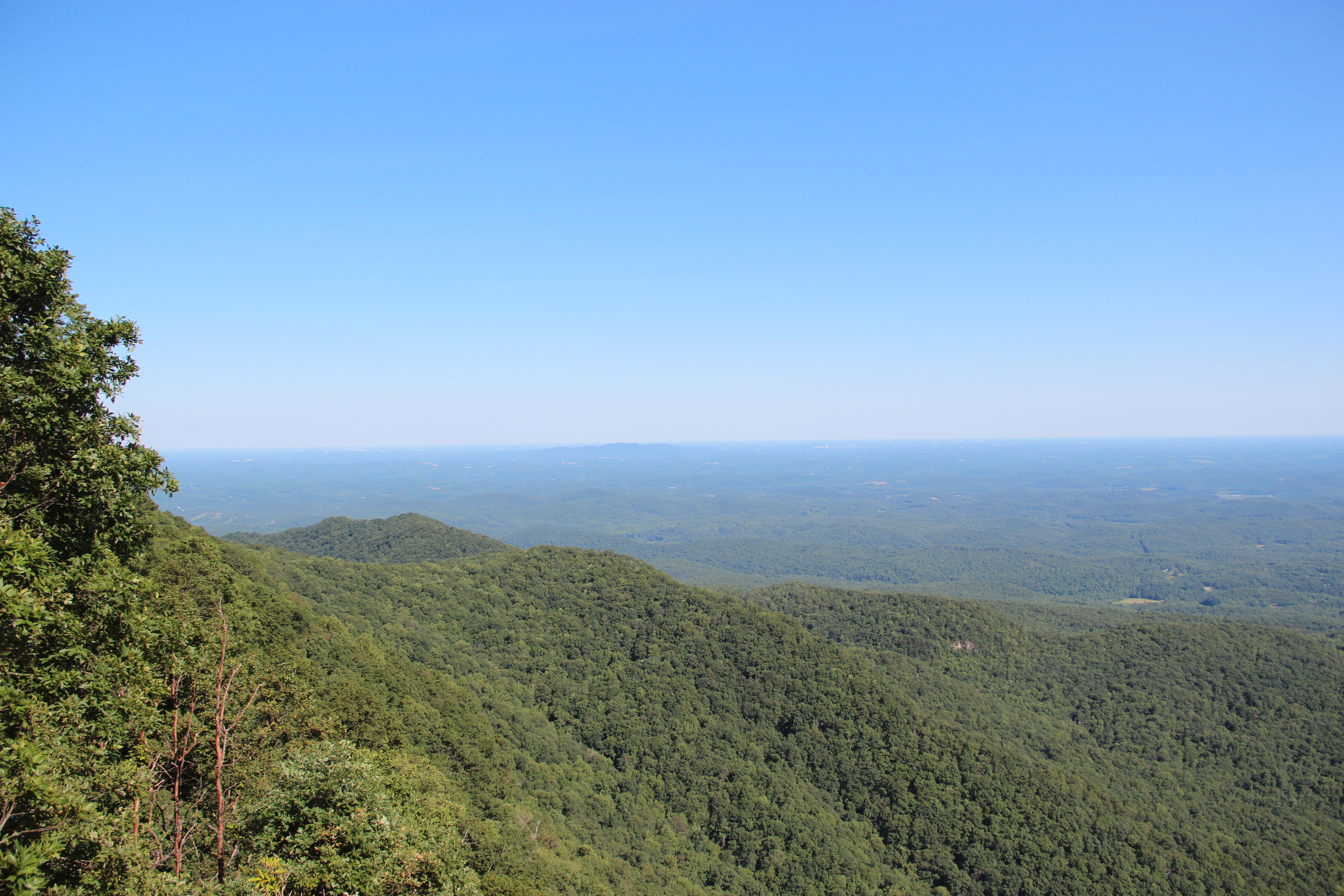
Greer sits toward the northern side of the Upstate with the Blue Ridge foothills a short drive away, which gives it a setting the flatter suburbs south of Greenville do not have.
Greer is organized around its downtown and split by a county line that does not follow the town boundary. Four groupings cover it.
Downtown and the Trade Street Blocks
The streets around Trade Street hold Greer's oldest housing and its only walkable ground, with the restaurants, shops, and services of the revitalized center within reach on foot. Product runs to early and mid twentieth century houses on established streets, many renovated, alongside some newer infill. This is the most distinctive position in the town and the one that justifies calling Greer a town rather than a suburb. The diligence is the usual older-housing set: systems, foundation, roof, and permit history on renovations. Establish also which county the address sits in, because the line runs through the town and the downtown is not automatically on one side of it.
The Airport and Industrial Side
Toward the airport and the BMW campus, Greer's housing sits closest to the Upstate's employment base, which is the reason a large share of buyers look here. Product runs across a range of eras and price points, from older houses to newer subdivisions built to serve the plants. What a buyer gains is a commute measured in minutes rather than tens of minutes. What a buyer should establish is what adjoins a specific property and what the zoning permits nearby, because on the industrial side that matters more than elsewhere, and whether the address sits under an airport approach path, since aircraft noise follows flight paths rather than straight-line distance.
The Acreage and Rural Edges
Away from the center and the industrial corridor, Greer runs out into acreage and rural parcels, which is what distinguishes its market from the suburbs closer to Greenville. Product includes older houses on land, some historic property, and newer construction on larger lots. For a buyer who wants land within commuting distance of the Upstate's employers, this is a genuine option and it is scarcer closer in. The diligence shifts accordingly: establish whether the property is on a private well or public water and sewer, the septic position if applicable, who maintains the access road, and whether the survey and easements are current.
The Newer Subdivisions
Greer has added substantial newer subdivision housing as the Upstate has grown, offering conventional detached houses on standard lots with homeowners associations and often amenity packages. This is where buyers who want current mechanicals and layouts find the most choice, and it is generally where the town's newer inventory concentrates. Read the association documents, ask what remains to be built on adjacent parcels, and confirm the county position, because the newer growth has gone in several directions from the town and the county line question applies to all of them.
Property Types Across Greer
Four categories cover the town. Older houses around the downtown are the character stock and the only walkable position. Housing on the airport and industrial side is closest to the employment base. Acreage and rural property on the edges is what distinguishes Greer from the suburbs south of Greenville. Newer subdivision housing is the most current inventory. Across all four, five questions decide value: which county the parcel sits in and therefore which taxes and school district apply, what any renovation did on older housing, whether the address sits under an airport approach path, what the association covers where there is one, and on rural parcels, well, septic, and road maintenance.
Greer's independent dining sits almost entirely on Trade Street, within a few blocks, and it is stronger than a town of this size usually manages.
SELECT Restaurant, at 112 Trade Street, is the town's most reviewed room and its most ambitious, running from breakfast through dinner with steaks, pork tenderloin, fried green tomatoes, and a wine program with sommelier service. Open seven days, 9 to 10.
Cafe on Trade, at 224 Trade Street, is the breakfast and lunch room, tucked inside a shared boutique storefront, doing French toast, grits, and sandwiches. It tells customers plainly not to be in a hurry. Closed Mondays, and daytime only.
Trade Street Social, at 315 Trade Street, covers pizza, tacos, and bar food with beers on tap, digital golf, and garage doors that open onto the street. Open seven days, from midday at the end of the week.
Crate Restaurant and Wine Bar, at 213 Trade Street, does lobster sliders, crawfish egg rolls, and crab cakes with cocktails and occasional live comedy. Closed Mondays and Sundays, dinner only.
Greer handles daily life comfortably and its downtown is a genuine center rather than a strip. Trade Street carries independent shops, boutiques, and services alongside the restaurants in a walkable arrangement, and the town's commercial corridors carry the grocery stores, pharmacies, big-format retail, and services that cover everything else. For a wider run, Greenville is a short drive southwest with the full range and its own page, and Spartanburg is a similar distance northeast. Buyers should note that outside the downtown blocks Greer is laid out for driving, and that the corridors toward the airport and the industrial base carry commuter traffic at peak.
Greer's downtown is the town's principal amenity, with the brick-paved streets, the restaurants, and the events and programming that a revitalized center carries through the year. Beyond it, the town runs its own parks and recreation, and the position toward the northern side of the Upstate puts the Blue Ridge foothills within a short drive north, with the state parks and waterfalls of the escarpment beyond them.
Further afield, Greer's position between two cities is the practical advantage. Greenville sits southwest with its downtown, Falls Park, and Main Street restaurant scene, covered on its own page, and Spartanburg is a similar distance northeast. Greenville-Spartanburg International Airport is minutes away, which is a genuine convenience rather than a marketing line for a town this size. Simpsonville and Mauldin sit south of Greenville and are covered on their own pages. The practical summary is that Greer is the Upstate town with the shortest commute to the region's employers and a downtown of its own, and buyers here are generally choosing both.
Greer is known as a fast-growing city straddling Greenville and Spartanburg counties, midway between the two. It is recognized as the home of the BMW Manufacturing plant, the South Carolina Inland Port, and the Greenville-Spartanburg International Airport, along with a revitalized Greer Station downtown and City Park.
Living in Greer offers a central Upstate location with a polished downtown and an easy commute to both Greenville and Spartanburg. Residents stroll Trade Street's shops and restaurants, attend festivals and concerts at Greer City Park, and reach the GSP airport in minutes. Major nearby employers make it popular with families and professionals.
Homes in Greer carry a median around $330,000 to $365,000. Older cottages and townhomes sit lower, while new-construction, executive, and golf-area homes run higher, reaching $620,000 and up in premium neighborhoods.
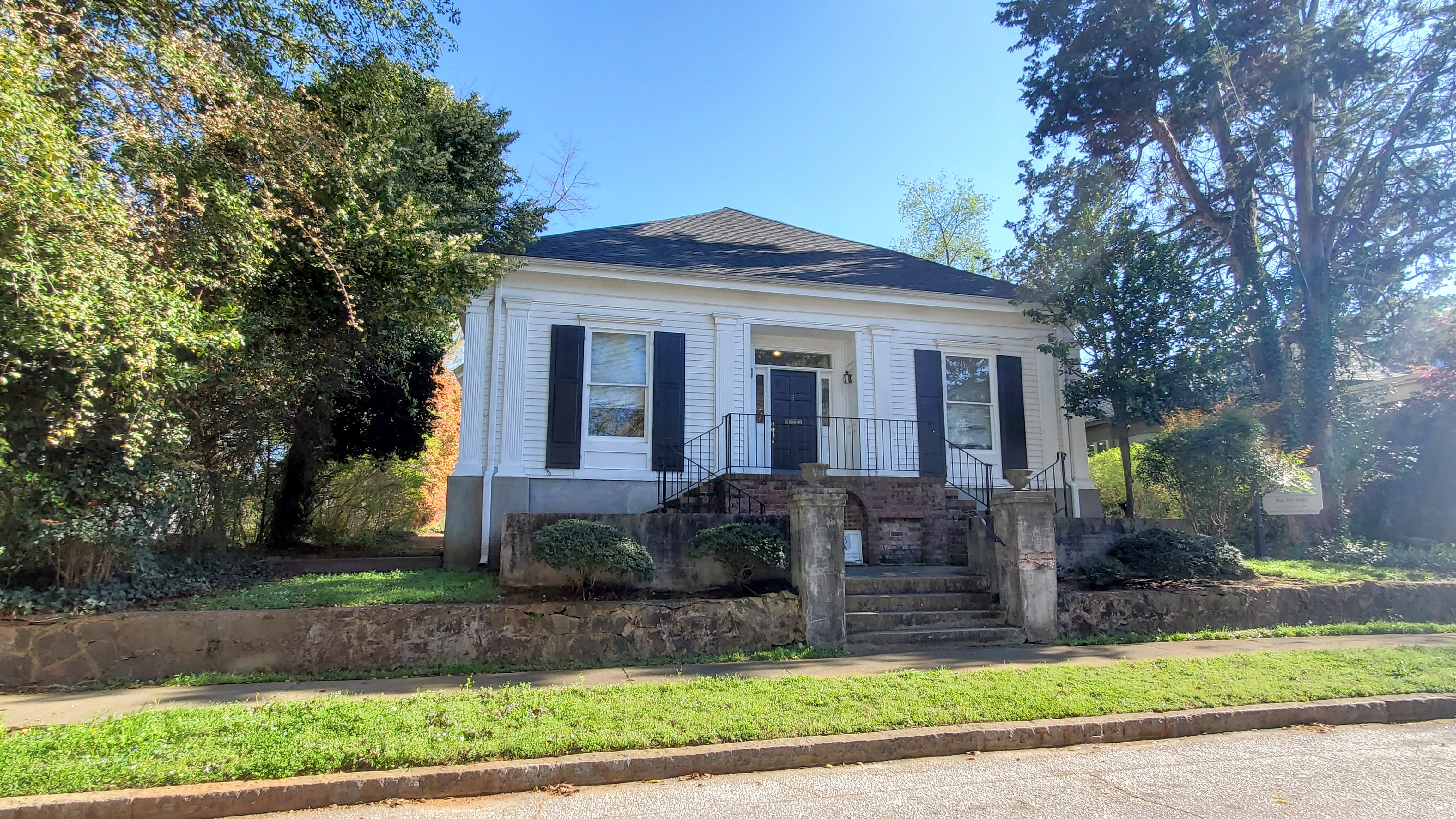
Greer offers older cottages and ranch homes near the core, historic bungalows near Trade Street, midcentury neighborhoods, new subdivisions along major corridors, larger planned communities, and executive and custom homes in areas such as Sugar Creek and Riverwood Farm. Rural homes with mountain views are found in north Greer.
Greer sits in northeastern Greenville County and southwestern Spartanburg County, South Carolina, along Wade Hampton Boulevard. Downtown Greenville is about 20 to 25 minutes southwest, Spartanburg lies to the east, and the GSP airport and BMW plant are within minutes.

The Andy Bovender Team pairs deep Carolinas market knowledge with the reach of Compass. Expect straight answers, sharp preparation, and a process that stays simple, whether you are buying, selling, or both.