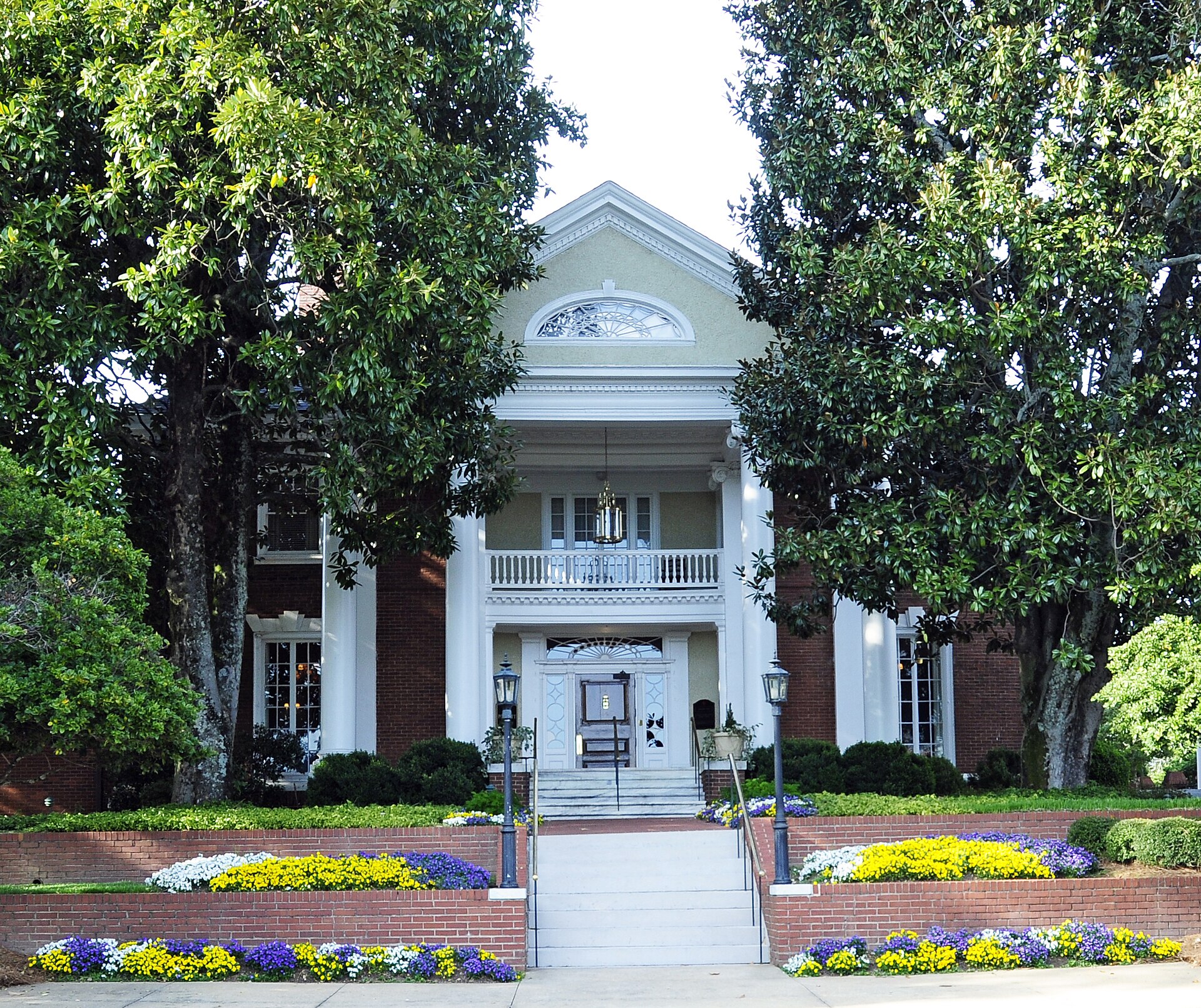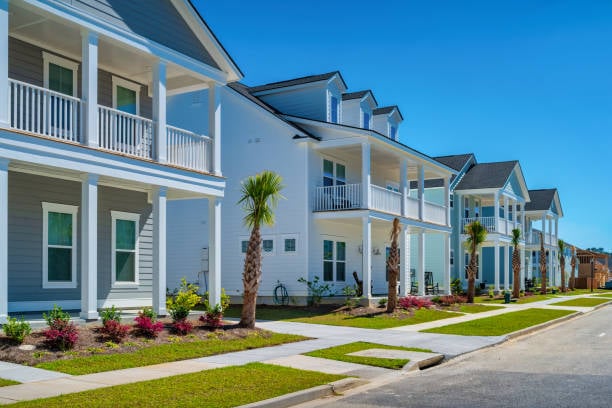
Greenville offers the Upstate's principal urban center, combining a walkable downtown with established neighborhoods, employment districts, and regional amenities.
Discover Local CommunitiesThe City of Greenville is much smaller than the broader Greenville postal and metropolitan area. Here, housing includes downtown apartments and condos, historic homes, bungalows, townhomes, and newer infill.
Lifestyle ranges from highly walkable downtown living to quieter residential streets where a car remains useful for most daily errands.
Conditions can vary by street, development, and jurisdiction, so property-level due diligence remains important.
Parks, trails, museums, theaters, sports, and community events create year-round options. Greenville County Schools uses address-level assignments and citywide school links should be treated as representative only.
School note: Attendance zones, program eligibility, and transportation can change. Confirm every assignment with the district using the full property address before making a housing decision.
Main Street, the West End, Village of West Greenville, Augusta Road, and neighborhood centers provide varied dining and shopping.
Greenville sits in the Upstate of South Carolina along the I-85 corridor, roughly midway between Atlanta and Charlotte and at the foot of the Blue Ridge escarpment, and the range of Greenville homes for sale runs from condominiums in the $200,000s to substantial houses well above $1.5 million. It has one of the most successful downtown revivals of any American city of its size, built around Main Street, Falls Park, and the Reedy River, and an economy anchored by manufacturing rather than by any single sector: BMW and Michelin both operate major facilities in the region, and Greenville-Spartanburg International Airport sits between the city and Spartanburg.
The most revealing figures in this market point in opposite directions. One recent analysis put Greenville's median sale price at about $525,000, up just 0.3 percent year over year, while price per square foot jumped 13.5 percent, with homes taking 59 days to sell. A median that barely moves while the per-foot rate rises by more than a tenth means buyers are getting less house for the same money, which is a mix shift toward smaller or denser product rather than a flat market. That is the reverse of the pattern found repeatedly on the coast, where medians rose while per-foot rates fell.
Other measures disagree on level more than on direction, and the spread is wide. Redfin recorded an average house price of about $477,000, down 18 percent year over year, with a Compete Score of 44. One aggregator gave a median of $480,000, essentially flat. A local brokerage put the range at $340,000 to $380,000 with active inventory up about 21 percent, and Zillow's index for Greenville County sat near $340,300. City figures and county figures are measuring different geographies, and a $340,000 county index alongside a $525,000 city median is consistent rather than contradictory, but a buyer should establish which they are looking at before drawing a conclusion.
The Andy Bovender Team serves Greenville from a Compass office in the city, alongside offices in Charlotte, Charleston, Columbia, Wilmington, Fort Mill, Lake Murray, and the Outer Banks. Two things follow. First, with inventory up around a fifth and homes taking about two months to sell, this is a market where correct initial pricing matters more than negotiation later, and buyers have room they have not had in several years. Second, Greenville spans a very wide range of neighborhoods and eras, from downtown condominiums to Augusta Road period houses to newer subdivisions on the edges, and the city median describes almost none of them well.
A Downtown People Travel to See
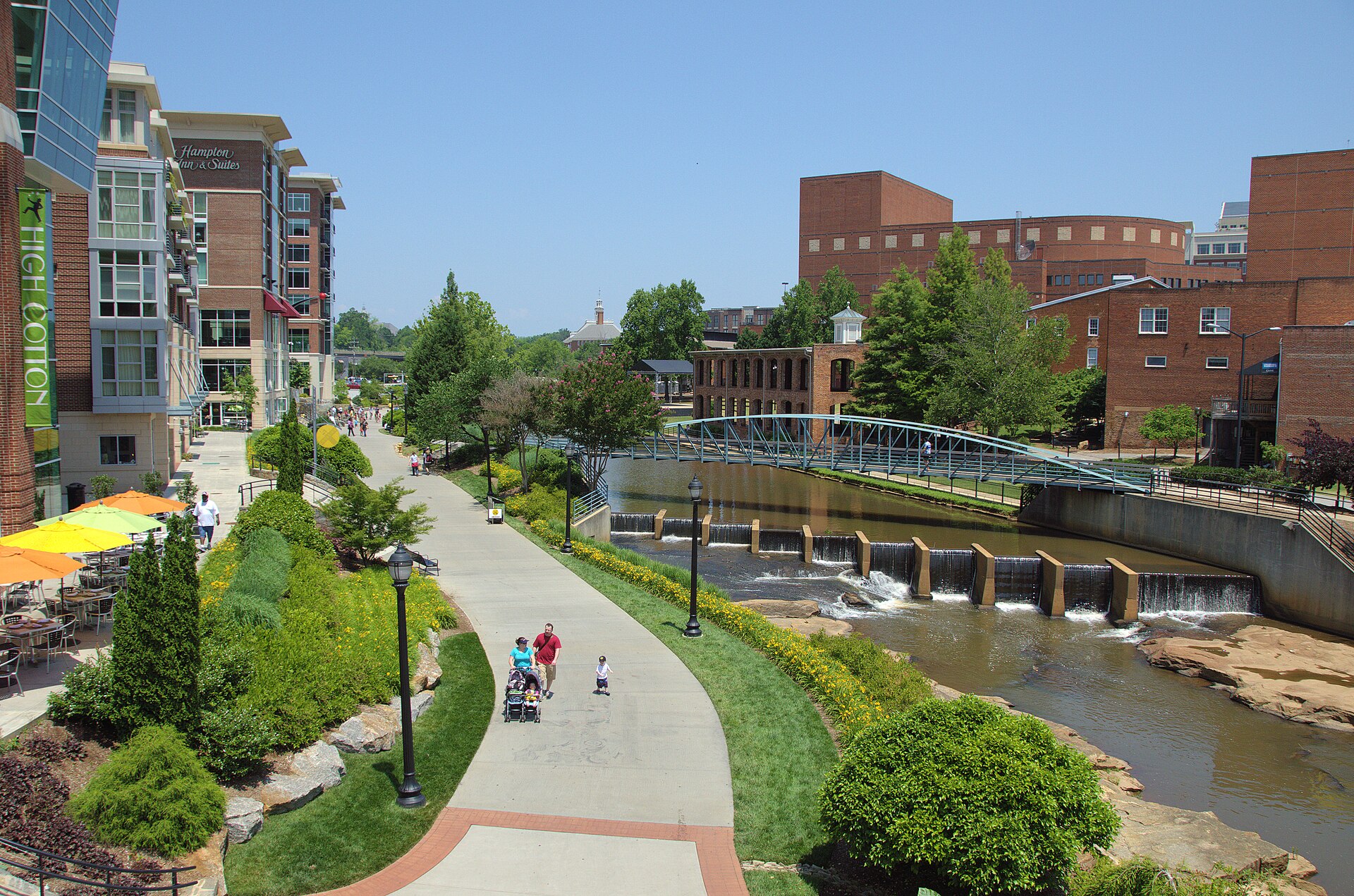
Main Street runs through a downtown widely regarded as one of the best small-city revivals in the country, with Falls Park and the Reedy River waterfall at its center. Very few cities of this size have a center that functions this well.
Restaurants Along Main Street
Nose Dive, Juniper, BrickTop's, Crave, and Between the Trees all sit within a few blocks of Main Street, several with well over a thousand reviews. The downtown restaurant density here is unusual for a city of Greenville's size.
Inventory Up About a Fifth
Active listings have risen roughly 21 percent year over year and homes take around 59 days to sell, which means buyers can compare, negotiate, and complete proper diligence. This market has not offered that in several years.
Midway Between Atlanta and Charlotte
Greenville sits on I-85 roughly between two major cities, with Greenville-Spartanburg International Airport nearby and commutes into the city center often under twenty-five minutes. The position is a large part of why the Upstate has grown.
Manufacturing Rather Than Tourism
BMW and Michelin both operate major facilities in the region, which gives the Upstate a year-round employment base rather than a seasonal one. Winter here is quiet rather than closed, which is not true of the coastal markets.
The Blue Ridge Escarpment on the Doorstep
Greenville sits at the foot of the mountains, with the escarpment, its state parks, and its waterfalls within a short drive north. Few cities put a downtown and mountain country that close together.
Greenville is a city rather than a neighborhood, and it is organized around a downtown that people actually use. Four areas cover it.
Downtown and the West End
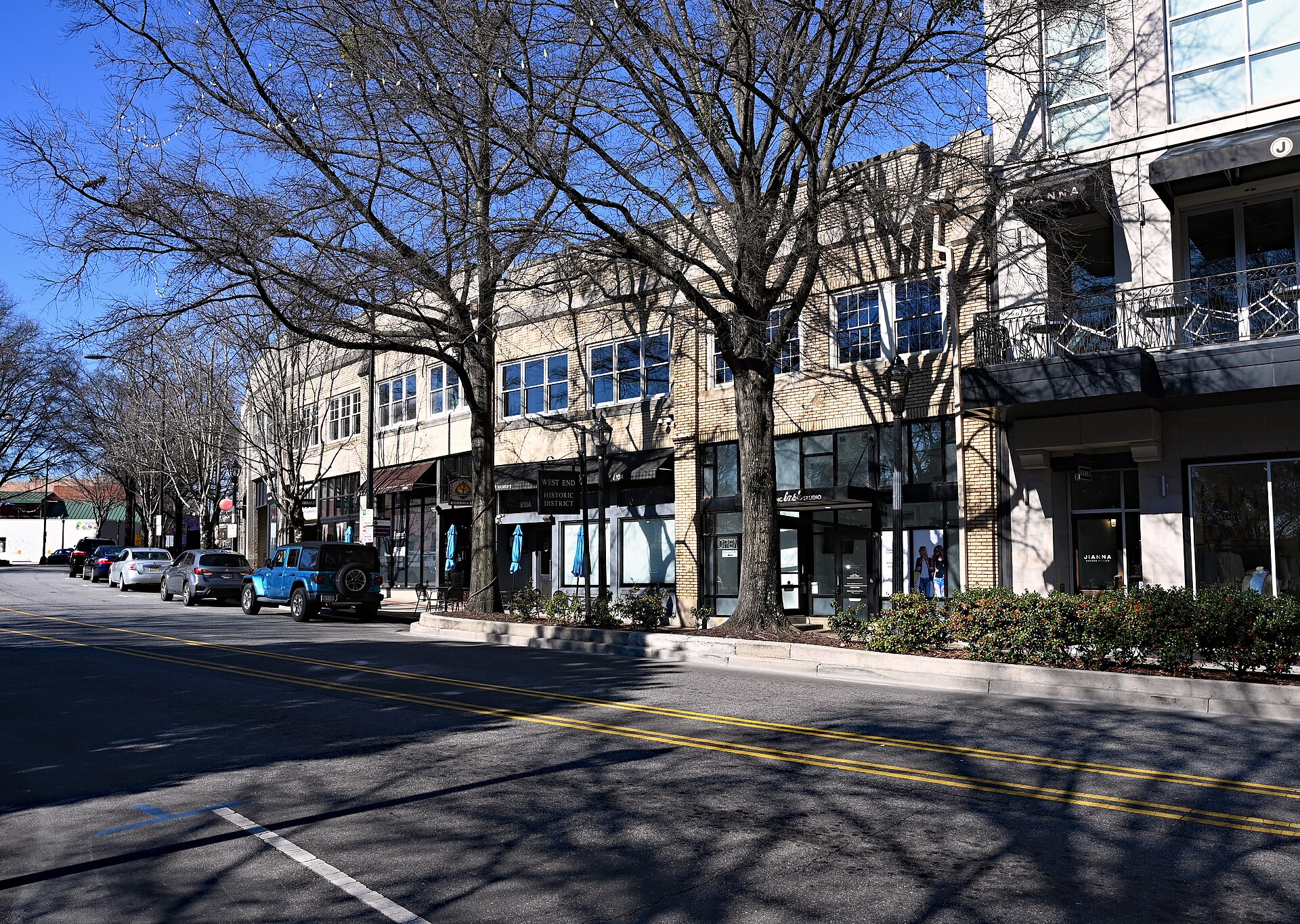
The blocks along and off Main Street, running south through the West End toward Falls Park, hold the city's densest housing and its only genuinely walkable ground. Product runs to condominiums, townhomes, and newer apartment conversions, alongside a small number of period houses on the surrounding streets. This is where a buyer gets restaurants, the park, and the river within a walk, and it prices at the top of the city's per-foot range as a result. Read the association documents on attached product, establish what parking a specific unit actually has because downtown parking is the standing constraint, and confirm what is approved on nearby parcels, since the downtown is still adding buildings.
The Augusta Road and North Main Areas
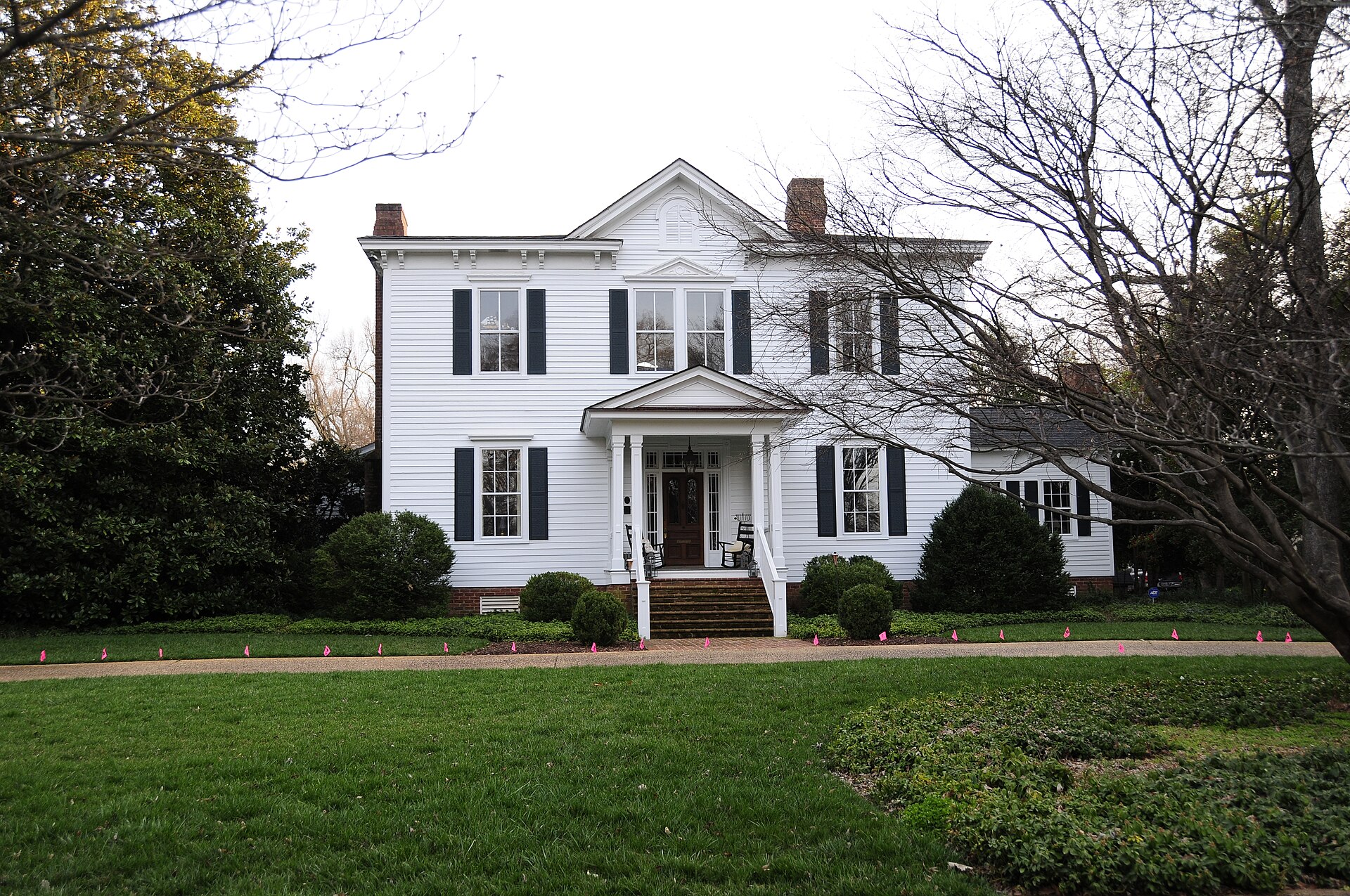
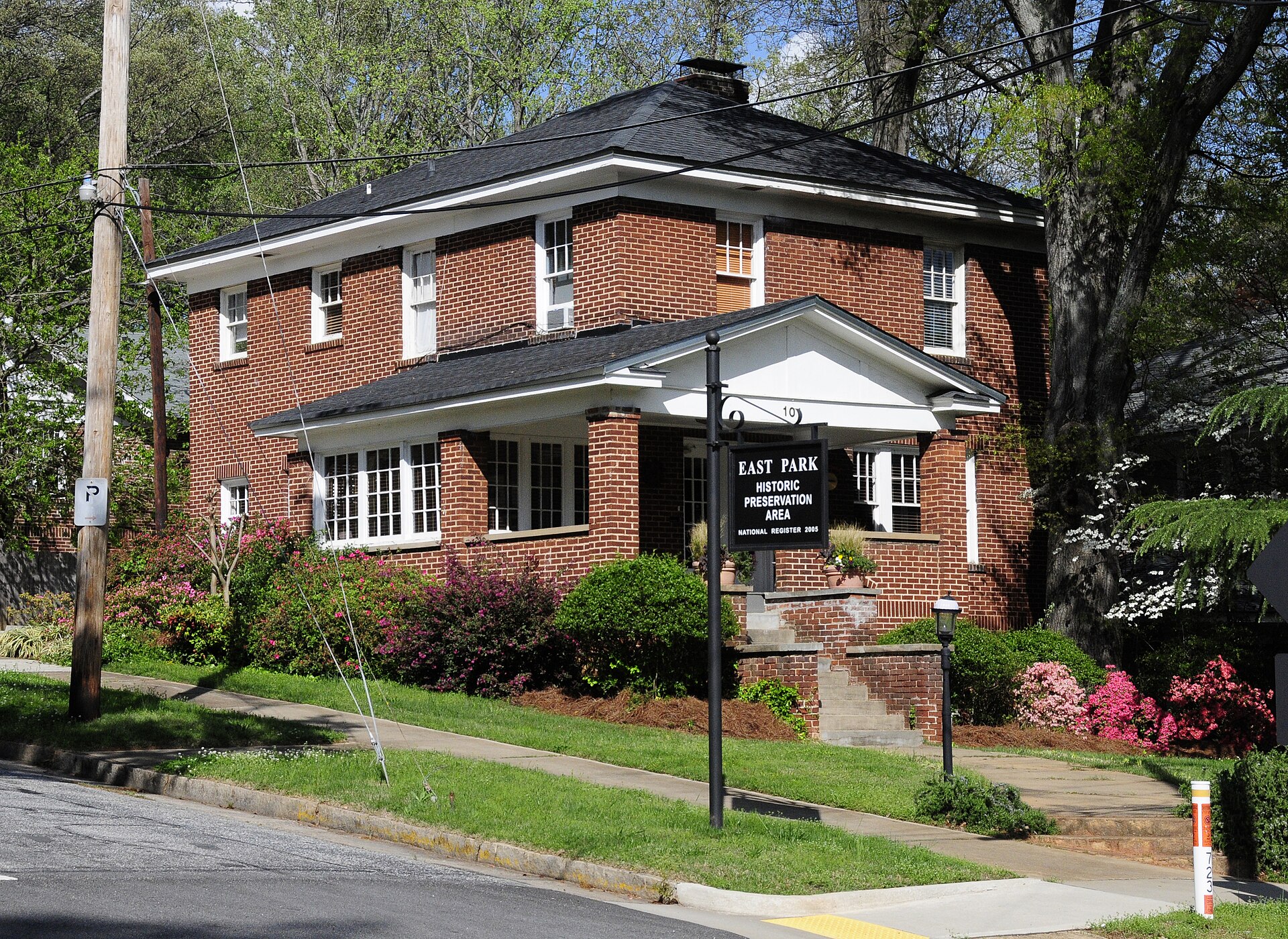
The established residential neighborhoods immediately around downtown, principally the Augusta Road area to the south and North Main to the north, hold the city's period housing and its most sought-after addresses outside the center. Product runs to early and mid twentieth century houses on established streets under mature trees, many renovated, with prices well above the city median and into jumbo loan territory at the upper end. The diligence is the usual older-housing set: systems, foundation, roof, and permit history on renovations. These are the areas where the difference between a thorough renovation and a cosmetic one is largest in absolute terms.
The Established Suburban Neighborhoods
Spreading out from the core in all directions, Greenville's conventional suburban neighborhoods hold the volume of the city's market: detached houses on standard lots built from roughly the 1950s through the 1990s, many without homeowners associations, with condition varying considerably by neighborhood and by house. This is where the city's most accessible pricing sits and where most buyers land. Budget for the maintenance profile of housing that may be fifty years old or more, and compare within a neighborhood rather than across the city, because the spread between areas is wide enough that a city median is not a useful benchmark.
The Newer Subdivisions on the Edges
Toward the city's boundaries and out into the county, newer subdivisions and current construction offer modern layouts, systems, and builder warranties, generally with homeowners associations and often with amenities. This is where buyers who want new build rather than a house to work on find the most choice, and it is where much of the county's growth has gone. Read the association documents, ask what remains to be built on adjacent parcels, and confirm whether a specific address sits inside the city limits or in unincorporated Greenville County, because that affects taxes and services and the boundaries are not obvious from the road.
Property Types Across Greenville
Four categories cover the city. Downtown condominiums and townhomes are the most walkable and the highest per-foot. Period houses in the Augusta Road and North Main areas are the character stock and the top of the detached market. Established suburban houses across the city are the volume and the most accessible. Newer subdivision housing on the edges is the most current inventory. Across all four, four questions decide value: which neighborhood the address is actually in, since the spread across the city is wide; what any renovation did and under what permit on older housing; what the association covers and costs where there is one; and whether the parcel sits inside the city limits or in unincorporated county.
Greenville's dining concentrates on and around Main Street, and the density is unusual for a city of this size, which is a large part of why the downtown works as well as it does.
Nose Dive, at 116 South Main Street, is the downtown gastropub, working kale salads, blackened grouper sandwiches, burgers, and a wine list, with a good position for watching the street. Open seven days.
Juniper, at 315 South Main Street, is the room people photograph, with hanging floral installations, brisket Benedict, potato waffles, and a strong brunch. Closed Mondays and Tuesdays, dinner only midweek, and Sunday brunch only.
Between the Trees, at 44 East Camperdown Way, serves breakfast, lunch, and dinner seven days with whipped ricotta, strip steak, and grits that diners single out, and it has a view and outdoor seating that make it worth the walk from Main.
BrickTop's, at 1 North Main Street, covers sushi, tuna tartare, filet, and salads across a broad menu with patio seating and a happy hour. Open seven days.
Crave, at 600 South Main Street, is the brunch room, doing salmon croquettes, red velvet waffles, lobster biscuits and grits, and smoked brisket Benedict. Open seven days, daytime except at the end of the week.
Greenville shops like a city and its downtown is a genuine retail destination rather than only a dining one, which is rare at this scale. Main Street carries independent shops, galleries, and services along its length alongside the restaurants, in an arrangement that people walk. Beyond the center, the city's commercial corridors carry the grocery stores, pharmacies, big-format retail, and services, with further retail out toward the county's growth areas and along the interstate. Between them nothing requires leaving the area. Buyers should note two things. Downtown parking is the constraint on the center rather than distance, and it is worth understanding what a specific address provides. And outside the walkable core Greenville is laid out for driving, with commutes into the center often reported under twenty-five minutes.
Falls Park on the Reedy sits at the downtown's southern end, with the river's waterfall at its center, gardens, and a suspension bridge, and it is the single feature most responsible for the way the center works. It connects directly into the surrounding streets, which is why a park and a restaurant district function as one place here rather than two. The city also carries a rail-trail running north out of the center toward Travelers Rest, which residents use for walking and cycling and which connects a substantial part of the city without crossing roads.
Beyond the city, the Upstate's position does a great deal. The Blue Ridge escarpment sits a short drive north with its state parks and waterfalls, Greenville-Spartanburg International Airport is between the city and Spartanburg, and I-85 runs to Atlanta and Charlotte in either direction. Greer, Simpsonville, and Mauldin sit around the city and are covered on their own pages in this volume. The practical summary is that Greenville is a city with a working downtown and mountains behind it, and both halves of that are the reason people move here.
Greenville is known as the anchor city of Upstate South Carolina, set along the Interstate 85 corridor between Atlanta and Charlotte. It is recognized for its acclaimed walkable downtown, Falls Park on the Reedy and the Liberty Bridge, a nationally praised restaurant scene, the Swamp Rabbit Trail, and a fast-growing, mountain-framed setting.
Living in Greenville offers a walkable, amenity-rich city lifestyle with Blue Ridge foothills nearby. Residents enjoy Main Street dining, the Peace Center, Greenville Drive baseball at Fluor Field, and miles of the Swamp Rabbit Trail. The city draws young professionals and relocating retirees alike, with major employers and an airport close by.
Home prices in Greenville run a wide range, with a city-wide median around $360,000 to $400,000. Close-in and downtown neighborhoods run much higher, with Downtown and North Main near $500,000 and the Augusta Road area into the $800,000s, while condos, townhomes, and outlying homes are lower.
Greenville offers downtown condos and townhomes near Falls Park, historic homes and bungalows in neighborhoods like North Main, the West End, and Augusta Road, luxury estates, new-construction and master-planned communities such as Verdae, and suburban single-family homes, some with mountain views on the north side.
Greenville sits in the heart of Greenville County, South Carolina, along Interstate 85 about halfway between Atlanta and Charlotte. Downtown is the Upstate's hub, Paris Mountain State Park and the Blue Ridge foothills are minutes north, and the GSP airport is a short drive east toward Greer.

The Andy Bovender Team pairs deep Carolinas market knowledge with the reach of Compass. Expect straight answers, sharp preparation, and a process that stays simple, whether you are buying, selling, or both.