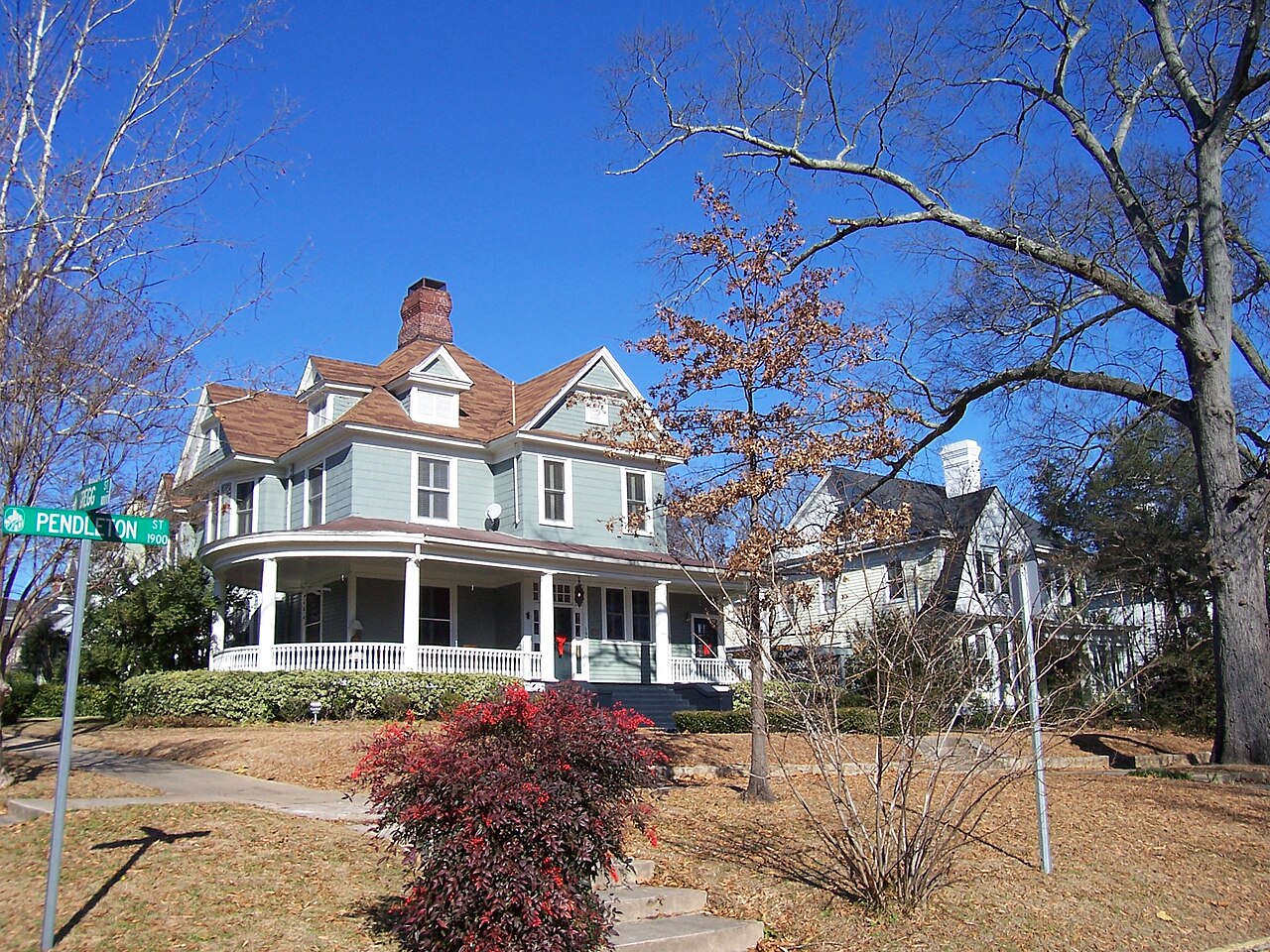
Easley offers an established Pickens County city with a traditional downtown and convenient connections toward Greenville and Clemson.
Discover Local CommunitiesThe city is west of Greenville along the U.S. 123 corridor. Here, housing includes older in-town streets, mid-century neighborhoods, subdivisions, townhomes, and newer construction at the edges.
Easley offers a small-city routine with most daily needs available locally and regional employment or entertainment within driving distance.
Conditions can vary by street, development, and jurisdiction, so property-level due diligence remains important.
City recreation, nearby lakes and foothill destinations, and community events broaden local options. Pickens County school assignments must be verified in the official locator.
School note: Attendance zones, program eligibility, and transportation can change. Confirm every assignment with the district using the full property address before making a housing decision.
Downtown and the main highway corridors provide local restaurants, groceries, services, and larger-format retail.
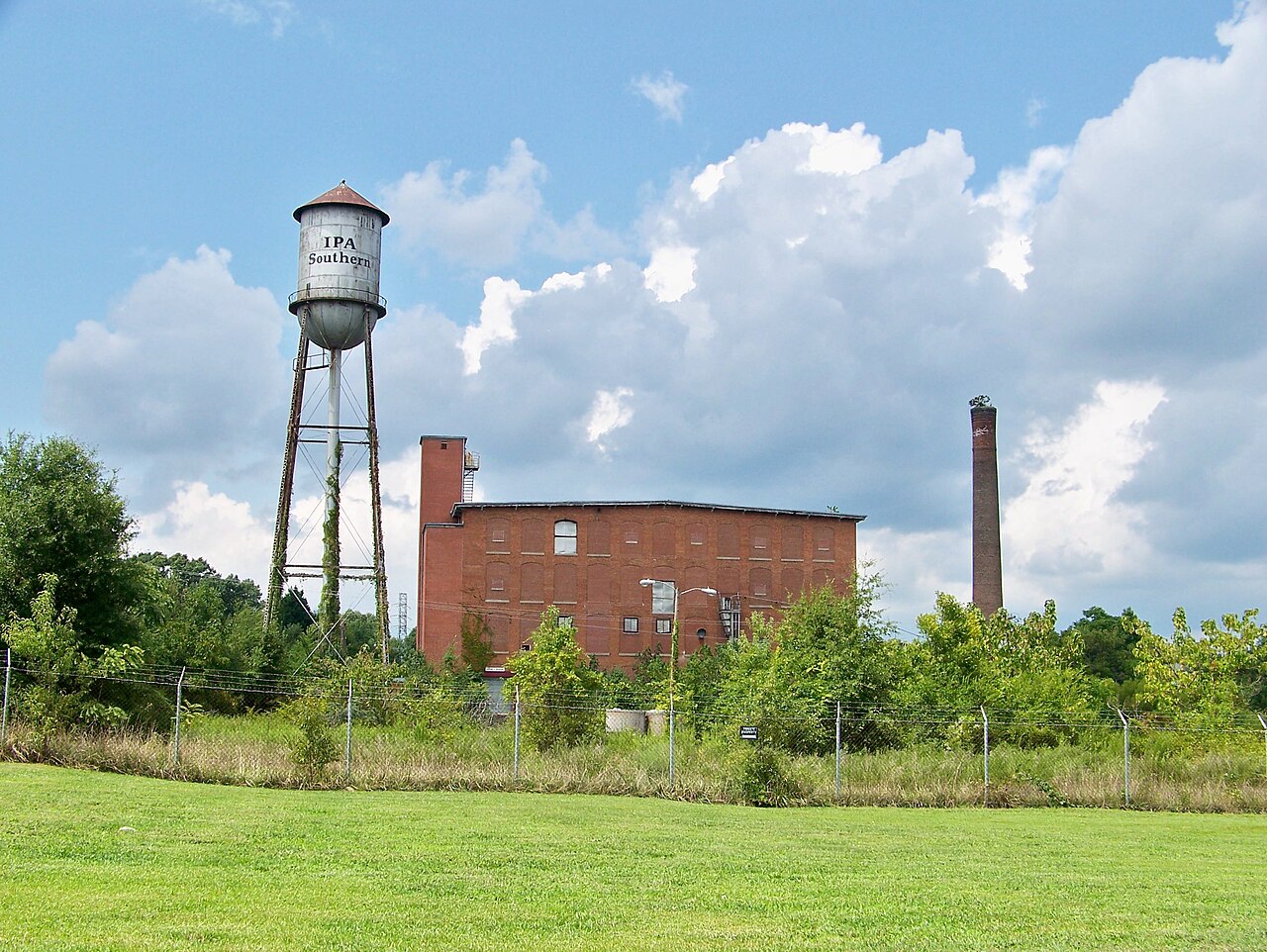
Easley sits in Pickens County about fifteen miles west of Greenville, between that city and the Blue Ridge foothills, and the range of Easley homes for sale runs from smaller houses in the $180,000s to newer construction above $450,000. It is the largest city in Pickens County and it has done something unusual with its industrial past: two former textile sites in the city now operate as food and drink destinations, which has given a working town a genuine social center it did not have a decade ago.
On price, Easley is among the more accessible markets in the Upstate. Zillow's home value index sat at about $311,242 with a median time to pending of around 49 days, and local analysis suggests portal medians for the city generally run in the low to mid $300,000s. Pickens County briefs have at times reported higher figures than the city, with one showing a median near $420,000 and about 5.2 months of supply, which is a more balanced pace than the city snapshots imply. City and county are measuring different geographies, and Easley is the county's largest city rather than its most expensive.
That gap between city and county is the thing to understand here. Pickens County contains Clemson, the lakes, and mountain property alongside Easley's working suburbs, and county-level figures blend all of it. A buyer researching Easley on a county brief will see a number substantially above what the city actually trades at, and a seller pricing from one will sit. Establish which geography a figure covers before relying on it, and prefer city-level MLS data to county aggregates for anything in Easley itself.
The Andy Bovender Team serves Easley from a Compass office in Greenville, alongside offices in Charlotte, Charleston, Columbia, Wilmington, Fort Mill, Lake Murray, and the Outer Banks. Two things follow. First, this is Pickens County, so the tax structure, school district, and county services differ from Greenville County fifteen miles east, and that difference is part of the value proposition. Second, Easley spans a wide range of housing eras and conditions, from mill-era housing near the old industrial sites to newer subdivisions on the Greenville side, and comparables need to match on era and neighborhood rather than on city.
Two Food Halls in Converted Mills
The Silos and Southern Weaving Food Hall both occupy former industrial sites and both carry ratings above 4.6, with breweries, food vendors, live music, and outdoor space. Two destinations of that quality in a city this size is genuinely unusual.
Among the Most Accessible Prices in the Upstate
With a Zillow index around $311,000 and portal medians in the low to mid $300,000s, Easley sits well below Greenville and below most of the Greenville County suburbs. For buyers measuring by price, this is where the Upstate opens up.
Fifteen Miles to Greenville
Easley sits close enough to Greenville to use it regularly while paying Pickens County prices and Pickens County taxes. That combination is the reason the city has drawn buyers from the county next door.
Toward the Mountains, Not Away From Them
Easley sits west of Greenville on the way to the Blue Ridge foothills, Table Rock, and the lakes, which puts genuine mountain country closer from here than from anywhere on the Greenville side of the county.
A Downtown Bar Worth the Trip
On The Rail on East Main Street holds a 4.6 rating with burgers regulars rate among the best around, pool tables, and live music. It is the sort of room a working town keeps rather than a destination built for visitors.
A Working City, Not a Bedroom Suburb
Easley is the largest city in Pickens County with its own economy, its own center, and its own history, rather than a commuter extension of Greenville. Buyers get a place rather than a position.
Easley is a working city organized around a downtown, its former industrial sites, and newer growth on the Greenville side. Four groupings cover it.
Downtown and the Mill Districts
The older center around Main Street and the former industrial sites hold Easley's oldest housing and its walkable ground, with the food halls, the bars, and the city's services within reach. Product runs to early and mid twentieth century houses, including mill-era housing near the old textile sites, with renovation activity through them. This is the most distinctive position in the city and the most accessible on price. The diligence is the usual older-housing set, with the addition that mill village housing was built to a different standard and era than suburban stock, so establish the build era, the condition, and what any renovation actually did and under what permit.
The Established Neighborhoods
Around the center, Easley's conventional neighborhoods hold the volume of the market: detached houses built across several decades on standard lots, many without homeowners associations, with mature landscaping in the older sections. This is where most buyers land and where the city's typical pricing sits. Condition varies considerably by street and by house, so compare within a neighborhood rather than across the city, and budget for the maintenance profile of housing that may be several decades old, particularly roofs, HVAC, and original systems.
The Greenville Side and Newer Growth
Toward the eastern side of the city and out along the routes to Greenville, Easley has added newer subdivision housing with homeowners associations and sometimes amenity packages. This is where buyers who want current mechanicals and layouts find the most choice, and it carries the shortest commute into Greenville County, which shows in pricing relative to the rest of the city. Read the association documents, establish what the fee will be after builder handover, ask what remains to be built nearby, and confirm whether the address sits inside the city limits or in unincorporated Pickens County, because that affects taxes and services.
The Rural and Western Edges
West and north of the city, Easley gives out toward the rest of Pickens County, the foothills, and eventually the lakes and mountain country, and older houses on land sit through that transition. For a buyer who wants acreage with the mountains close and Greenville still reachable, this is the position and it is considerably cheaper than the equivalent on the Greenville side of the region. The diligence is rural: private well or public water and sewer, septic age and permit status, road maintenance responsibility, and survey and easement currency. Establish the county and district position, since out here the city limits are behind you.
Property Types Across Easley
Four categories cover the city. Older and mill-era housing around the downtown and the former industrial sites is the character stock and the most accessible walkable position. Established neighborhood housing is the volume of the market. Newer subdivision housing on the Greenville side is the most current inventory and carries the shortest commute. Rural property on the western edges offers land with the mountains close. Across all four, five questions decide value: the build era and condition of older housing, particularly anything mill-era; whether the parcel sits inside the city limits or in unincorporated Pickens County; what any association covers where there is one; on rural property, well, septic, and road maintenance; and which geography any price figure you are working from actually describes.
Easley's eating and drinking has been reshaped by two converted industrial sites, both of which now hold multiple vendors under one roof, alongside the city's own rooms.
The Silos, at 122 Folger Avenue, is the city's best-rated destination, with permanent food stalls covering Indian, Thai and Vietnamese, loaded macaroni and potatoes, and a donut shop, around a brewery in the middle, with covered outdoor seating, fire pits at the tables, and a stage. Open seven days.
Southern Weaving Food Hall, at 210 Fern Street, holds several kitchens including pizza and burgers alongside an ice cream counter, with an arcade, a play area, indoor and outdoor seating, screens for sport, and an amphitheater for live music. Open seven days, with a short Monday.
On The Rail Bar and Grill, at 465 East Main Street, is the downtown bar, with burgers regulars rate among the best around, fried green tomatoes, jalapeno corn bites, pool tables, and live music. Open seven days and late at the end of the week.
Brio Trio, at 102 Southern Center Ct, is the Italian room, doing lasagna, chicken parmigiana, calzones, and a salad bar with breadsticks across a broad menu. Open seven days.
Easley is a working city and it is provisioned like one, with grocery stores, pharmacies, big-format retail, medical offices, and services along its main corridors, and independent shops and services in the downtown alongside the bars and restaurants. That covers a household without leaving the city, which is what distinguishes a city from a commuter suburb. For a wider run, Greenville is about fifteen miles east with the full range and its own page, and Anderson is south. Buyers should note that Easley is laid out for driving outside the downtown blocks, and that the routes east toward Greenville carry commuter traffic at peak, which is the practical consideration for anyone making that trip daily.
What Easley has done with its industrial sites is the most interesting thing about living here. The Silos and Southern Weaving between them provide breweries, food vendors, live music, an amphitheater, arcades, and outdoor space, and they have given the city a social center that a working town of this size does not usually have. The downtown carries its own bars and programming alongside them, and the city runs parks and recreation of its own.
Beyond the city, Easley's position is toward the mountains rather than away from them. The Blue Ridge foothills sit north and west with state parks, waterfalls, and Table Rock, and the Upstate's lakes lie beyond them, all considerably closer from Easley than from the Greenville side of the region. Greenville is about fifteen miles east with its downtown, Falls Park, Main Street restaurants, and the rail-trail, covered on its own page. Powdersville sits southeast in Anderson County with its own page, and Clemson is southwest. The practical summary is that Easley is a working city that has made something of its mill sites, at the accessible end of the Upstate's prices and on the mountain side of it.
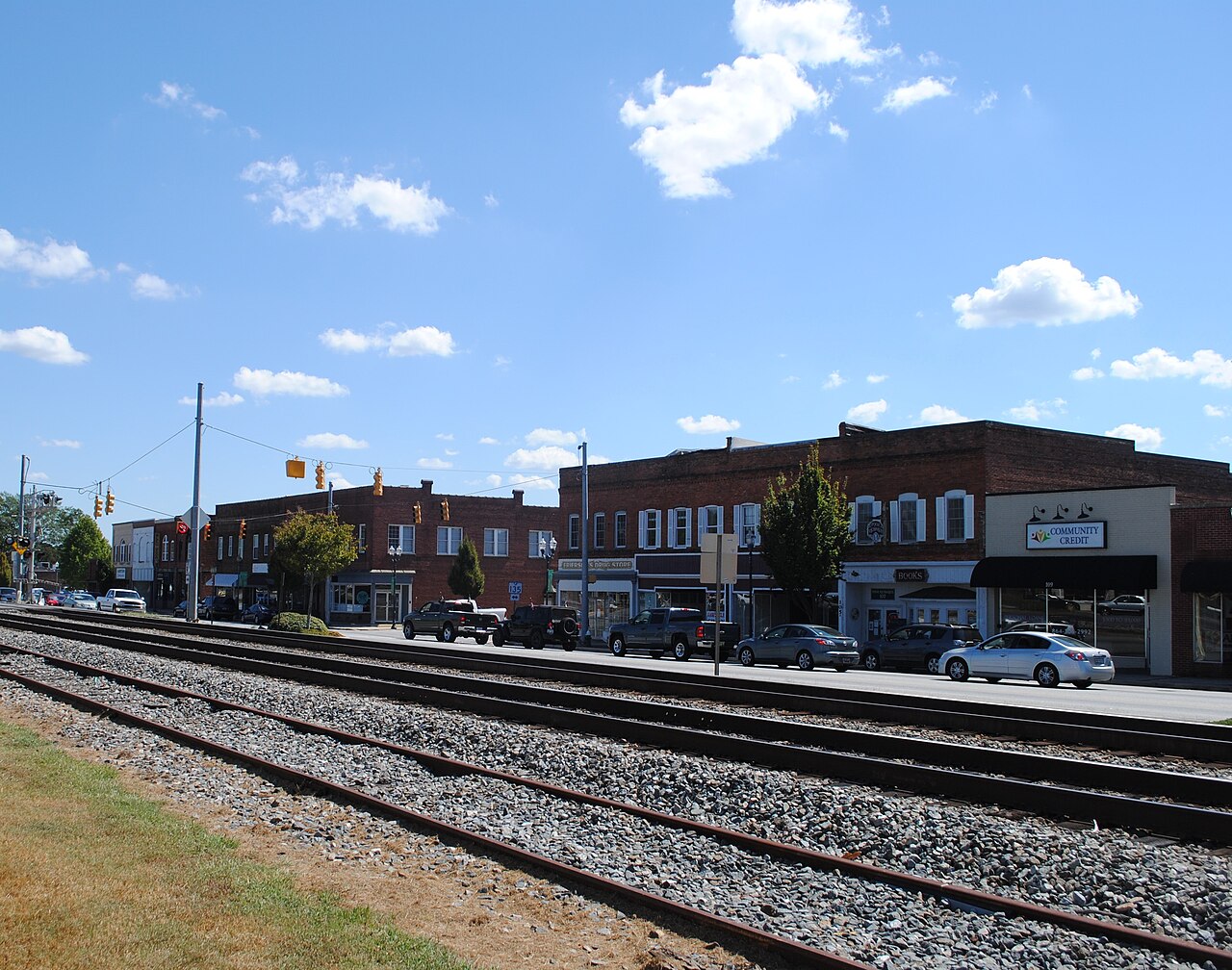
Easley is known as an affordable, fast-growing city in Pickens County, positioned between Greenville and Clemson in Upstate South Carolina. It is recognized for the Doodle Trail rail-trail to Pickens, a walkable downtown of brick storefronts and local restaurants, and easy access to both the Blue Ridge Mountains and the region's major employers.
Living in Easley offers a relaxed, small-city lifestyle with lower home prices than Greenville. Residents walk and bike the Doodle Trail, spend time at Nalley Brown Nature Park, and reach downtown Greenville or Clemson in about 30 minutes. The growing downtown adds dining and gathering spots like The Silos, and the area suits families and first-time buyers.
Homes in Easley carry a median around $330,000. Starter homes, townhomes, and older bungalows sit lower, often from the $200,000s, while new-construction and larger-acreage homes run higher.
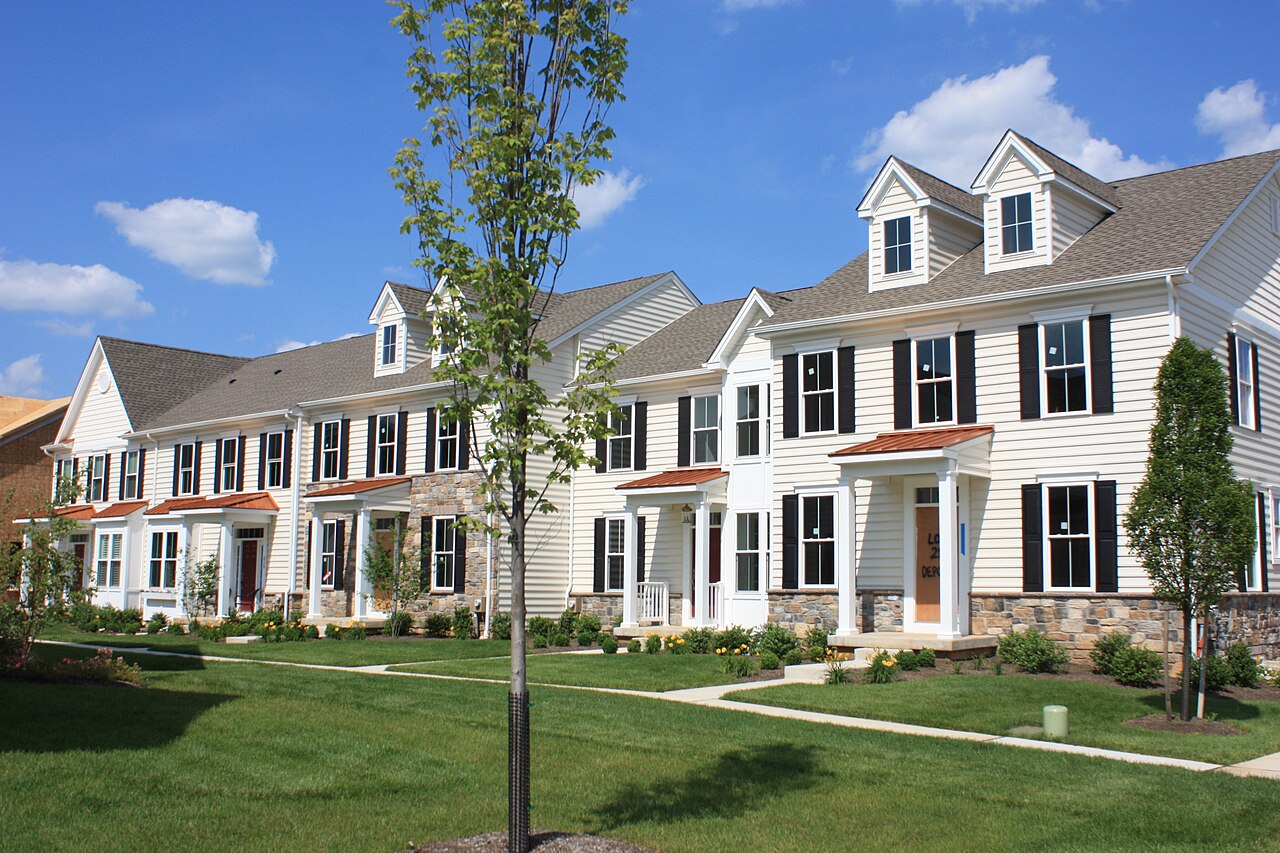
Easley offers older bungalows, Craftsman, and ranch homes north of Route 123, newer traditional and ranch-style builds to the south, new-construction subdivisions, townhomes, and larger lots with no-HOA options. Manufactured homes are available at the entry end.
Easley sits in Pickens County, South Carolina, along US-123 between Greenville and Clemson. Downtown Greenville and Clemson University are each about 18 to 30 minutes away, and Table Rock State Park and the Blue Ridge Mountains lie roughly 20 miles north.

The Andy Bovender Team pairs deep Carolinas market knowledge with the reach of Compass. Expect straight answers, sharp preparation, and a process that stays simple, whether you are buying, selling, or both.