Duck is a narrow Outer Banks town between the Atlantic Ocean and Currituck Sound, known for its waterfront boardwalk and village center.
Discover Local CommunitiesThe town's pedestrian-oriented core links shops, civic spaces and sound views, while neighborhoods extend toward both waters. Seasonal traffic and coastal hazards remain important practical considerations.
Residents and visitors can walk between the boardwalk, park and central businesses, with cycling and paddling also prominent. NC 12 remains the principal route through town.
Duck Town Park, the boardwalk and beach access support outdoor recreation and community events.
Dare County Schools serves Duck. School assignment and transportation depend on the exact address; verify directly with the district.
Independent dining, galleries and shops line the village center and boardwalk area, with broader services south in Kitty Hawk and Kill Devil Hills.
Duck is a town on the northern Outer Banks in Dare County, north of Southern Shores and south of Corolla, and the range of Duck homes for sale sits at the upper end of the region, with a recorded median around $914,000. It is a low-density town organized around a village center with a soundside boardwalk on Currituck Sound rather than a highway strip, and it has no through traffic beyond the single road that runs its length.
Duck-specific figures are scarce and the available ones are dated. Redfin recorded a February 2025 median of $914,000, up 7.5 percent, with six homes sold, days on market at 158 against 52 a year earlier, and price per square foot down 51.3 percent. That last figure alongside a rising median is the signature of a small sample rather than a market movement, and on six sales it should not be interpreted. More recent competitiveness data from the same source shows homes selling around 3 to 4 percent below list and going pending in roughly 84 to 86 days.
Against its neighbors, Duck sits at or near the top. Southern Shores has been recorded at a median around $750,000, Kitty Hawk at a typical value around $607,000, Kill Devil Hills at $592,000 to $595,000, and Nags Head at about $870,000. Those figures come from a mix of sources and periods, but the ordering is consistent: Duck and Nags Head anchor the upper end of the northern Outer Banks and Kitty Hawk and Kill Devil Hills the middle. Regionally, the market has been softening, with a median residential sale price down 16.5 percent in February 2026 and average days on market rising from 68 to 83.
The Andy Bovender Team serves Duck from Compass offices across the Carolinas, including the Outer Banks, alongside Charlotte, Charleston, Columbia, Fort Mill, Greenville, Lake Murray, and Wilmington. Two things follow. First, on six monthly sales at this price level, comparables must be assembled over a longer window and no single published figure should be quoted without its date. Second, this is a barrier island: flood zone, base flood elevation, elevation certificate, storm history, insurance cost with its trend, and the erosion and nourishment position are the underlying economics of ownership rather than diligence details.
A Village Center, Not a Highway Strip
Duck is organized around a walkable village center with a soundside boardwalk rather than a commercial highway. On the Outer Banks that arrangement is close to unique.
A Boardwalk on Currituck Sound
The town's boardwalk runs along the sound behind the village, linking shops and restaurants on the water. It is the reason Duck feels like a place rather than a stretch of road.
Three Restaurants on the Water
NC Coast Grill, The Village Table and Tavern, and Even Tide all sit on Duck Road with sound views and more than 2,700 reviews between them, covering a full dinner room, a tavern, and a counter-service board concept.
The Upper End of the Northern Beaches
With a recorded median around $914,000 against Kitty Hawk near $607,000 and Kill Devil Hills near $592,000, Duck anchors the top of the northern Outer Banks alongside Nags Head.
No Through Traffic
One road runs the length of Duck and it does not connect onward except north to Corolla, which means the town carries its own traffic and not the region's.
Ocean and Sound Within a Few Hundred Yards
The island is narrow here, with the Atlantic east and Currituck Sound west, giving two water positions and two price tiers within a short walk of each other.
Duck runs along a narrow stretch of the northern Outer Banks with one road through it, so position means which water a property faces and how close it sits to the village. Four groupings cover it.
Oceanfront and the Beach Side
Property on the Atlantic side is the top of the Duck market, running to substantial houses built with letting in mind. Price is set by ocean position rather than square footage, and at this level the distinction between true oceanfront, second row, and ocean side is worth a great deal. The diligence is the full coastal set: elevation certificate and base flood elevation for the exact parcel, storm and claims history, insurance cost with its five-year trend, and the erosion and nourishment position for that stretch. Given what is documented further south on the Outer Banks, establishing the shoreline change rate here is worth doing rather than assuming the northern towns are unaffected.
The Village Center
Around the village and its soundside boardwalk, Duck holds its shops, restaurants, and its most walkable ground. Property here trades on being able to reach the center on foot, which on the Outer Banks is genuinely rare, and it is the most practical position for year-round living. What a buyer accepts is village activity in season and proximity to the town's one road at its busiest point. Establish what the town permits on any commercial-adjacent parcel and what parking arrangements apply, since a walkable center generates its own pressures.
Soundside on Currituck Sound
West of the road, property faces Currituck Sound with dock potential, shallow protected water, sunset outlook, and lower exposure to ocean weather, generally below oceanfront pricing. For a buyer who wants water without ocean exposure, or a boat rather than surf, this is the position, and in Duck it also puts the boardwalk and village within reach. Establish dock permit status and water depth at varying tides, which on Currituck Sound is shallow, and confirm what any dock conveys on sale.
The Interior and the Northern End
Between the waters and running north toward Corolla, Duck's interior holds housing away from both frontages at the town's more accessible levels, some of it under maritime tree cover. This is where a buyer gets the address without paying for water, and where the beach and the village are a short distance rather than a doorstep. Establish what any association covers, the flood position for the specific parcel, and on older stock what renovations were done, since the town's housing spans several decades.
Property Types Across Duck
Four categories cover the town. Oceanfront houses are the top of the market and are frequently valued partly on rental income. Village-center property carries a walkability premium unusual on this coast. Soundside offers protected water and dock potential. Interior and northern-end housing is the most accessible. Across all four, six questions decide value: which water position and what it commands; rental history and what the town permits, if income is part of the plan; elevation certificate and base flood elevation for the exact parcel; insurance cost with its five-year trend; the erosion and nourishment position for that stretch; and which of the neighboring towns a comparable actually sits in, since they price differently and they are minutes apart.
Duck eats along Duck Road with sound views, and the three principal rooms cover very different registers.
NC Coast Grill and Bar, at 1184 Duck Road, is the largest, working North Carolina oyster, salt and vinegar fries, shrimp and grits, tacos, crab dip, and a shareable board, with waterfront seating and live music outside. Open seven days, and expect a wait in summer.
The Village Table and Tavern, at 1314 Duck Road, is the more ambitious dinner room, with goat cheese and feta hushpuppies, an arugula salad with caramelized grapes and blue cheese, an extensive beer list, and water views from the dining room. Dinner only and closed Saturdays, which is unusual, so check before going.
Even Tide, at 1190 Duck Road, is the counter-service board and sandwich room, with a Bavarian pretzel and pimento cheese board, chicken salad and veggie sandwiches, grilled cheese, and beer and wine, on a deck over the sound. Closed Mondays.
Duck is unusual on the Outer Banks in having a village center where shopping happens on foot rather than from a car park on a highway. The center and its soundside boardwalk carry independent shops, galleries, and services alongside the restaurants, which covers a good deal of daily life and gives the town a character the highway towns do not have. For a full weekly shop and for medical facilities, Kitty Hawk and Kill Devil Hills are south with more extensive provision, both within a short drive and Kitty Hawk covered on its own page. Buyers should note that Duck Road is the town's only road, that it carries summer traffic heading north to Corolla as well as Duck's own, and that the village center is the busiest point on it.
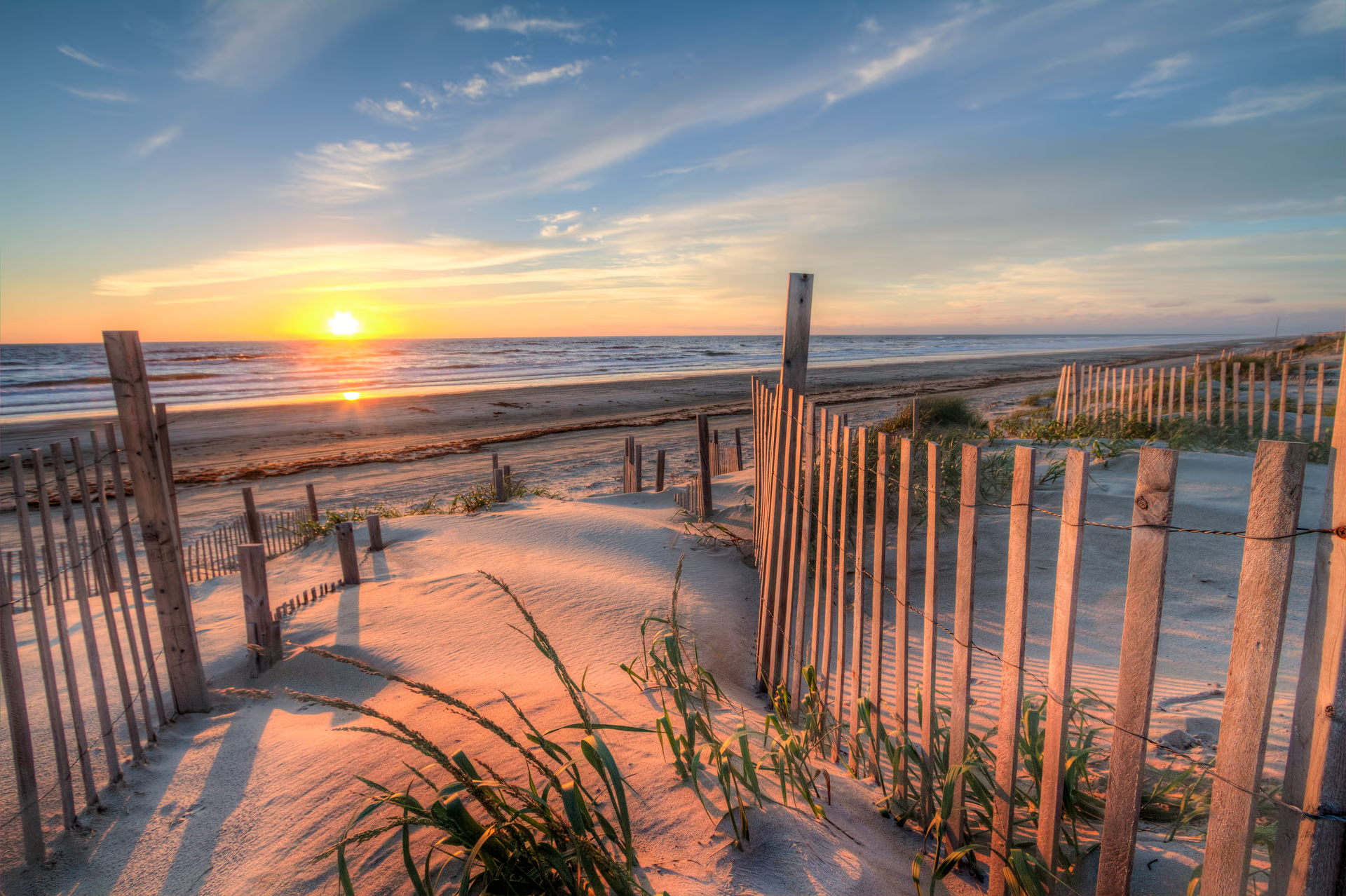
Duck has beach on one side and sound on the other within a short distance, which on a town this size means both are part of daily life rather than a choice. The soundside boardwalk is the town's distinguishing feature, running along Currituck Sound behind the village and linking shops and restaurants on the water, and Currituck Sound itself is shallow and protected, suiting paddling, kayaking, and small boats. The Atlantic side carries surf and beach access along the town's length.
Beyond the town, the northern Outer Banks runs in both directions. Corolla is north at the end of the road, and Southern Shores, Kitty Hawk, and Kill Devil Hills run south with Nags Head beyond, Kitty Hawk and Nags Head covered on their own pages. Further south, Highway 12 runs the length of Hatteras Island to Rodanthe, Avon, and Hatteras village, all covered on their own pages, with the ferry to Ocracoke at the end. The mainland bridges are reached south through Kitty Hawk. The practical summary is that Duck is the northern Outer Banks town with an actual village center, at the upper end of the region on price, with one road in and out.
Duck is known as an upscale resort town on the northern Outer Banks, recognized for boutique shopping, well-regarded restaurants, and a soundfront boardwalk and multi-use path. It keeps a relaxed pace set by low speed limits along NC Highway 12, and it is one of the area's most upscale and consistently high-value vacation-home markets.
Living in Duck is quiet and seasonal, with fewer than 1,000 year-round residents and an economy centered on tourism and hospitality. Daily life revolves around the beach, the sound, the boardwalk, and village shops, with limited year-round commercial services and a large summer influx of visitors. Dare County operates the schools, and the nearest hospital is about 18 miles away.
Homes in Duck average in the mid-to-high $700,000s, among the higher price points on the northern Outer Banks, and oceanfront estates run well into seven figures. Year-over-year figures have moved with the broader market.
Duck offers large coastal homes ranging from three to eight bedrooms, classic beach cottages, oceanfront and soundfront estates, and condominiums. Many properties operate as vacation rentals and feature private pools, multiple decks, and direct or short-walk beach access. Communities include Sea Pines, Ships Watch, and Poteskeet.
Duck sits on the narrow northern Outer Banks of North Carolina, between Southern Shores to the south and Corolla to the north, along NC Highway 12. The Atlantic Ocean lies to the east and Currituck Sound to the west. Kitty Hawk, Kill Devil Hills, and the Wright Memorial Bridge are a short drive south.

The Andy Bovender Team pairs deep Carolinas market knowledge with the reach of Compass. Expect straight answers, sharp preparation, and a process that stays simple, whether you are buying, selling, or both.