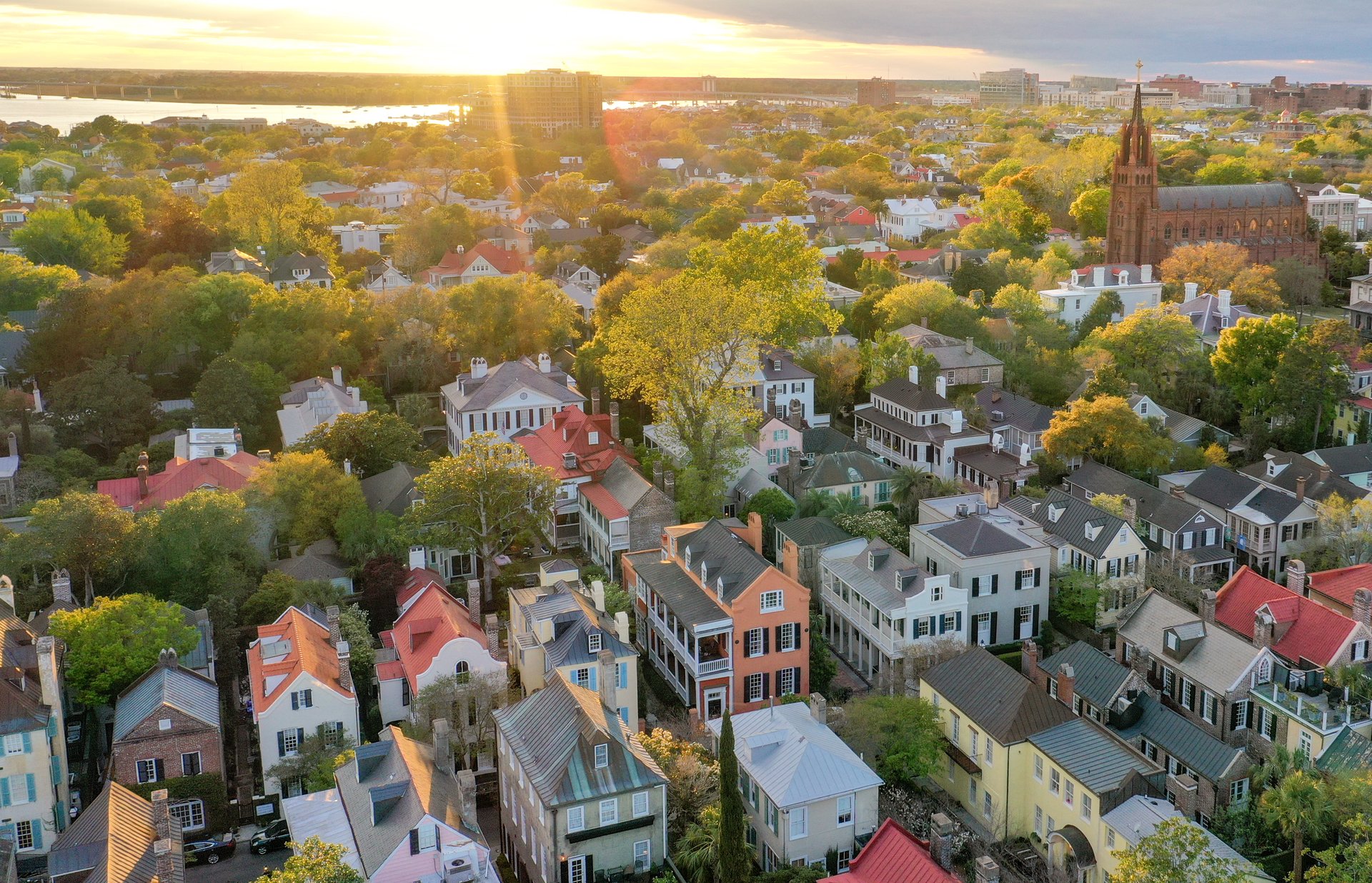
The Charleston Peninsula inside the Crosstown offers the lower portion of the peninsula on the harbor side of the U.S. 17 Crosstown, including many of the city's densest historic, civic, and mixed-use districts.
Discover Local CommunitiesThe phrase is an editorial boundary, not an official Census geography; the precise side of U.S. 17 and any exceptions should be mapped before statistics are assigned. Here, housing includes historic houses, apartments, condominiums, row houses, and infill across neighborhoods with distinct character.
Many short trips can be made on foot or by bicycle, but parking, flooding, preservation rules, and tourist activity vary by block.
Conditions can vary by street, development, and jurisdiction, so property-level due diligence remains important.
Museums, theaters, parks, the waterfront, and civic institutions are close at hand. Schools vary by address, and choice or magnet programs are not automatic assignments.
School note: Attendance zones, program eligibility, and transportation can change. Confirm every assignment with the district using the full property address before making a housing decision.
King Street, Meeting Street, neighborhood corridors, and waterfront districts offer extensive dining and shopping.
Inside the Crosstown means the historic Charleston peninsula south of the Septima P. Clark Parkway, and the Charleston peninsula homes for sale inside that line are among the most expensive real estate in South Carolina. The Crosstown is a local name for the stretch of US 17 that cuts east to west across the peninsula, completed in 1967 to connect Highway 17 with Interstate 26. Charleston agents and buyers use it as a dividing line because the two sides behave like different markets. South of it sits the walled city and everything that grew from it: South of Broad, the French Quarter, Ansonborough, Harleston Village, Radcliffeborough, Cannonborough and Elliotborough, and the King Street commercial spine that runs through them. North of it the peninsula turns residential and considerably less expensive.
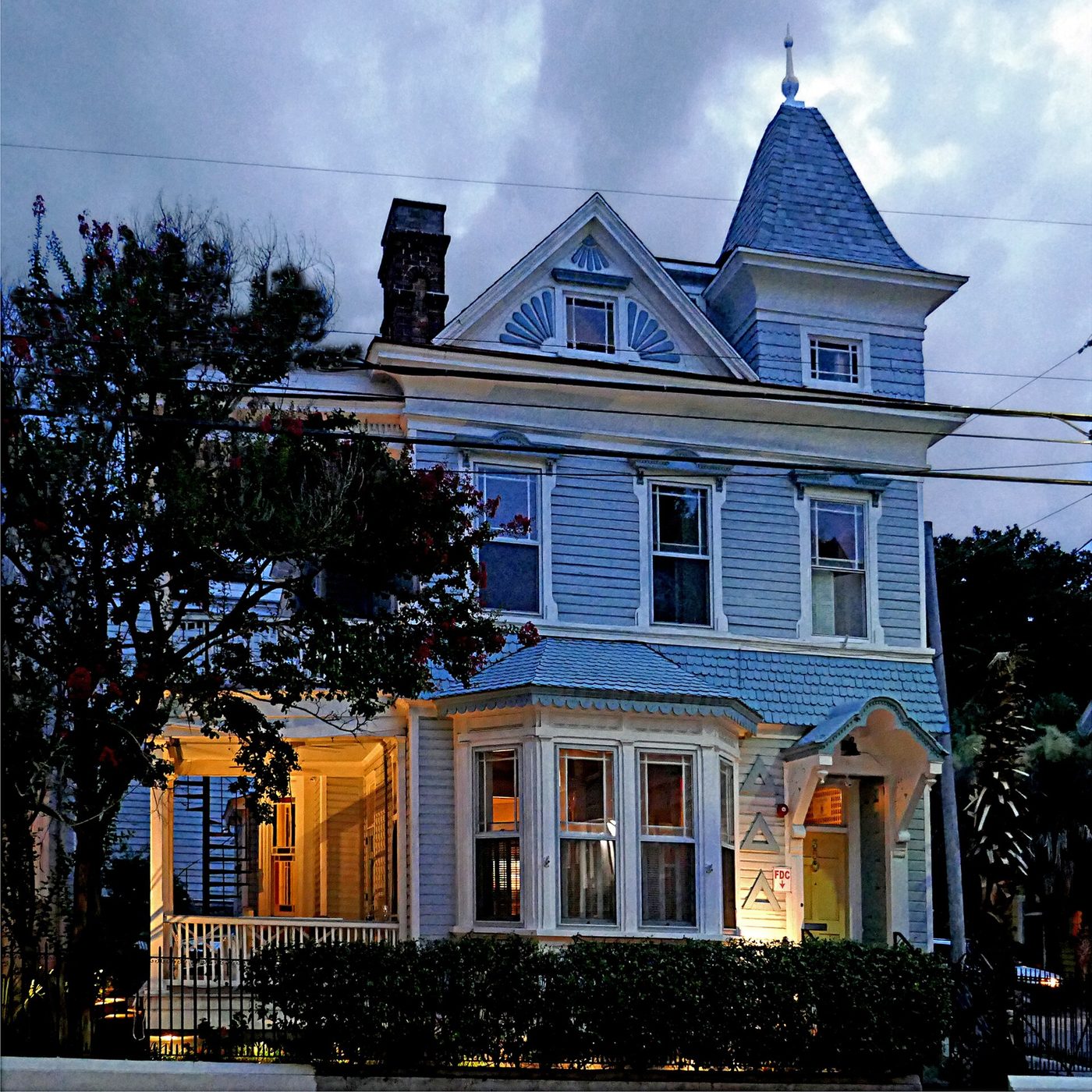
Buying here means buying inside a working historic district, and that is the fact that shapes everything else. Most of this housing predates the Civil War, much of it predates the Republic, and exterior alterations fall under the Board of Architectural Review rather than being a matter of owner preference. The Charleston single house, one room wide with its narrow end to the street and a side piazza catching the breeze, is the defining local form and it comes with the maintenance profile of a two-hundred-year-old timber and masonry structure. Flood zone, base flood elevation, and the elevation certificate for a specific address matter as much here as square footage, and insurance is a line item buyers from other markets routinely underestimate. Off-street parking is scarce enough that it is priced as an amenity.
Published figures for the peninsula vary widely by source, and buyers should be careful reading any single one. Redfin recorded a Charleston citywide median sale price of about $640,000 over the three months ending May 2026, up roughly 5.5 percent year over year, with homes taking about 68 days to sell against 56 days a year earlier. That is the city figure, and it includes West Ashley, James Island, and everything else inside city limits, so it sits far below what the peninsula does. Zillow's home value index for the 29401 ZIP code stood near $1.5 million at the end of June 2026, up about 4.5 percent, and secondary market reports have placed the South of Broad median somewhere between roughly $2.9 million and $3.5 million with price per square foot frequently above $1,000. Those are different metrics measuring different geographies, and this page publishes them as such rather than blending them into a single number.
The Andy Bovender Team serves Charleston from its Compass office at 708 South Shelmore Boulevard in Mount Pleasant, across the Cooper from the peninsula, as part of a footprint that also covers Charlotte, Columbia, Wilmington, Fort Mill, Greenville, Lake Murray, and the Outer Banks. Two things make representation matter more here than in most markets. First, the peninsula is priced by the block and sometimes by the side of the street, because flood exposure, piazza orientation, parking, short-term rental eligibility, and Board of Architectural Review history all change within a few hundred feet. Second, a large share of the inventory has been renovated at least once and often several times, and what a buyer needs to know is what was done, when, under what permit, and to what standard. Neither question is answered by a price per square foot.
You Can Live Here Without Driving
The peninsula south of the Crosstown is roughly two miles from The Battery to the parkway, and groceries, restaurants, offices, the medical district, and the waterfront all sit inside that distance on a walkable street grid. It is one of the few places in the Southeast where a household can function without a second car.
Waterfront Park and the Pineapple Fountain
Waterfront Park runs along the Cooper River off Vendue Range and Concord Street with a pier, swings, two fountains including the Pineapple Fountain, and lawn along the harbor. It opens early and stays open into the evening, and it is the peninsula's front porch onto the water.
Colonial Lake in the Middle of a Neighborhood
Colonial Lake Park sits in Harleston Village off Ashley Avenue, a tidal pond ringed by a walking path, benches, and mature trees with houses facing it on all sides. It is open around the clock and functions as the residential heart of the western peninsula rather than as a tourist stop.
Architecture Under Actual Protection
Charleston established the country's first historic district zoning in 1931, and exterior work on the peninsula still goes through the Board of Architectural Review. That is why the streetscape looks the way it does, and it is a genuine constraint on what an owner may change as well as a guarantee about what the neighbors may.
A Restaurant Scene That Draws People to the City
King Street, East Bay, and Broad Street hold a concentration of nationally recognized kitchens inside a walkable few blocks, from Slightly North of Broad on East Bay to The Ordinary and Indaco on upper King and Sorelle on Broad. Residents walk to restaurants that visitors plan trips around.
The City Market Under Its Own Roof
Charleston City Market runs four blocks from Meeting Street toward East Bay at 188 Meeting, open daily under a series of covered sheds with the 1841 Market Hall at its head. Sweetgrass basket weavers, local makers, and food vendors work it, and it operates evenings on Fridays and Saturdays as well.
The peninsula south of the Crosstown is made up of distinct neighborhoods, each with its own housing era, price tier, and daily character, and the differences between them are sharper than the short distances suggest. These are the six a buyer will be choosing among.
South of Broad
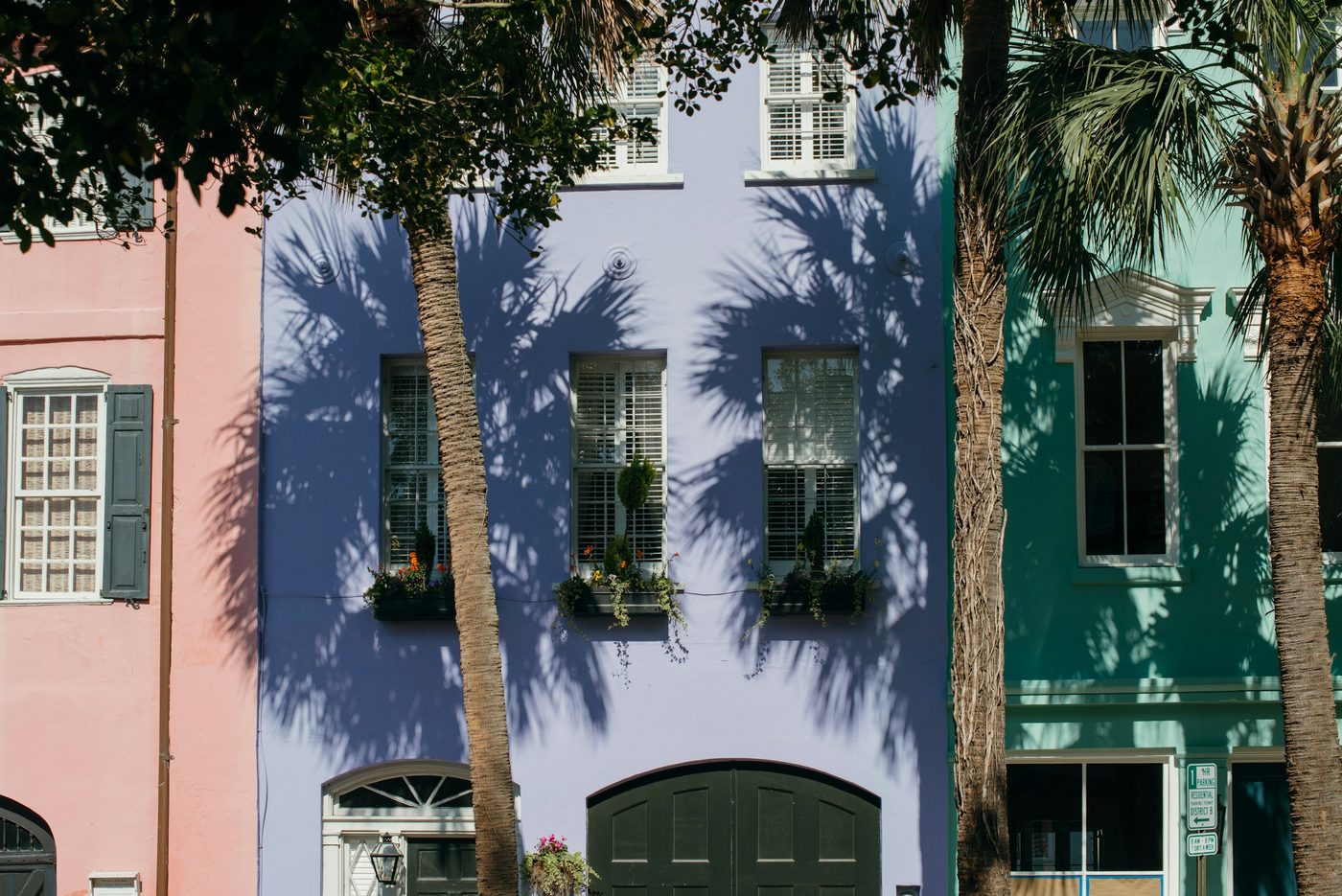
South of Broad is the address at the top of the market, covering everything below Broad Street to The Battery at the peninsula's tip. Antebellum mansions line East Bay and Meeting, Rainbow Row faces the harbor on East Bay, and White Point Garden holds the point where the Ashley and Cooper meet. Housing runs from grand harbor-facing houses through smaller singles and carriage houses on the narrow lanes behind them, so the neighborhood is not uniformly enormous even though it is uniformly expensive. Most properties carry no homeowners association, with historic review taking that role instead. Inventory is thin, turnover is slow, and flood exposure at the lower elevations near the point is a serious diligence item rather than a formality.
The French Quarter
The French Quarter occupies the footprint of the original walled city between Broad Street and Market Street toward the Cooper River, and it is the most commercial of the historic residential neighborhoods. Art galleries line Broad and Queen, cobblestone survives on Chalmers Street, and the housing stock leans heavily toward condominiums and converted historic buildings rather than single-family houses. That makes it the strongest lock-and-leave inventory on the peninsula and the most common choice for second-home buyers. Waterfront Park and the City Market both sit at its edges, which means foot traffic, tour carriages, and evening activity are part of daily life here in a way they are not four blocks west.
Ansonborough
Ansonborough sits north of the French Quarter between East Bay and Meeting, and it is the quiet alternative to it. The neighborhood was one of Charleston's earliest planned suburbs and holds an unusually intact run of antebellum houses, many restored through a preservation revolving fund campaign in the mid twentieth century. Inventory mixes single-family historic houses with condominiums in converted buildings, generally at a lower price point than the French Quarter or South of Broad while staying inside easy walking distance of both. Buyers who want the historic peninsula without the tour route often land here.
Harleston Village
Harleston Village runs across the western side of the peninsula from Broad Street north, taking in Colonial Lake, the College of Charleston campus, and the approaches to the Medical University of South Carolina. It is the most residential of the southern neighborhoods and the one where daily life looks most conventional, with a park at its center, houses facing it, and the medical district and campus within a walk. Housing spans single-family historic houses, converted multi-family, and condominiums, at prices below South of Broad while sitting a few blocks away. Proximity to two large institutions cuts both ways: it supports demand and resale, and it brings student housing, hospital shift traffic, and parking pressure onto some blocks and not others.
Radcliffeborough
Radcliffeborough sits north of Calhoun Street between King and the medical district, and it is where renovated cottages and smaller historic houses are still found at prices below the neighborhoods to the south. The stock is a genuine mix, running from restored singles through Victorian cottages to houses that have not yet been through their renovation, which makes condition variance the defining feature of the neighborhood. It puts upper King Street shopping and dining within a few blocks and the medical district closer still. This is the segment where a buyer's contractor matters as much as their agent.
Cannonborough and Elliotborough
Cannonborough and Elliotborough, two neighborhoods now generally treated as one, sit between King and President streets and run from the Crosstown south toward Morris and Bee, which makes them the northernmost part of the peninsula inside the Crosstown. Spring and Cannon streets are the commercial spine, holding a concentrated run of restaurants that has made this the peninsula's most active dining district outside lower King. Housing runs from Charleston singles and shotgun row houses through converted multi-family and student rentals, side by side on the same block. It is the most affordable entry point inside the Crosstown and the most variable in condition, and buyers should confirm which side of the Crosstown a specific address actually sits on, because the line runs right through this area.
Property Types Across the Peninsula
Four categories cover nearly everything inside the Crosstown. The Charleston single house, one room wide with a side piazza and its narrow end to the street, is the signature form and appears in every neighborhood here at every price level. Grand harbor-facing and street-facing historic houses, largely South of Broad and Ansonborough, are the top of the market and the thinnest inventory. Condominiums in converted historic buildings, concentrated in the French Quarter, Ansonborough, and along King, carry the lowest maintenance burden and the highest share of second-home and investor ownership, and their regime documents and insurance arrangements deserve as much scrutiny as the unit. Cottages and smaller singles in Radcliffeborough and Cannonborough and Elliotborough are the entry point, and condition ranges from fully restored to project. In all four categories the questions that decide value are the same: elevation and flood zone, off-street parking, what has been renovated and under what permit, and short-term rental eligibility for the specific address.
The peninsula's restaurants sit in three bands: lower King and East Bay near the historic core, Broad Street, and upper King through Cannonborough and Elliotborough. All three are walkable from most addresses inside the Crosstown.
Slightly North of Broad, at 192 East Bay Street, has been a Charleston benchmark for decades, working through barbecue tuna, flounder, and she-crab soup with a kitchen counter facing the line. Open seven days, and reservations are strongly advised.
The Ordinary, at 544 King Street, is an oyster hall and seafood restaurant in a former bank building on upper King, with a raw bar and a fish stew that regulars order by name. Dinner only, closed Tuesdays.
Indaco, at 526 King Street, does wood-fired pizza and handmade pasta with a deep Italian wine list and a seasonal menu. Dinner nightly plus weekend brunch.
Sorelle, at 88 Broad Street, is the occasion Italian restaurant, spread across several rooms and floors with a bar and an upstairs dining room. Dinner nightly, closed Mondays, and the adjoining Sorelle Mercato at 90 Broad handles coffee and pastry through the day.
Brasserie La Banque, at 1 Broad Street, occupies a former bank at the corner of Broad and East Bay, serving French brasserie cooking with a downstairs cocktail room. Dinner nightly plus weekend lunch.
Costa, at 320 Broad Street, sits behind Colonial Lake in Harleston Village and is the neighborhood option on the western side, with Ashley River views from the patio and a pasta-making class. Dinner only, closed Mondays.
Virginia's on King, at 412 King Street, is the Lowcountry standby for she-crab soup, fried green tomatoes, and shrimp and grits, open daily from 8 in the morning.
167 Raw, at 193 King Street, is the oyster bar people line up for on lower King, working through oysters, lobster rolls, and fish tacos at a counter that takes no reservations. Open Monday through Saturday from 11 in the morning, closed Sundays.
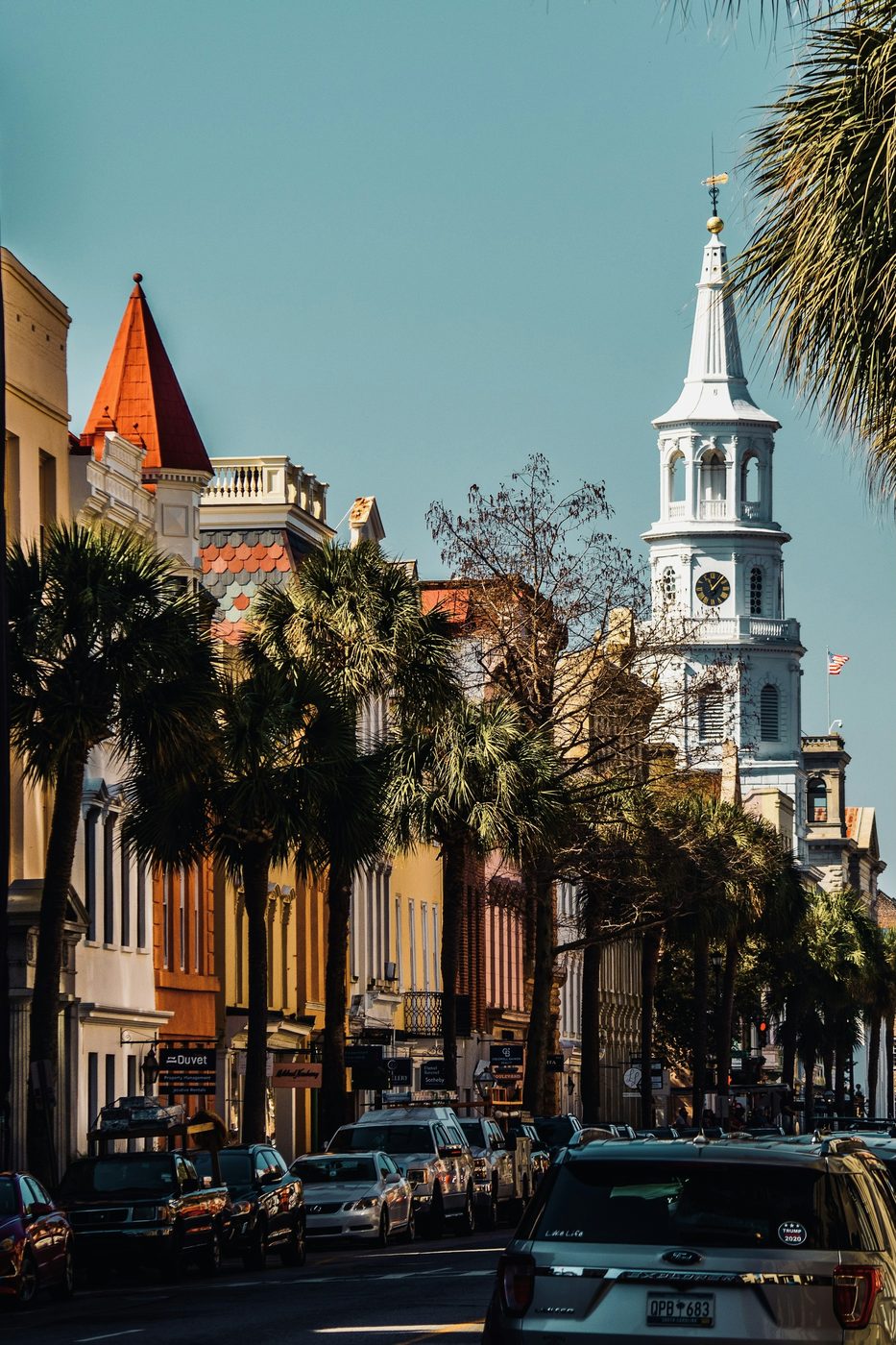
King Street is the shopping street, and it is organized in a way most visitors work out only after a few trips. Lower King below Market runs to antiques, upper King above Calhoun runs to design, fashion, and independent boutiques, and the middle stretch carries the national retailers. The whole of it is walkable and none of it is a mall. Charleston City Market runs four blocks from 188 Meeting Street toward East Bay under covered sheds, open daily with sweetgrass baskets, local makers, and food vendors, and it stays open evenings on Fridays and Saturdays. Broad Street holds art galleries alongside law offices and the city's older commercial fabric, with more galleries along Queen. For groceries and everyday needs, residents use the stores at the top of the peninsula and along the Crosstown itself, and buyers should check the walk from a specific address to a full-size grocery store rather than assuming, because it varies more than the distances suggest.
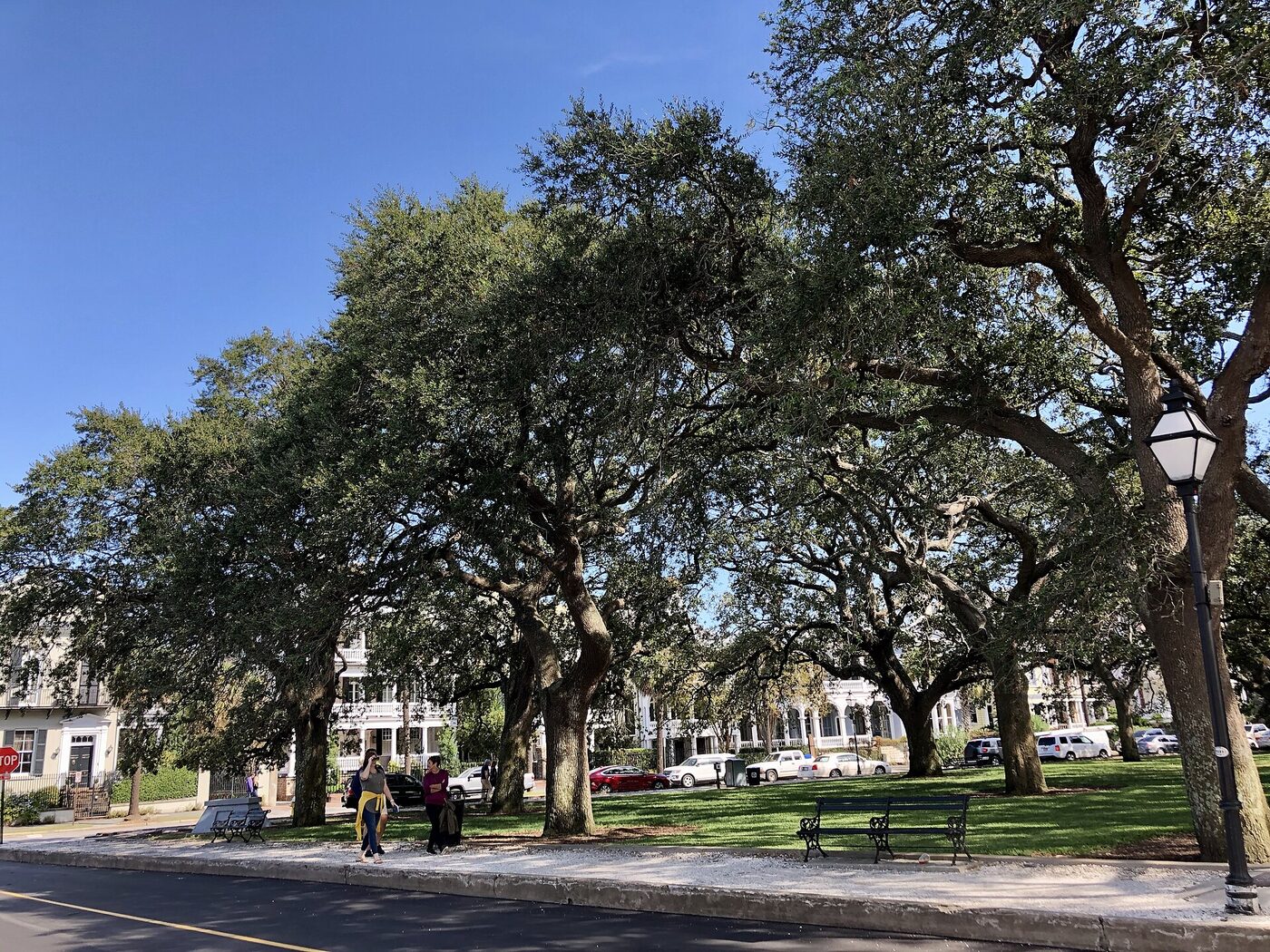
Waterfront Park is the peninsula's main public space, running along the Cooper River off Vendue Range and Concord Street with a pier, harbor swings, lawn, and two fountains including the Pineapple Fountain. At the southern tip, White Point Garden sits where the Ashley and Cooper meet, with live oaks, monuments, and the promenade along The Battery, and Rainbow Row faces the harbor a short walk up East Bay. On the western side, Colonial Lake Park in Harleston Village rings a tidal pond with a walking path and benches and functions as a genuine neighborhood park rather than a stop on a tour. Marion Square anchors the upper end at King and Calhoun and hosts the city's farmers market in season.
The rest of what there is to do here is the city itself. The Gibbes Museum of Art sits on Meeting Street, the Dock Street Theatre is on Church, and Charleston Gaillard Center on Calhoun handles larger performances. Historic house museums including the Nathaniel Russell House and the Aiken-Rhett House are open to visit, and the Charleston Museum and the Charleston Visitor Center sit near Marion Square. The South Carolina Aquarium sits on the harbor at 100 Aquarium Wharf, with a sea turtle care center open to visitors and the Fort Sumter ferry departing from Liberty Square beside it. Spoleto Festival USA takes over venues across the peninsula in late spring. For beaches, residents cross to Sullivan's Island, Isle of Palms, or Folly Beach, each roughly twenty to thirty minutes by car, and all three are covered on their own pages.
The Charleston peninsula inside the Crosstown is known as the historic lower and central peninsula, the area south of the Septima Clark Parkway. It is recognized for South of Broad, the Battery, Rainbow Row, the French Quarter, and Harleston Village, along with King Street shopping, the College of Charleston, and the city's celebrated restaurants.
Living inside the Crosstown offers the most walkable, historic version of Charleston life, surrounded by centuries-old architecture, parks, and the waterfront. Residents walk to King Street dining, galleries, and Waterfront Park, though the most central areas draw heavy tourist traffic. The district appeals to history lovers and buyers wanting a true downtown lifestyle.
Homes inside the Crosstown are among the most expensive in the region. Condos generally start in the $300,000s and average around $500,000, while historic single houses commonly run from about $1 million, rising to several million and beyond South of Broad, where grand mansions reach $6 million to $11 million or more.
The area offers historic Charleston single houses with side piazzas, grand antebellum mansions South of Broad, renovated townhomes, more modest shotgun-style homes in the boroughs near the Crosstown, and a wide range of condos, from historic conversions to luxury buildings near the waterfront. Buyers should review elevation, flood zones, insurance, and the city's short-term-rental rules.
This part of the peninsula sits south of the Crosstown in the City of Charleston, South Carolina, between the Ashley and Cooper rivers down to the Battery at the harbor. Most of the city's historic sites, shopping, and dining are here, the upper peninsula lies just to the north, and Mount Pleasant and the beaches are a short drive over the bridges.

The Andy Bovender Team pairs deep Carolinas market knowledge with the reach of Compass. Expect straight answers, sharp preparation, and a process that stays simple, whether you are buying, selling, or both.