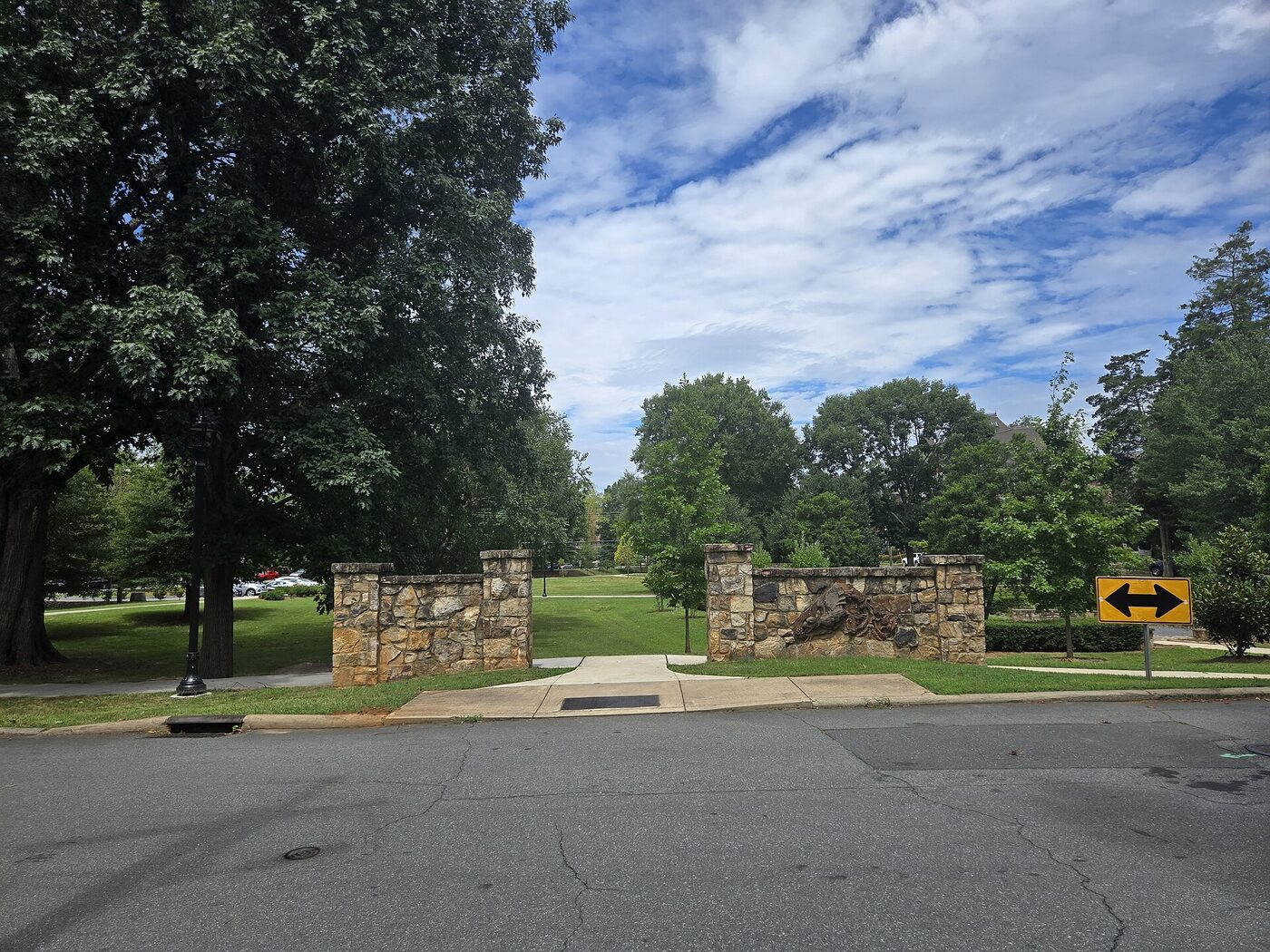
Chantilly is an east Charlotte neighborhood of tree-lined residential streets positioned between Elizabeth and Plaza Midwood, close to Briar Creek and central-city amenities.
Discover Local CommunitiesIts location offers a quieter residential setting near active commercial corridors, parks and institutions. Exact neighborhood limits vary by local source, so property-specific claims should use a mapped parcel rather than the name alone.
Chantilly's appeal comes from its established streetscape, small neighborhood scale and proximity to several of Charlotte's central districts. Nearby parks and greenway segments add outdoor options without changing its primarily residential character.
Residents can reach Elizabeth, Plaza Midwood and Uptown by a mix of local streets, transit, cycling and driving. Walkability varies block by block, especially where larger roads and creek crossings interrupt the street network.
Chantilly Park, nearby greenways and central Charlotte cultural venues broaden recreation choices. CMS serves the neighborhood; magnet programs and attendance boundaries have separate rules, so the address locator must be used for a specific home.
Everyday shopping and restaurants are found along nearby Central Avenue, Seventh Street and Pecan Avenue rather than on every residential block. This gives the neighborhood access to active commercial areas while preserving quieter interior streets.
Chantilly is a small historic neighborhood about two miles east of Uptown Charlotte, and the range of Chantilly homes for sale runs from restored bungalows in the low $400,000s to custom rebuilds above $1 million. It covers roughly 0.44 square miles between Elizabeth to the southwest and the Plaza Midwood business district to the north, bounded by Independence Boulevard on the northeast, the CSX railroad tracks on the west and south, and Briar Creek on the east. The neighborhood was established in 1913, most of its housing went up through the mid-1940s, and additional streets were added in the 1950s. Its defining feature is that no street cuts through it. Every route in is also a route out, which is why a neighborhood this close to Uptown feels as quiet as it does.
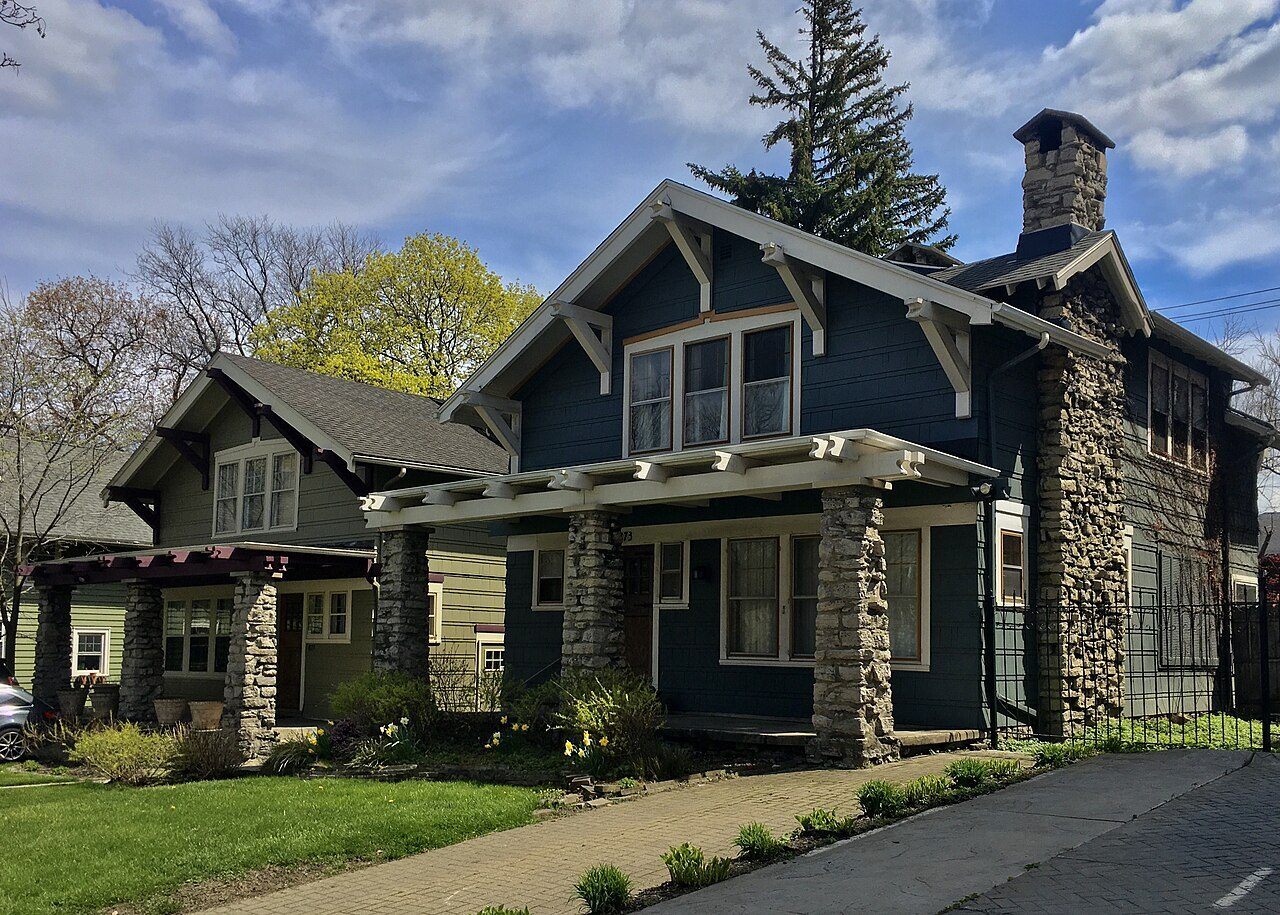
The housing stock is the reason buyers come here, and it is a genuine mix rather than a single era. Classic Charlotte bungalows dominate the streetscape, with Craftsman houses and post-war ranches alongside them, on lots that generally run around a quarter acre. Over the past decade the neighborhood has seen heavy renovation and teardown-and-rebuild activity, which means two adjacent lots can hold a largely original 1930s bungalow and a new custom house of three times the square footage. A newer townhome community has been built on the Briar Creek side as well. For a buyer, that variety is the opportunity and the risk in the same sentence: comparable sales here have to be drawn street by street and condition by condition, not from a neighborhood average.
Be careful with published market figures for Chantilly, because there are almost none. The neighborhood is small enough that the major portals do not maintain a separate market page for it, so the figures that circulate are either drawn from the wider 28205 ZIP code, which includes Plaza Midwood and NoDa, or are broker estimates. One neighborhood guide put the range at roughly $429,000 for a two-bedroom ranch up past $2 million for a five-bedroom custom build, with townhomes between about $550,000 and $630,000. Those are useful as orientation and no more. Charlotte as a whole showed a Zillow home value index near $397,000 at the end of June 2026, down about 1.3 percent, which tells a buyer that the wider market has softened but says nothing specific about these streets.
The Andy Bovender Team serves Chantilly from a Compass office at 4525 Sharon Road in Charlotte, as part of a footprint that also covers Charleston, Columbia, Wilmington, Fort Mill, Greenville, Lake Murray, and the Outer Banks. Two things make local knowledge unusually valuable in a neighborhood this size. First, with so few sales a year and such a wide spread in condition and square footage, pricing a Chantilly house is an exercise in finding three genuinely comparable properties rather than in running a per-foot calculation. Second, the older housing stock carries the diligence profile of houses now eighty to a hundred years old: foundation type, original wiring and plumbing, whether a renovation was permitted, and what a previous owner did behind the drywall all matter more here than the listing photographs suggest.
No Street Cuts Through It
Chantilly has no through streets connecting it to the neighborhoods on either side, which means the only traffic on its streets is traffic that belongs there. Two miles from Uptown, that is close to unheard of, and it is the first thing residents mention about the place.
A Seven-Acre Park at the End of the Street
Chantilly Park at 222 Wyanoke Avenue is a seven-acre Mecklenburg County park inside the neighborhood, with two playgrounds, swings, a nature trail, picnic tables, and covered seating. It sits on ground that previously held apartments, and it borders Briar Creek at the southern end of the neighborhood.
The Chantilly Ecological Sanctuary Next Door
The Chantilly Ecological Sanctuary is a restoration of roughly 24 acres along Briar Creek immediately east of the neighborhood, reached from Laburnum Avenue. It adds unpaved walking trails, a beach volleyball court, and a short disc golf course to the neighborhood's green space.
Bungalow Streets Under Mature Trees
The streetscape is primarily classic Charlotte bungalow, with Craftsman houses and post-war ranches alongside them on quarter-acre lots under a heavy tree canopy. Buyers who want period architecture within two miles of Uptown are choosing between Chantilly, Elizabeth, and a small number of comparable pockets.
Two Restaurant Districts Within Walking Distance
Chantilly has no commercial street of its own, and that is deliberate. What it has instead is Plaza Midwood's Central Avenue run to the north and Elizabeth's Seventh Street cluster to the southwest, both close enough to reach on foot or by a two-minute drive, giving residents two established dining districts without the noise of either.
An Active Neighborhood Association
The Chantilly Neighborhood Association runs community events through the year, including a Halloween parade, a road race, food truck evenings, and neighborhood yard sales. In a neighborhood of a few hundred houses with no cut-through traffic, that organization is a large part of what the place actually feels like.
Chantilly is too small to have sub-neighborhoods, but at half a square mile it still has four distinct edges, and which one a house sits near affects noise, light, price, and what the street feels like day to day.
The Interior Streets
The streets in the middle of the neighborhood are the quietest ground in Chantilly and where the original character is most intact. This is where the classic bungalow streetscape reads clearly: houses set back behind small front yards under mature canopy, sidewalks, and no traffic that is not local. Housing runs to bungalows and Craftsman houses from the neighborhood's earliest decades alongside post-war ranches, with renovation and rebuild activity scattered throughout rather than concentrated. Buyers who want the Chantilly that gets described in neighborhood guides usually end up here, and they should expect the maintenance profile of houses eighty to a hundred years old, including foundation type, original systems, and the question of what previous renovations did and did not permit.
The Chantilly Park and Briar Creek Edge
The southeastern part of the neighborhood, running toward Chantilly Park and Briar Creek, trades a slightly longer walk to the commercial districts for direct access to the neighborhood's green space. Chantilly Park sits at the southern end of Wyanoke Avenue and the Chantilly Ecological Sanctuary continues east along the creek, which puts trails, playgrounds, and open ground within a short walk of these streets. Two practical points belong in any offer here. Proximity to a creek raises a flood question that should be answered for the specific parcel rather than assumed from the block, and park frontage means foot traffic and playground noise as well as views, so a buyer should visit at a weekend afternoon rather than only on a weekday.
The Independence Boulevard Edge
The northeastern boundary runs along Independence Boulevard, which is a major arterial carrying traffic east out of the city, and houses closest to it carry the neighborhood's most obvious trade-off. What a buyer gains is price: this is generally the most accessible entry point into a Chantilly address. What a buyer accepts is road noise, which varies considerably depending on the depth of the lot, the intervening tree cover, and which way the house faces. This edge is also the shortest route to Bojangles Coliseum and the surrounding event complex, less than two miles east. Walk these blocks at a weekday evening peak before making a decision, because the difference between two streets here can be substantial.
The Railroad Side and the Plaza Midwood Approach
The western and southern boundary follows the CSX railroad tracks, and the northern end of the neighborhood is the closest approach to the Plaza Midwood business district on Central Avenue. Houses on this side have the shortest walk to restaurants and everyday retail, which is the main reason buyers choose them, and the trade-off is the rail corridor: active freight track means intermittent noise and vibration that no amount of renovation removes. A newer townhome community has been built on this general side of the neighborhood as well, which gives buyers a low-maintenance option inside a historic neighborhood that otherwise offers almost none. Confirm the current freight schedule rather than judging by a single visit.
Property Types Across Chantilly
Four categories cover the neighborhood. Original and lightly updated bungalows and Craftsman houses are the character stock and the reason most buyers look here, generally the smallest square footage and the oldest systems. Post-war ranches, added as the neighborhood filled in through the 1940s and 1950s, sit in the middle on both price and condition and are the most common candidates for renovation. Fully renovated and rebuilt houses, including custom new construction on original lots, are the top of the market and can run several times the square footage of the house next door. Townhomes in the newer community on the neighborhood's edge are the low-maintenance option and the only attached product here. Because those four categories can appear within a block of each other, the question that decides value in Chantilly is not price per square foot but which three houses genuinely compare to the one in front of you.
Chantilly has no restaurants of its own, and that is the point of a neighborhood with no through streets. What it has is two established dining districts on either side, both reachable on foot: Central Avenue in Plaza Midwood to the north, and the Seventh Street cluster in Elizabeth to the southwest.
Midwood Smokehouse, at 1401 Central Avenue, is the barbecue benchmark for this side of Charlotte, working brisket, burnt ends, ribs, and jalapeno cornbread from a wood pit. Open seven days, and it stays busy.
The Workman's Friend, at 1531 Central Avenue, is the Irish pub option, with a fireplace at the back, a private room, and a late license seven days. Street parking is tight, so allow time.
Que Onda, at 1518 Central Avenue, does Mexican cooking across two floors in a kept-original building, with birria, a long cocktail list, and its own parking lot. Closed Mondays.
DTR, at 1413 Central Avenue, is the small-plates and wine option on Central, with a back patio and weekend brunch. Closed Mondays, dinner only on weekdays.
Painted Rooster, at 1601 Central Avenue, covers wings, tenders, and salads with a long list of sauces and rubs, open seven days until late with covered outdoor seating.
Catalina Kitchen and Bar, at 1942 East 7th Street in Elizabeth, is the neighborhood restaurant on that side, open seven days with three hours of validated deck parking.
Rosemont, at 1942 East 7th Street, shares that building and covers wine, mussels, and a dog-friendly patio, open seven days.
Biscuit Belly, at 1949 East 7th Street, handles breakfast and lunch only, opening at 7.30 every day, which makes it the closest morning option to the neighborhood.
Everyday shopping happens outside the neighborhood, and how far outside depends on which edge a house sits near. Central Avenue in Plaza Midwood is the closest commercial street, carrying independent retail, coffee, salons, services, and a grocery store within a short walk or drive of the northern end of Chantilly. The Elizabeth business district along East Seventh Street covers the southwestern side at a similar distance, with restaurants and small retail rather than everyday errands. Independence Boulevard on the northeastern boundary carries big-format retail, services, and grocery, which is the practical convenience of living on that edge. For larger shopping, Uptown is about two miles west and SouthPark is roughly fifteen minutes south. Buyers moving from a suburb should note that the trade-off runs the other way here: everything is close, but almost nothing is in the neighborhood itself, and street parking rather than a lot is the norm on both commercial streets.
Chantilly's green space is disproportionate to its size. Chantilly Park at 222 Wyanoke Avenue is a seven-acre Mecklenburg County park inside the neighborhood, with two playgrounds, swings, a nature trail, picnic tables, and covered seating, and it borders Briar Creek at the southern end. Immediately east, the Chantilly Ecological Sanctuary restores roughly 24 acres along the creek, reached from Laburnum Avenue, adding walking trails, a beach volleyball court, and a short disc golf course. Briar Creek Greenway continues along the corridor for walking and cycling. Between the three, most of the neighborhood is within a few minutes of open ground, which is unusual this close to Uptown.
Beyond the neighborhood, Bojangles Coliseum sits less than two miles east on Independence Boulevard and hosts touring productions, hockey, and family shows. The Mint Museum's Randolph Road building is a short drive south and holds the older collection, with the Uptown building covering the rest. The Chantilly Neighborhood Association runs the local calendar, including a Halloween parade, a road race, food truck evenings, and yard sales. For everything else, and that includes professional sport, major performance venues, and the Levine Center museums, residents drive or ride two miles into Uptown, which is covered on its own page.
Chantilly is known as a small historic neighborhood in Charlotte, North Carolina, just east of Uptown between Elizabeth and Plaza Midwood. It is recognized for 1940s and 1950s bungalows and ranch homes, tree-lined streets with no cut-through traffic, Chantilly Park and the Briar Creek greenway, and a recent wave of renovations and high-end new construction.
Living in Chantilly offers a quiet, close-knit feel minutes from the city. Residents enjoy front-porch streets, community events like Food Truck Thursdays and the annual home tour, and Chantilly Park, with the restaurants and shops of Plaza Midwood and Elizabeth a short walk away. Uptown is a five to ten minute drive down 7th Street.
Homes in Chantilly carry a median around $1 million, lifted by extensive new-construction infill. Renovated bungalows and ranch homes run from the $600,000s to $1 million, while new custom homes reach $2 million or more. Smaller original cottages occasionally sell lower, often as renovation or rebuild opportunities.
Chantilly offers historic 1940s and 1950s bungalows, Craftsman, and ranch homes on roughly quarter-acre lots, renovated cottages, and large custom new-construction homes ranging from 4,000 to 8,000 square feet. The mix of original character homes and high-end infill defines the neighborhood, with many lots seeing renovation or rebuild activity.
Chantilly sits just east of Uptown Charlotte, in Mecklenburg County, North Carolina, between Elizabeth and Plaza Midwood near Briar Creek and US-74. This is the Charlotte neighborhood, distinct from Chantilly, Virginia. Students attend Charlotte-Mecklenburg Schools, with magnet options like Chantilly Montessori, so buyers should verify the assignment for a specific address.

The Andy Bovender Team pairs deep Carolinas market knowledge with the reach of Compass. Expect straight answers, sharp preparation, and a process that stays simple, whether you are buying, selling, or both.